

David Trefgarne ’63’s Run in Britain’s House of Lords Is At an End
Parliament passed legislation this spring ending the tradition of hereditary peers


To address David Trefgarne ’63 by his proper title, one should call him Second Baron Trefgarne or the Right Honorable the Lord Trefgarne. For almost 64 years, he sat as a hereditary peer in the British House of Lords, a seat he inherited from his father when he was still a Princeton undergraduate. But on March 27, in the wake of legislation passed by Parliament and given ceremonial assent by King Charles III, Trefgarne resigned his seat. In doing so, he helped close a chapter in British constitutional history that dated to the reign of Edward III in the 14th century.
Along with the House of Commons, the House of Lords constitutes the British Parliament. But the aristocratic Lords, whose seats passed down from generation to generation, have long been criticized as undemocratic and unnecessary. Gilbert and Sullivan mocked them in their opera, Iolanthe. The Lords lost their power to veto legislation more than a century ago, although they can delay it for up to a year, issue critical reports, and offer amendments which sometimes force the government to change its policies.
Until this year, most of the 800-plus members of the House of Lords were known as life peers, holding their seats for their lifetimes in recognition of service to the country or financial support of the party in power. However, several dozen hereditary peers also served.
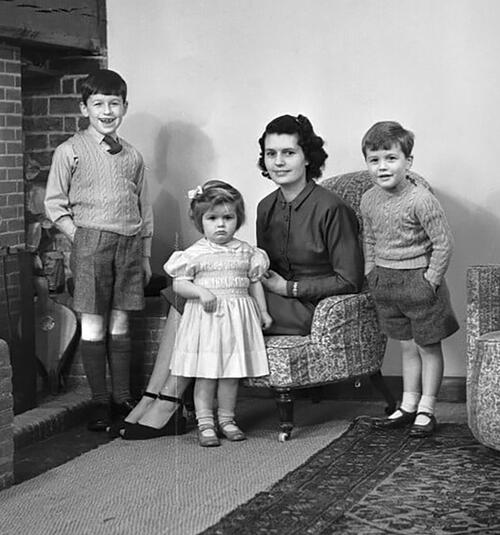
The Hereditary Peers Act of 2026 abolished those hereditary peerages. Facing imminent removal from Parliament, Trefgarne chose to retire. “I’m very sorry, obviously,” he told The Guardian last December, when it became clear that the legislation would pass. “I was coming to the end of my time in the House anyway. ... But I think it was inevitable eventually, and therefore I’m fairly relaxed about it.”
He has not always felt so relaxed. In recent years, Trefgarne has been one of the most ardent defenders of hereditary peerages, leading opposition against previous attempts to abolish them or water down their prerogatives. By stalling and introducing numerous time-consuming amendments, they prevented the measures from passing until this year.
His fancy title notwithstanding, Trefgarne comes from nonaristocratic stock. His father, George Garro-Jones, was a minister’s son from Wales who served in the House of Commons as a member of the Liberal and Labour parties. When Prime Minister Clement Attlee made him a baron — and thus a Lord — in 1947, he became the first Lord Trefgarne, taking his name after the Treffgarne Rocks, a geological feature near his boyhood home.
It was his father, Trefgarne says, who decided to send him to Princeton. He had just finished his freshman year when his father died, making him the second Lord Trefgarne. He left Princeton and took his seat in the House of Lords in 1962, shortly after his 21st birthday. At the time of his resignation, Trefgarne was the longest continuously serving hereditary peer.
Despite inheriting his father’s title and seat, Trefgarne did not inherit his father’s politics. He became a conservative, serving first as an opposition whip and then as a junior minister under Prime Minister Margaret Thatcher. When he stepped down from his last cabinet post in 1990, as minister of state for trade, Thatcher praised Trefgarne for his service, writing that he had always done his work “staunchly and with characteristic vigour.”
Trefgarne returned Thatcher’s praise in a recent interview with PAW. “She was the best prime minister we’ve had since Winston [Churchill],” he says. “She made the right decisions.”
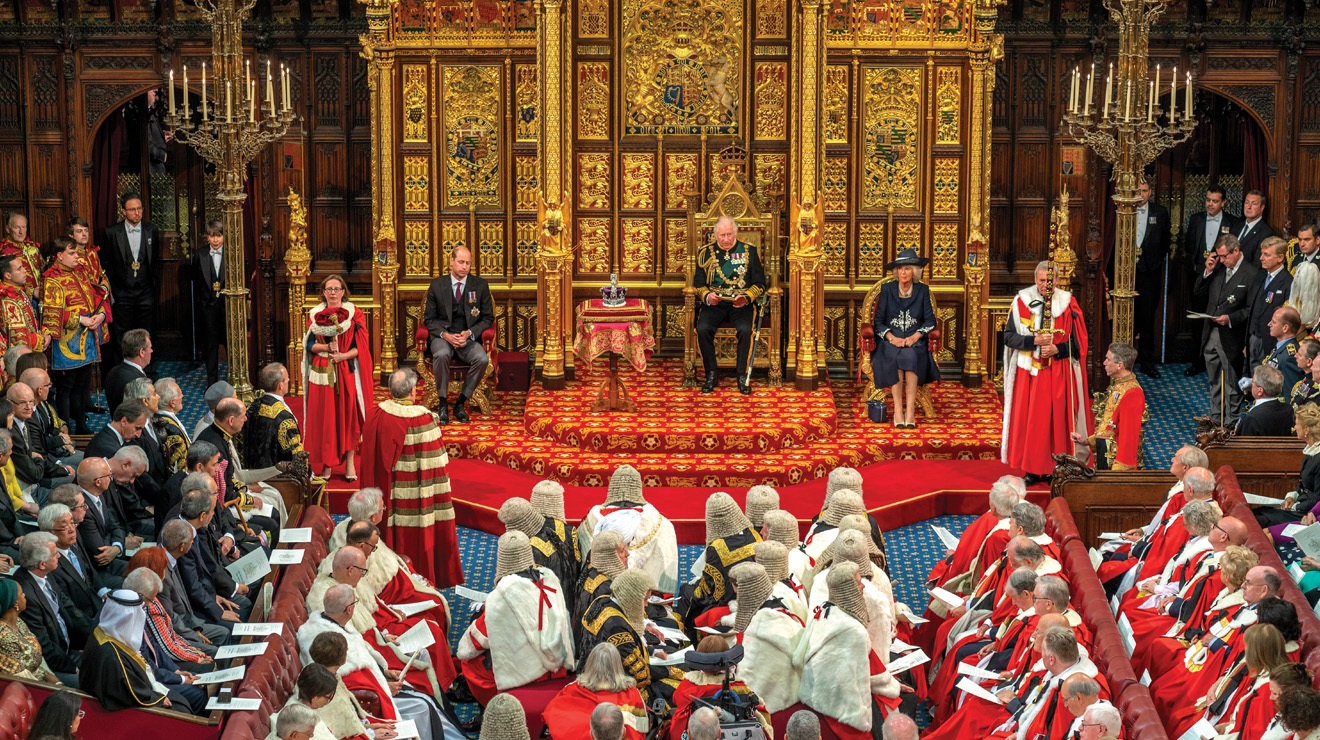
In 1999, a Labour government passed legislation abolishing more than 600 hereditary peerages but was forced to accept a compromise, permitting 92 peers to be readmitted to the House of Lords if elected by the life peers. Trefgarne was one of those elected, thus serving somewhat incongruously as an elected hereditary peer. Until his resignation, he was one of relatively few hereditary peers who attended sessions regularly, also serving on committees and participating in debates.
Outside of Parliament, Trefgarne has had numerous business interests, some of which brought him controversy. For many years, the Trefgarne family owned Windermere Island in the Bahamas, where then-Prince Charles and Princess Diana spent their 1981 honeymoon. He also served as honorary president of the Libyan British Business Council. While in that role, it was disclosed that he had lobbied for the release of one of the Lockerbie airplane bombers from a Scottish prison and then written to the son of ousted Libyan dictator Moammar Gadhafi seeking to recoup more than £1 million in fees.
Although the House of Lords had long been neutered, Trefgarne believes the hereditary peers served as a useful check on the party controlling the House of Commons which, under the British system, usually gets its way legislatively. “If you have the government dominating one chamber [without opposition], who knows what will become law?” he asks PAW.
Nevertheless, when a reporter for The Guardian asked Trefgarne if he would miss sitting in the House of Lords, he was characteristically laconic.
“Yes,” he replied. “But one’s got to live in the real world.”
The Latest
See all


Related News

With Prominent Journalists and Hoagies, the ‘Prince’ Celebrates 150 Years
A gala at the New York Historical raised roughly $400,000 for the independent student newspaper


1 Response
Rocky Semmes ’79
4 Months AgoPaine’s Views on Hereditary Governance
Second Baron David Trefgarne ’63 of the British House of Lords is likely among the nicest fellow alumni I might ever meet (“Legislation Ends 64-Year Run in the House of Lords,” June issue). Yet he is reported as “one of the most ardent defenders of hereditary peerages.” Today, in this 21st century, one questions his quizzical convictions.
The 18th century pamphleteer Thomas Paine put up a convincing argument against such outdated thinking (like that of the Second Baron), succinctly summarizing it in his seminal and purposeful publication “Common Sense.”
Mr. Paine’s argument proved so persuasively powerful that an entire nation (our own), was founded on its principles. One suspects that the Good Baron (when enrolled as an undergraduate) did not capitalize particularly on the depth of course offerings in the Department of History.