

Former Princo Managing Director’s New Book Imparts Investing Lessons
Ted Karns’ new book is titled A Compounding Life
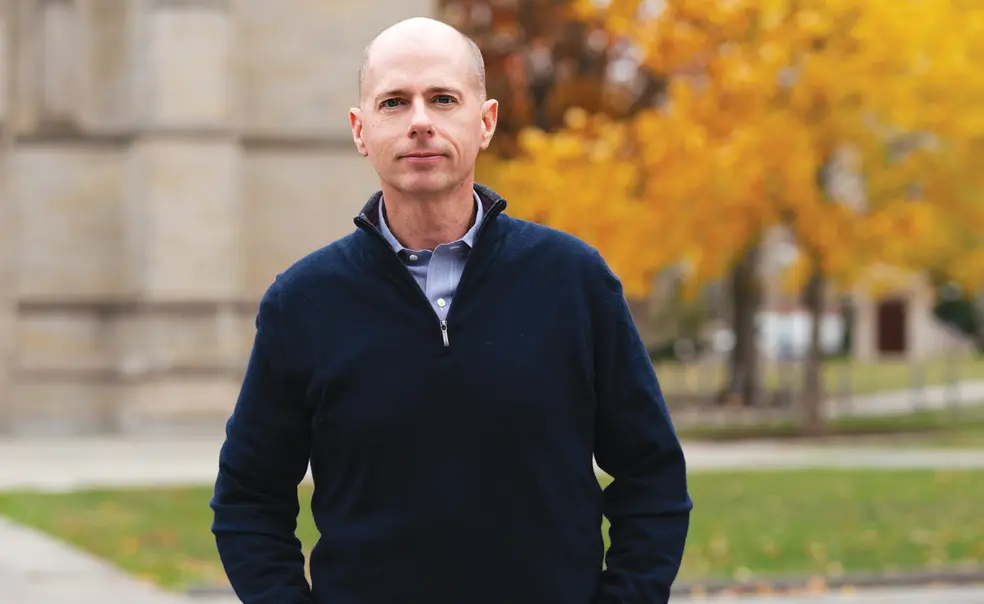

Ted Karns spent 15 years working at the Princeton University Investment Co. (Princo), joining in 2008 as a senior associate and rising to managing director by 2012, a position he held for the next 11 years. During that time, Karns helped steward one of the largest university endowments in the world, while also recruiting and mentoring successive classes of Princo analysts. Along the way, he discovered that writing down his advice to mentees in essay format helped clarify his own thinking.
By the time he left Princo in 2023, Karns had accumulated roughly a dozen of those essays. “I started looking back at them and realizing there were certain themes that ran throughout,” he says. Those essays became the foundation of his book, A Compounding Life, Lessons in Long-Term Thinking from a Leading Endowment (Damn Gravity).
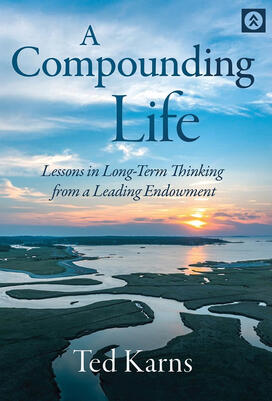
Karns organized the book around four “key areas” of compounding: character, capital, relationships, and purpose. In one early chapter, he recounts joining the investment office just as the global financial crisis of 2008 was unfolding. He takes readers inside the culture and management style of Princo, reflecting on collaboration, setbacks, and breakthroughs.
In a chapter about risk, Karns details how, shortly after he’d joined Princo and in the lead up to the financial crisis of 2008, the team realized they had overcommitted capital to private equity firms and venture capital funds. Karns suggested selling their positions to secondary buyers, a practice which carried a stigma of being something done by panicked, reactionary institutions. At first, Princo’s leadership shot the idea down, but Karns helped to broker a series of deals which reframed the secondary sales as a strategic reallocation of resources, and ultimately helped Princo freeup liquidity to navigate the tides of the global financial crisis.
Karns also writes about how Princo’s work has helped make Princeton more accessible through financial aid and scholarships. “Seeing the percentage of Pell Grant-eligible students rise from around 8% when I arrived in 2008 to about 22% when I left in 2023, and now about 25%, remains one of the things I’m most proud of. That increase represents thousands of lives changed.”
Other chapters focus instead on personal decisions that helped build meaningful relationships. During the pandemic, for example, Karns began kayaking regularly on Lake Carnegie with a close friend, using the evening paddles to stay grounded in a time of uncertainty. Relationships, like capital, Karns says, compound through consistent care and investment.
Karns’ own path to finance was not linear. He earned a bachelor’s in international relations, followed by a master’s in political science and a law degree, and worked as a lawyer before transitioning into investing. That unconventional route informs one of the book’s central themes: that careers are rarely built through a single decisive leap, but rather through smaller, cumulative decisions made over time.
Karns says the chapter on learning resilience was the most difficult one for him to write as it centers on his childhood. At 8, Karns lost his father to cancer, and two years later a catastrophic house fire forced his family out of their home. That essay also happens to be the first one he wrote while working at Princo, laying the emotional foundation for much of what followed.
A Compounding Life is both an intimate view inside the workings of Princeton’s endowment and a broader reflection on how the impact small decisions, made consistently over time, can accumulate. “Endowments are one of the clearest expressions of compounding purpose,” he says. “They turn investment returns into scholarships, research, and opportunity for people we’ll never meet.”






1 Response
Tom Franco
2 Weeks AgoInsightful Writing About Long-Term Thinking
Ted Karns’ A Compounding Life is an exceptional book — thoughtful, insightful, and full of wisdom about the power of patience, curiosity, relationships, and long-term thinking.
I’m particularly proud to have Ted as both a colleague and a friend. His perspective on investing and on life reflects the same qualities he brings to everything he does: intellectual rigor, humility, generosity, and a genuine commitment to helping others.
I highly recommend A Compounding Life to anyone interested not only in investing, but in how to build a life that compounds in the ways that matter most.