

He Built a Secret Empire Ghostwriting for Students
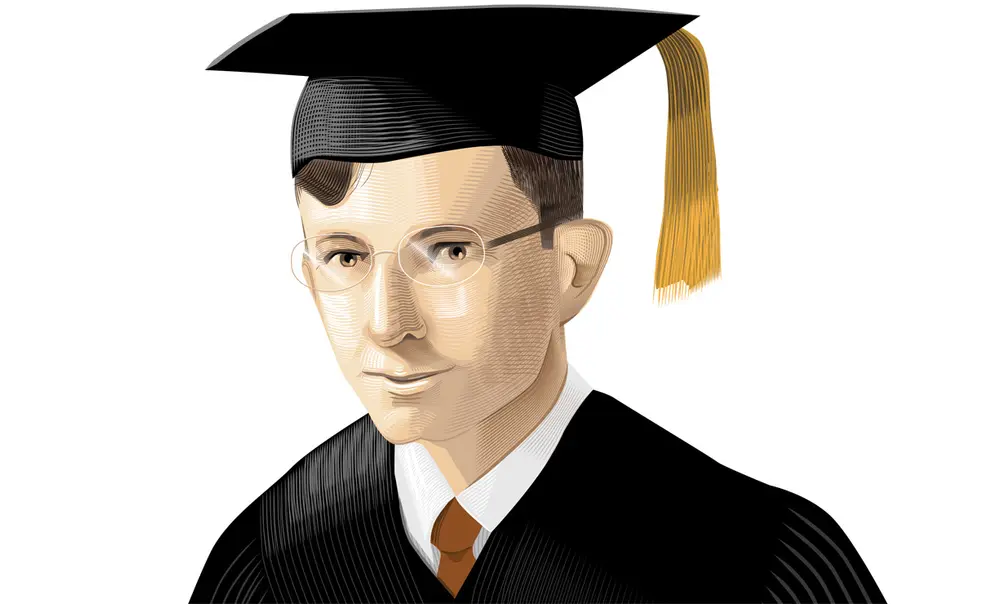

During the 1930s and ’40s, every so often the students at Princeton would receive a circular that read, across the top, “EVERY MAN TODAY HAS A GHOST.” The circular came from one “G.H. Smith,” a ghostwriter who offered his services to the gentlemen of the college in composing their class essays and senior theses.
G.H. Smith was a pseudonym. In a 1939 profile, The American Mercury called him “the king of college ghost writers.” The magazine reported, “Smith has put his business on such a mass-production basis that his far-from-ghostly earnings come to $10,000 a year. This year, his clientele included over 600 men and women in colleges and universities throughout the country.”
Predictably, he was the bane of administrators at those same colleges. Smith College sent him a letter entreating him, “as a gentleman,” to stop catering to its students; he didn’t. Swarthmore asked the City of New York, where his mailing address was, to shut down his business; the city could only force him to register it, so he registered it as a typing agency. (He employed 12 typists and writing assistants.) Princeton launched an investigation into him, but it couldn’t stop him from “ghosting” for Princeton students — like one who wrote, after receiving his advertisement, “Dear Mr. Smith: Would you submit by return mail the price of a 6,000 word paper? The subject is The Supernatural Elements
in Beowulf.”
Smith’s real name was Theodore George Lanning. Born in Michigan, Lanning received his B.A. in 1930 at San Diego Teachers College, then an M.A. in 1931 at the University of Michigan. He began a Ph.D. in English literature at Yale but dropped out after two years. In his transcripts from Yale, his professors expressed frustration that he was spending all his time scheming and side-hustling instead of studying. “Too busy at making a living,” one of them wrote. Another wrote, “Should be dissuaded from continuing graduate work.”
No matter; as a ghostwriter, he wrote 10 dissertations by the time of his 1939 interview, as well as 60 master’s theses. He made it a point of pride never to recycle papers, as other essay mills might, The Mercury said: “He could easily rehash some paper done years before, but that isn’t his idea of ghosting cricket. Each assignment brings a different problem.”
In 1938, a reporter for The Daily Princetonian tracked him down; by then, he was a campus celebrity. He told the student who visited him, who disclosed only his last name, that he had written four Princeton senior theses the previous year. The student compared him to Uriah Heep, a cunning clerk from the rogues’ gallery of Charles Dickens: “His study contains himself, a typewriter, several stacks of paper, a small library and a canary, half-choked and listless in the smoke-filled atmosphere. Reminiscent of Uriah Heep, Mr. Lanning bends over his typewriter for hours at a stretch, burning cigarettes with a nervous fury.”
Smith was so well-known on campus that the Prince ran, in 1939, a satirical article claiming he wrote for everyone on campus, deans included: “G.H. Smith, New York’s ghost writer, was revealed as the man behind Dean Root’s numerous books. … Concern was expressed along Nassau Street that other noted Princeton writers might become implicated in the affair. Names mentioned were Thomas Mann, Alpheus T. Mason [*1923], political theorist, and maybe even Archibald MacLeish.”
Eventually, Lanning hung up his ghostly hat. He moved to San Diego and opened a bookstore, which he ran for 25 years. (He told The Mercury that he was “the best-read man in the country.”) He said he planned to write his own books someday — including a memoir of his adventures as a ghostwriter — but he never did. A man of a thousand voices, he prided himself on being able to mimic any style: a freshman’s paper or a senior’s, the work of a Princetonian or a Smith woman — even the kinds of papers specific professors liked to read. But in the end, perhaps the only voice he never learned to write in was his own.
The Latest
See all


Related News
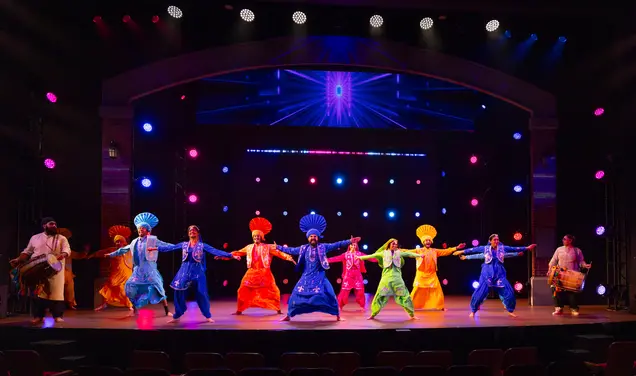
McCarter Theatre’s First South Asian Musical Took Me Back to Forbes Basement
A Beat of Our Own is about a college dance team not unlike Princeton South Asian Theatrics


1 Response
Jeffrey Marshall ’71
5 Months AgoLanning’s Output and a Familiar Fear
I was fascinated by Elyse Graham ’07’s reminiscence about Theodore George Lanning, the ghostwriter extraordinaire who captivated the campus in the late 1930s (Princeton Portrait, May issue). The notion that he wrote four senior theses in one year is a little mind-boggling for most of us who struggled to finish one. Of course, he had a mercenary interest in maximizing his output.
The idea that he prided himself on being able to mimic any style — quite a talent in itself — made me realize that in his own way, Lanning was almost a century ahead of himself. He was a precursor of AI — and just as feared and unpopular with those who expect students to create something that is uniquely theirs.