

To Improve Mental Health, Students Point to Campus Culture
‘Everything here is hard, and everyone pretends that it’s not hard,’ said Dave Achonu ’28
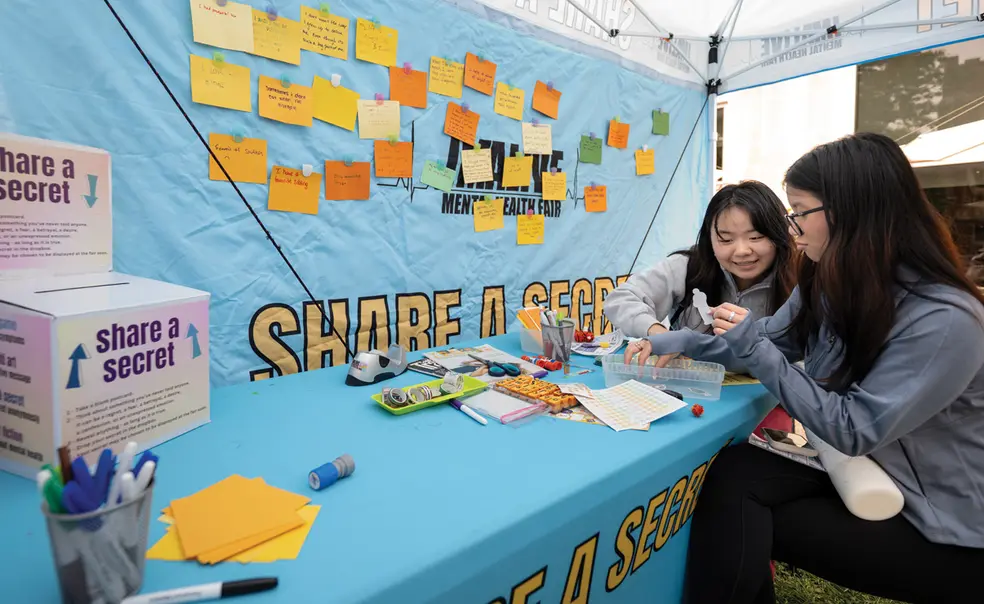

Caitlin Stein ’30 attended the University’s third annual Community Care Day on Sept. 25 specifically to pet therapy dogs, but she couldn’t miss the dozen or so tables staffed primarily by University employees offering information about wellness resources at Princeton.
“I know that Princeton has a lot of mental health resources,” said Stein, in large part because new students heard about them at “every single one” of the start-of-the-year events for freshmen and transfer students.
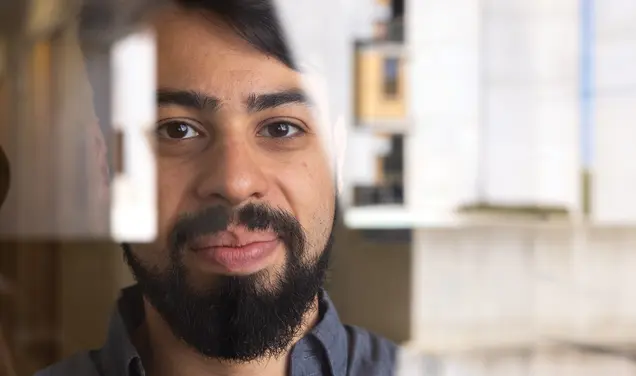
Dave Achonu ’28 volunteered for Community Care Day to help inform students about the University’s resources because he believes his generation faces significant mental health challenges, especially at elite universities.
“Everything here is hard, and everyone pretends that it’s not hard,” said Achonu, adding that it’s up to the entire Princeton community to spur positive changes.
The multitude of resources offered coupled with a campus culture that can make well-being difficult to prioritize has become a point of tension for student leaders and University administrators.
John Kolligian, executive director of University Health Services, and Calvin Chin, director of Counseling and Psychological Services (CPS), recently co-chaired a Mental Health Task Force composed of 45 staff, students, and faculty “from many different parts of Princeton” who examined how different areas of the University contribute to well-being, Chin told PAW in an email.
“Support for well-being is woven across campus,” Kolligian said via email. “In that respect, Princeton’s resources and overall approach are comparable to, and in some areas distinctive among, our Ivy Plus peers.”
In May, the task force published a report outlining the University’s progress on 79 recommendations intended to improve student mental health and well-being. It reported that 89% of the recommended steps had been completed, including peer mentoring programs, a plan to help identify isolated students, and other administrative actions related to mental health.
Aakansh Yerpude ’27, chair of the Undergraduate Student Government (USG) Mental Health Committee, is one of many students who said that making resources available is not enough. “We can create all the policies and have all the structures and have all the resources that we want, but our metric should not be whether we have them, it should be whether students are using them and if students are finding value in them,” he said.
Yerpude co-led a student and alumni mental health campaign last academic year titled One Too Many, a reference to the campaign’s message that even one student death by suicide is too many. According to the One Too Many website, seven Princeton students have died by suicide in the last five years, “the highest known Ivy League rate.”
The campaign culminated in the spring with a letter to administrators signed by nearly 300 undergraduates demanding more action. The letter included a dozen recommendations, such as workload audits across the University and providing anonymous pathways to support.
The letter, which was adopted by the USG Senate, also detailed findings from a survey of about 330 undergraduates. Nearly 70% of respondents reported being “always or often stressed about academics” and four out of five said they “sacrifice sleep to keep up with coursework.” Only 13.7% reported having enough time to prioritize their own well-being.
Related coverage
New Alumni Mental Health Group Seeks ‘To Make Princeton Students Feel Less Alone’
The coalition is asking alumni to tell share stories of struggle in an exhibit during Reunions
“Meaningful change is long overdue” when it comes to mental health at Princeton, the letter said, and “this crisis deserves attention, respect, and most importantly, urgency.”
Yerpude said over the summer that the USG Mental Health Committee met several times with administrators, leaving him optimistic about the University’s response. He anticipates an update from either USG or the University’s Office of the Vice President for Campus Life by the end of this semester. “Things are underway, I think, generally, with most all of the recommendations that we had outlined in the letter,” he said.
That outlook seems like an improvement from the beginning of the summer, when the University made cuts to reimbursement rates for therapists and psychiatrists within Princeton’s Exclusive Provider Network (EPN) without warning — a decision that Yerpude said “felt like a slap in the face” to the student body.
“That was just really disappointing for us because we’ve done this letter, this campaign, and then they take literally the opposite step. And part of me understands this whole budget cut thing, but I also don’t understand because health is not something that they should be cutting back on,” said Yerpude.
Chin told PAW in September that 82% of EPN providers remain in the network.
Noah Luch ’24 co-founded the USG Mental Health Committee in 2023 because he felt “something really needed to be done” at Princeton. As a student representative on the Mental Health Task Force, Luch said he “felt like I was fighting almost against the task force in sometimes trying to really make sure the student voices were actually heard.” But overall, he’s happy with what he sees as positive shifts in policy over the past few years, leading to “real substantive change.”
The task force was convened as part of the University’s second partnership in a decade with The Jed Foundation, a national nonprofit focused on college student mental health. During the latest 18-month collaboration, which ran from 2023 to 2025, the task force reviewed existing resources and support, formed subcommittees, hosted a Jed Foundation site visit in spring 2024, and developed a strategic plan with 79 action items. By the time the plan was created, work had begun on all but one of those items.
The task force’s report, released on May 1, included an important caveat, namely that “broader dimensions of campus culture or climate” had not been fully captured and “remain important areas for ongoing institutional attention.”
“A single report cannot change culture,” Kolligian said. “Culture evolves through sustained efforts, shared values, policies, programs, leadership, and everyday interactions across the community.”
Tiffanie Cheng Wu ’24, founder of the Princeton Alumni Mental Health Coalition and a member of the task force, said the community has a responsibility not only to make resources accessible and digestible but to ensure “that students have room and space within their everyday life of being a student here” to take advantage of them. In response to those who say Princeton has tons of great resources, she responds, “Yes, love that. We need these. But on top of that, there is an underlying issue of why students are not doing great.”
“From a student perspective, the culture is what directs and influences student well-being,” said Chioma Ugwonali ’24, a member of the task force. “So, conversations about mental health that don’t implicate campus culture are missing the mark.”
Addressing that culture — and helping to reshape it — could become a focus of the task force’s next iteration: a standing Mental Health Advisory Committee that Kolligian said will form this academic year. Vice President for Campus Life W. Rochelle Calhoun will decide its membership and what they will do.
Yerpude said he knows that neither the One Too Many campaign nor the Mental Health Task Force are the “solution,” but he hopes Princeton continues to try different approaches. “We need to be trying more, harder, and we need to be less afraid of having the right answer, because I don’t think that anyone does,” he said.
The Latest
See all


Related News
Dung Beetles Do ‘the Job That Is Necessary’
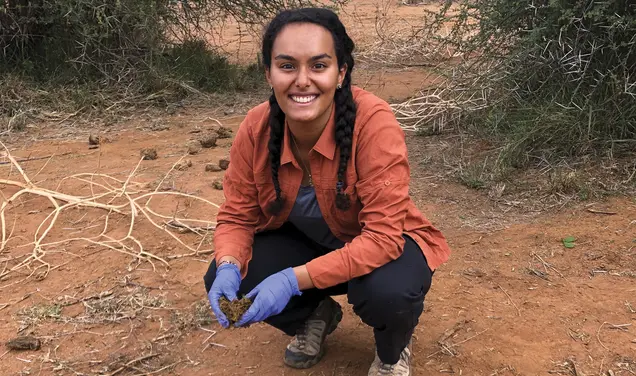
Princeton researcher Finote Gijsman *25 studies crucial links between the insects and elephants in a new paper

No responses yet