

Murray-Dodge Café Celebrates 50 Years of Free Cookies
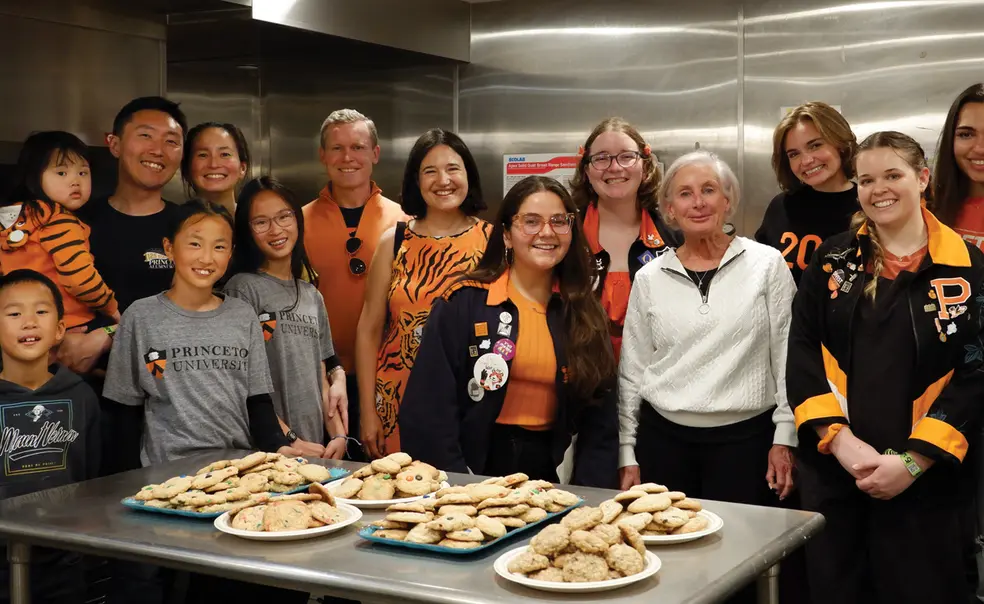

There’s something special about the Murray-Dodge Café that goes beyond the enticing sweet scents of freshly baked cookies, though those certainly don’t hurt.
The cozy, dimly lit space in the basement of the Office of Religious Life (ORL) building “felt like home” to Destiny Eisenhour ’20 when she was a student supervisor, thanks to the welcoming community of student bakers and patrons.
Emmie Pickerill ’25, another former supervisor, said it’s “so clear when people walk into the café that they enjoy this space, and I feel like that energy would really just rub off on me.”
This fall, the café will celebrate 50 years of serving free cookies, coffee, tea, and conversation.
The night before it first opened in September 1976, Rick Chrisman ’65 was emotional and worried that his two years of planning would be for naught. Chrisman, then assistant dean of the Chapel, intended to create a space that would welcome all people and foster interaction at a personal level. At a time of political consciousness, campus was “electric and very divisive,” Chrisman said, and he found students “desperate for dialogue,” somewhat similar to today.
Immediately, it was clear to Chrisman that the café he had dreamed up out of a neglected basement was a success. After hosting its first patrons during a three-night freshman week preview, it officially opened a week later, on Sept. 16. It was open from 10 p.m. to 12:30 a.m., in hopes of enticing students leaving Firestone after late-night study sessions.
Today, the café is open during the academic year from noon to midnight. Student bakers make 1,000 cookies per shift, with the freedom to bake anything from classic chocolate chip cookies to whatever they can find in the pantry. Eisenhour experimented with double chocolate red pepper flake cookies. Brooklyn Fraser ’27, a current supervisor, recalled one baker who made a delicious pumpkin, pretzel, and white chocolate chip creation.
The student bakers, who are paid, “come up with the most awesome recipes,” said Joanne Campagnoli-Sismondo, operations and events coordinator at the ORL. She has supervised the café for the past two decades. “I can’t even tell you what they do. … They’re like little scientists down there.”
On Wednesdays, a vegan option is available, and on Sundays, a gluten-free option.
According to Ellen Sheehy ’84, a student baker during the early 1980s, they didn’t offer anything “too fancy” then — “chocolate chip was the norm.”
Since its humble beginnings, the café has undergone a major year-long renovation, during which it temporarily relocated to the Carl A. Fields Center in 2015-16. It’s survived challenges, like mice that kept finding ways in during nearby construction and ORL’s decision last year to staff most shifts with one baker instead of two due to budget cuts.
Over the years, the café has served as a late-night alternative to the Street and a meeting place for clubs. Sue Anne Morrow, a former associate dean of religious life, said that student meetings in the café helped the ORL make some of its first connections with the LGBTQ+ community. When she introduced herself to an LGBTQ+ group, the students seemed confused, “Like, really? Why are you here?” Morrow recalled with a laugh. Over time, though, “we cultivated a very strong relationship with that group of students, and it was really fun.”
At Reunions in May, the café opened an hour early for alumni and student bakers, with generations of workers and their families meeting for the first time. Attendees brought recipes for a new cookbook that Campagnoli-Sismondo and the alumni bakers hope to publish. On its Sept. 16 anniversary, the café plans to celebrate with special pins, a giveaway, and student group collaborations.
The Latest
See all


Related News
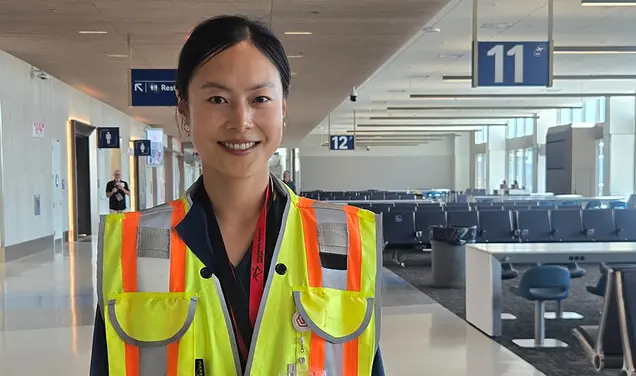
Janice Lee ’09 Worked to Renovate One of Hollywood’s Best-Kept Secrets
An engineer by training, Lee has been deputy project manager on the renovation of Hollywood Burbank Airport

2 Responses
David Schankler ’71
2 Weeks AgoAn Earlier Coffeehouse Incarnation
While I congratulate the Murray-Dodge Café on its 50th anniversary, I would like to add a historical perspective. The cafe Rick Christman “dreamed up out of a neglected basement” in 1976 had a precursor and model in the Axe Coffeehouse, same location but seven years earlier. Begun by Archie MacColl ’70 and Brian Langston ’71 in the fall of 1969, it offered music, coffee, tea, pastries, and peanuts, lots of peanuts, on weekend nights. The following year it expanded service to six nights a week, and in the spring of 1971 it opened for lunch, serving as many as a hundred people a day. One of the highlights that spring was catering a lunch meeting for Halcy Bohen, assistant dean of students.
At the end of the year, we had been so successful that the Office of Religious Life decided to reclaim their basement and try to create their own welcoming student space. With a few fits and starts they were ultimately successful.
David Schankler ’71
Axe Coffeehouse supervisor 1970-71
Rocky Semmes ’79
1 Month AgoRemembering the Commons Bake Shop
It is no surprise that the Murray-Dodge Café generates welcoming energy, considering that a working bakery is the heart of its operation. For two years I was a student baker in the Commons Bake Shop, under the always warm, wise, and wonderful direction of master baker Jay Truitt. The Bake Shop was a perpetually happy place, and people in the know sought it out and dropped in when they could because of that.
Working the proscribed and proverbial “bakers’ hours” was the sole negative to the experience, and I reluctantly hung up the oven mitts when majoring in architecture gave me robust radical religion about my sleep (what little there was).
It was all the sensory stimulation down in that subterranean shop that made the universal appeal. It was the smell of the yeast and flour, the tactile task of working the ponderous proofs of dough into the pans, and then the final warmth and glow of the golden loaves coming fresh out of the ovens (not to mention the perennially popular cookies — and on Wednesdays, the doughnuts — that we crafted from scratch). The beneficent baking core of the Murray-Dodge Café is a sure bet to maintain its continued longevity.