

Poet Gordon Walmsley ’71 Found His Voice in Denmark


On a quiet block in Østerbro, a neighborhood in the northern part of Copenhagen, lives an unlikely resident. I biked there to meet him through the quiet, orderly streets, past buildings painted with soft reds and ochres and children trailing their parents on cargo bikes. In this part of the world, it can feel as if the whole universe has taken a deep breath.
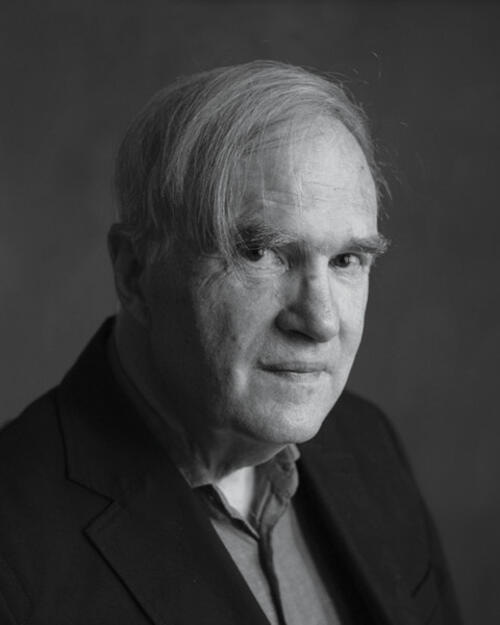
The resident in question, Gordon Walmsley ’71, shook my hand and greeted me with a thick Louisiana accent. Walmsley is a poet, the author of 11 books, and he’s lived in Copenhagen for close to 40 years. He grew up in New Orleans, a city of jazz, decadence, and sweltering heat, and where, as Walmsley puts it, “if you can trace your family back more than five generations, stop. You don’t want to know where they came from.”
Walmsley chose Princeton because his father and brother had gone there, but really because he was “in love with F. Scott Fitzgerald [1917] at the time.” He wrote for The Daily Princetonian and majored in German, and remembers when, in his junior year, Bob Dylan came to campus to receive an honorary degree, an event the musician referenced in his song, “The Day of Locusts.” “They wanted me to be in the creative writing course,” Walmsley says, “but I didn’t have anything to write about. I mean, what was my life at the age of 19?”
In an unconventional act of rebellion, Walmsley went to law school next. “My parents tried to talk me out of it,” he says. “They said, ‘This is not you.’ And I said, ‘You don’t know what you’re talking about.’” Once he graduated, he decided it was time to grow up and start writing poetry.
Walmsley moved to Guatemala; his friends said he’d love it since it was “exotic and cheap.” It was 1980, and the country was in the throes of a 36-year civil war. “It was this paradox of it being a very beautiful place, and also a horrible place where they were torturing people and eradicating the Indigenous population,” he remembers. “It was really Guatemala that made me a poet.” Walmsley’s first book of poems, Kinesis, written during his time in Guatemala, was published in 1983.
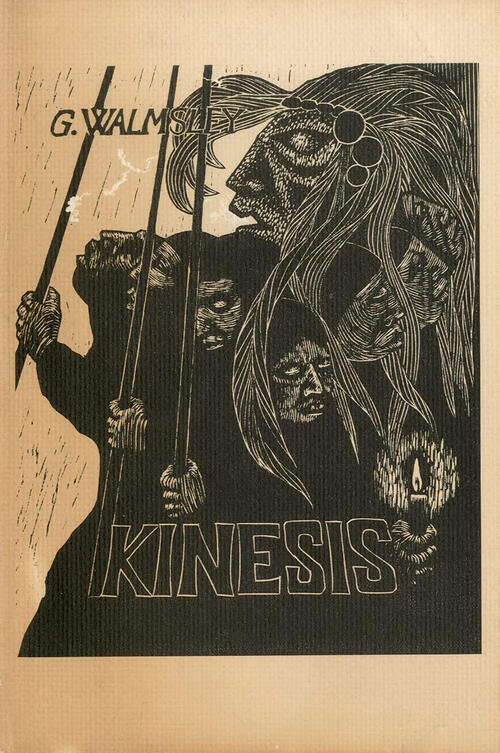
The artwork for Kinesis is a series of woodcut prints of the Indigenous Guatemalan population by Jørn Bie, a Danish artist who was living in Antigua at the time. When Walmsley approached Bie, asking him to illustrate the book, Bie agreed on the condition that Walmsley accompany him to Denmark to put the project together. After they published the book, Walmsley was back and forth to Denmark for a couple years before he settled there full time. “I think all Americans have a thing about Europe,” he says. “But it’s particularly enchanting when you fall in love with a place and then meet your wife.”
In Copenhagen, Walmsley had been taking classes in Eurythmy, a movement art that combines elements of dance, rhythm, and speech, when he met his wife, Annie. “I think she felt sorry for me,” he says, “I wasn’t a very nimble dancer.” She invited him to visit her family’s home on Bornholm, a picturesque Danish island in the Baltic Sea. The rest was history.
Walmsley’s nine other books touch on varying themes. Daisy: The Alchemical Adventures of a New Orleans Hermaphrodite reaches back to memories of New Orleans, while others, including The Braille of the Sea, are much more connected to Scandinavia.
Though Walmsley is not a native of Denmark, the city is part of him, and he feels organically part of it. “Denmark is where I feel most at home,” he says.
Authenticity is at the heart of who Walmsley is, and he defines it as a sense of moving toward the truth. “Some people will say, ‘There is no truth.’ But if there’s no truth, there’s no bullshit, and we know that’s not true,” he says. Walmsley is full of wisdom like this.
When asked what he’s writing about now, he says, “I won’t know until it’s finished. I never sit down and say I’m going to write a poem about war or whatever. It develops as you do it. A process of becoming.”
The Latest
See all


Related News

With Prominent Journalists and Hoagies, the ‘Prince’ Celebrates 150 Years
A gala at the New York Historical raised roughly $400,000 for the independent student newspaper


No responses yet