

A Princeton Alum’s Guide to Working Remote From Anywhere in the World
Kalle Kamal Eko ’07, who during the pandemic seized the chance to work remotely, shares some lessons learned
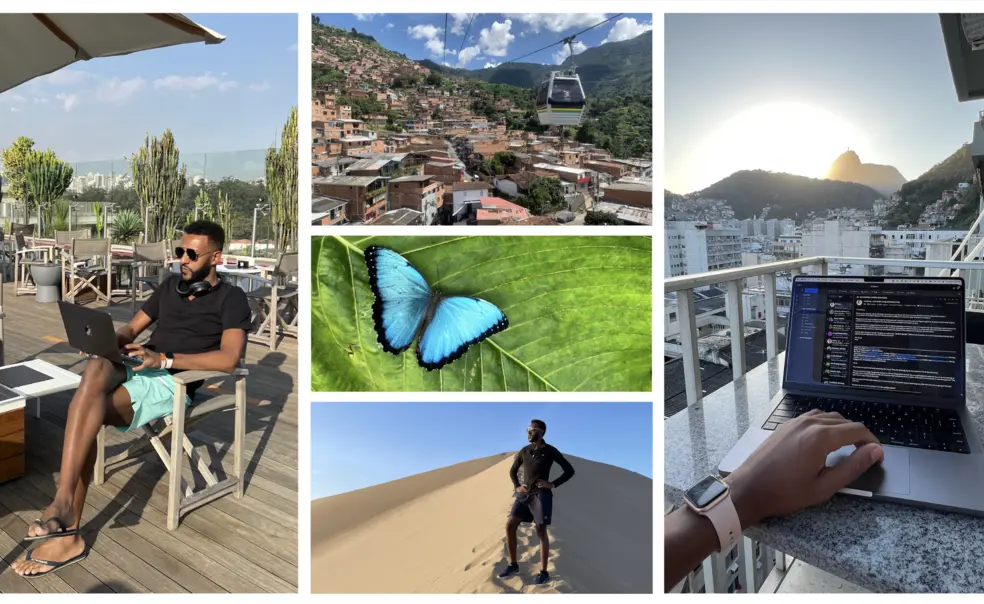

The COVID-19 pandemic forced a seismic shift in work culture, allowing millions of us to work from home for the first time. In 2019, about 8% of Americans worked remotely. That number spiked to 70% in 2020, according to Gallup. As weeks turned into months and widespread lockdowns began to lift, I wondered: What was keeping me in Chicago? With no partner, no children, no pets, and not even a plant in my small apartment, could I be one of those people to work remotely...anywhere?
Near the end of 2020, many countries reopened their borders, and in October I bought a one-way ticket to Medellin, Colombia, for $41 on Spirit Airlines. It’s a relatively affordable city that I had been to before, and I speak Spanish. I stayed for a month in a cozy neighborhood apartment that I found online the day before my trip. The landlady welcomed me warmly, as I was the first American to stay in her apartment since the pandemic. I followed strict local protocols by social distancing while working remotely, sometimes on outdoor rooftops.
After returning home for the holidays, I flew to Bucaramanga, Colombia, in January 2021 for $77 one way, then to Ecuador for $51, and later to Panama for $65. A new lifestyle was born. Over the last five years, I’ve worked remotely all over the world for weeks at a time, leading me to explore different cultures and develop a healthier, more productive work-life balance. Whether you are among the 26% of American employees that are fully remote these days, or have smaller ambitions — like spending a week taking video calls during the day and exploring the Afro-Brazilian mecca of Salvador, Brazil during your free time — here are five practical tips to help you embark on a remote adventure:
Create an ‘equation’ to find your ideal destination
I work in communications and marketing, which allows for greater flexibility to work remotely. Before heading anywhere, I always check the legal and tax implications of the places I am visiting. Some countries (e.g. Chile and Norway) have strict laws against tourists working remotely, even if they almost certainly don’t hunt down foreigners checking work emails at cafés. I would also recommend checking your employer’s remote work policy and making sure that your health insurance covers you abroad.
An ideal destination fits your budget, lies in a time zone that suits your work schedule, and matches your lifestyle. I loved the U.S. Virgin Islands’ weather and beaches, but lasted only a week after buying a poke bowl for $28 and spending way too much on housing. Working in Indonesia, Thailand, and Vietnam from 9 p.m. to 5 a.m. was brutal. I spent a few weeks working in Italy, Malta, and Spain and went to beaches and museums in the morning and worked late into the evening, which I found manageable with the time difference. But I find that places like Quito, Ecuador suit me best. It’s a city where you can easily find lunches for $3 to $4, within one time zone of my East Coast home office, and close to volcanoes, forests, and thermal baths.
Keeping routines (going to the gym) and identifying key institutions nearby (a go-to coffee shop) helps me hit the ground running in new places. I’ve also found that establishing a clear line between my work and personal time allows me to be more productive so I can fully enjoy my time after I close my laptop.
Look for remote positions or make your own

Looking for a partially or fully remote job is a job in itself, with relatively few opportunities these days. I took on this task in January 2024 in Côte D’Ivoire while freelancing for an online soccer magazine at the African Cup of Nations. Over the course of a month, I spent my days applying and interviewing for jobs, and then evenings at trainings and matches. (Tip: I found my last two career opportunities on LinkedIn, filtering for remote work.) What would have been a stressful search during a dreary winter in the U.S. ended with me getting a full-time remote offer and serendipitously dancing on the streets of Abidjan with locals while the home team won match after electrifying match, and eventually the championship.
Freelancing keeps remote workers afloat worldwide. If you can’t freelance and aren’t fully remote, but have some hybrid flexibility, persuading your current employer to skip a few in-office days might make trips for a week or more feasible.
Find a second home base
I gave up my Lake Shore Drive apartment and am now based in Dallas. It’s where my sister lives, has a major international airport, and is centrally located. But I really enjoy one international destination in particular: Colombia. It is visa free for U.S. citizens, within an hour’s time difference from the East Coast, and a quick direct flight to other Latin American destinations. I love Colombia’s vibrant culture and nature escapes, and my time there has helped me to become fluent in Spanish, building on the classes I took at Princeton and years of learning in Chicago and traveling throughout Latin America.
It goes without saying, but a second base should have reliable internet (always use a secure connection or VPN) and good coworking spaces or cafés. For this reason, I avoid working on small Caribbean islands like San Andres and opt instead for destinations like Bucaramanga, a large city in northeastern Colombia known for its beautiful parks and great weather.
Get a local SIM card or eSIM to tether your computer to and manage that important Teams call in case the power goes out. It’s far cheaper than using international roaming. And always watch where you pull out your phone to use a translator app or call a ride share — even in safe neighborhoods.
Plug into the local community
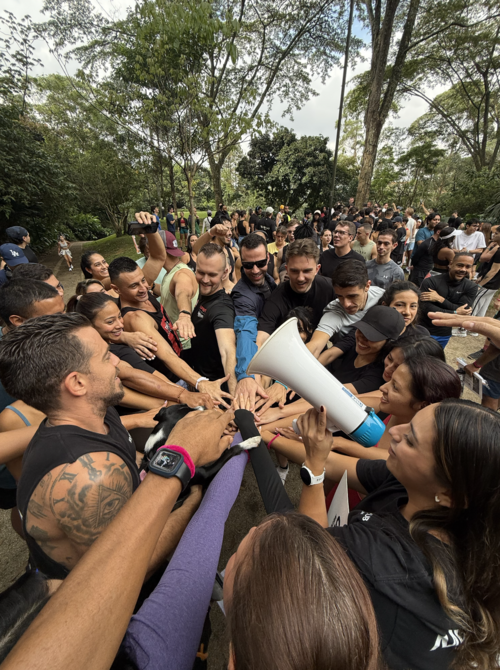
Culture shock is real, for Westerners and locals. I’ve personally seen Americans behave badly abroad, pricing out locals and expecting them to speak English in places like Mexico City. But many of us are earnest and respectful, genuinely connecting with the culture and creating a positive ripple effect for locals. I have gone to local restaurants that few Americans visit in Arequipa, Peru, one of Peru’s culinary capitals, celebrated Afro-Colombian culture during Carnaval in Barranquilla, Colombia, and once did a media interview in Portuguese in São Paulo, Brazil during the 2022 World Cup. Being a good ambassador, learning key phrases in the local language, tipping well, and gracefully accepting inconveniences and misunderstandings can make experiences more positive for everyone.
The flip side of exploring another culture? Being away from your own can lead to feelings of isolation. I don’t mind going weeks without speaking English in person, but I’ve found it important to find community through coworking spaces, Facebook groups, and social clubs such as the Medellin Run Club, where I volunteer every week when I’m in Medellin. I also enjoy staying connected with people on Instagram and hosting friends from the United States for a week or more. In Cartagena, Colombia, we work during the day and enjoy our evenings and weekends just as we would at home — with happy hours on tropical rooftops instead of in New York City dining sheds, and weekend island hopping in the Caribbean instead of boat parties on Chicago’s Lake Michigan.
Choose your own adventure
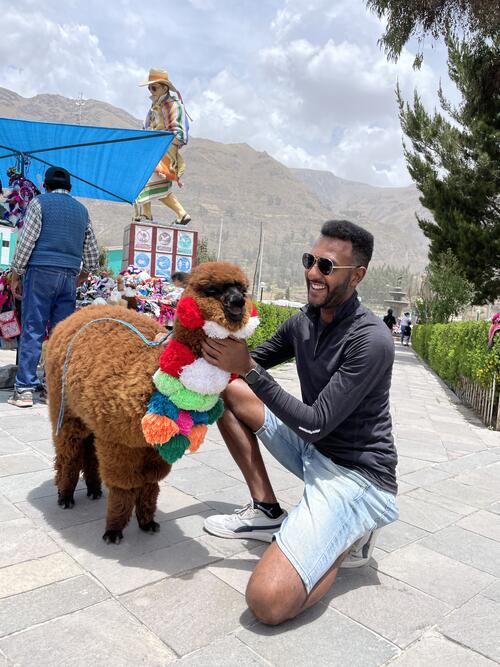
You can put in as much research on a destination as you would for a Princeton senior thesis (and AI prompts can help build your itinerary), but your adventure starts when you close your computer and embrace spontaneity.
Cali, Colombia is the world capital of salsa dancing, and my classes start at 6:30 p.m. on Mondays. I’ve enjoyed sandboarding on Saturdays in Peru’s Ica Desert, Sugarloaf Sundays on the iconic mountain in Rio de Janeiro, Brazil, and saw llamas and Incan ruins for the first time in Ingapirca, Ecuador. I’ve kept old routines (like yoga) and adopted new ones (weekly haircuts). Barbers in Latin America are cheaper and, in my opinion, better. Physically, I feel better, which I credit to eating food that is less processed than in the United States, and to getting a lot more vitamin D and vitamin Sea.
Manejar los tiempos is a phrase in Spanish that roughly translates to “managing your time.” Over the last five years I’ve managed my lifestyle, supporting my work productivity while fundamentally enriching my life. If you’ve ever dreamt of changing the view from your office window, the world is more open than ever. The only question is: Where will you be when you log on next?





No responses yet