

Princeton’s Nepali Students Advocate for Climate Justice

For students in the relatively new Nepali Society at Princeton, the August flash floods that killed more than 1,400 people along the China-Nepal border were not just tragedies, they were a clear example of climate injustice.
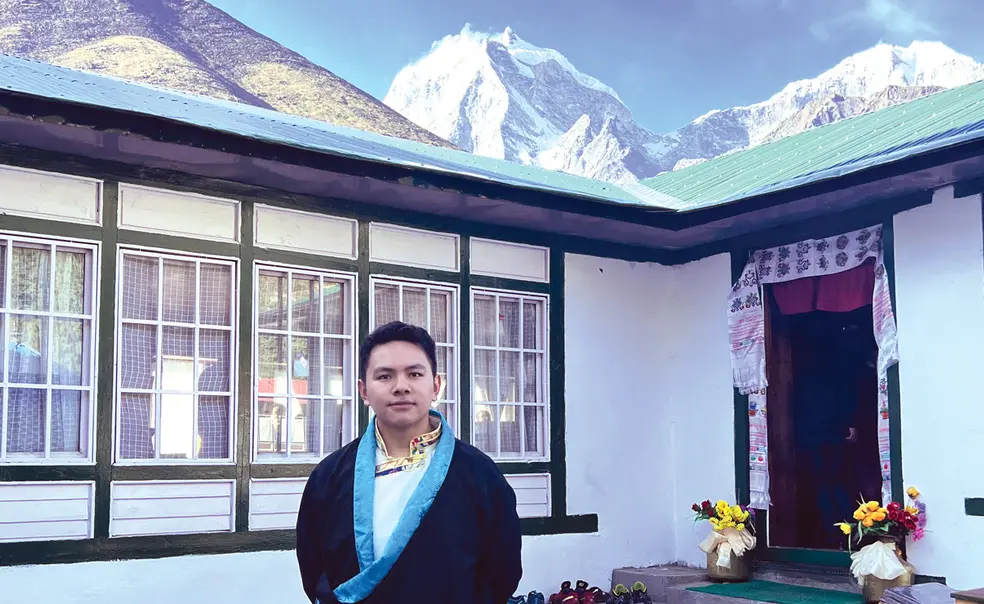
“Nepal only contributes less than 1% of global greenhouse gases, but it faces the brunt of climate change disasters,” said Tenzing Sherpa ’27, a Nepali American and U.S. Air Force veteran who was raised near the Mount Everest region.
According to researchers from World Weather Attribution, long-term rising temperatures destabilized mountain slopes, triggering the destructive flash floods.
Sherpa and other students in the Nepali Society, which has 11 members, initially sought to raise money for Nepal, but because of a lengthy University approval process for fundraising, the group instead organized a candlelight vigil outside of Firestone Library and a community dinner to honor the more than 84,000 lives affected by the flooding on Sept. 24. Members also directed those interested in donating to the Nepali Prime Minister’s Disaster Relief Fund.
Sherpa comes from the Sherpa community of mountaineers who perform the vital and dangerous work of guiding visitors up and down the Himalayan mountains. He knows of distant relatives who have died from avalanches.
He also knows that, unlike in Switzerland or Norway, his community lacks monitoring systems to warn residents of danger.
For his senior thesis in the computer science department, Sherpa is hoping to use techniques developed by researchers at the Institute for Snow and Avalanche Research in Switzerland to analyze satellite data from the region and create a machine learning model that can predict avalanches. Swiss researchers collected data from more than 24,000 avalanches between 2018 and 2019 to train their detection model. The challenge for Sherpa is to replicate this research in a data-scarce environment like the Himalayas where “there are only about 16 known data points.”
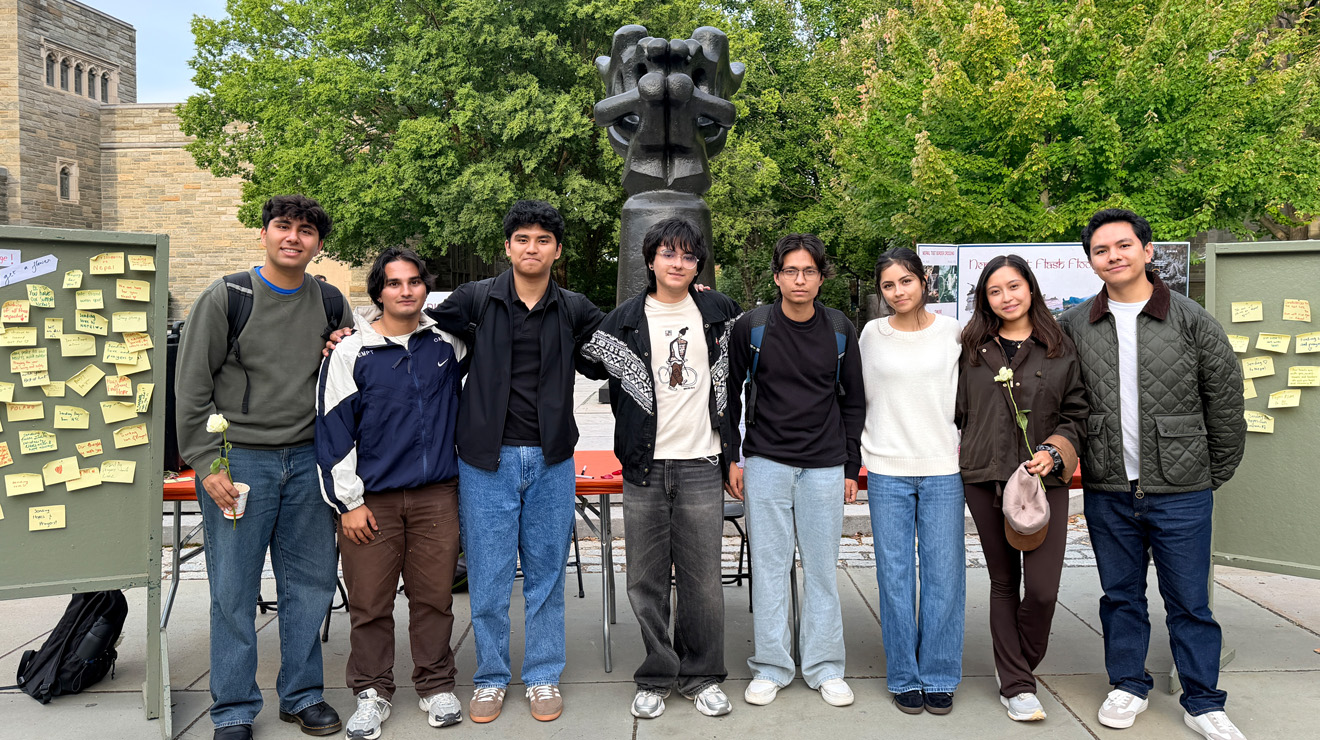
Sakshyam Pokharel ’28, another member of the Nepali Society who grew up in Kathmandu, said he struggles with the inequalities between his home country and Princeton.
“The amount of resources that we have [at Princeton], I think people are quite afraid to acknowledge it,” he said. “Because if you’re not using it to the fullest extent, maybe you’re misusing it, right? You’re not doing everything in your power to make the most out of it.”
Pokharel wants to pursue a Ph.D. in quantitative policymaking and one day start a research institute in Nepal to contribute to more effective governance.
An operations research and financial engineering major, Pokharel is familiar with the approach to effective altruism associated with professor emeritus Peter Singer: Make a lot of money and then give it away for good. But he believes “there’s a lot you can do as a single person that requires not a lot of capital, not a lot of access, that still changes lives of so many people.”
The summer after high school, Pokharel worked as a debate instructor for the Kathmandu Pragya Kunja School, traveling to rural parts of the country to teach and organize workshops for kids from underprivileged backgrounds. Despite having “no money to [his] name, working in an organization that also had very little money,” Pokharel felt he had made a difference in his students’ lives.
He also learned how to mobilize people during his time at the school and says he can leverage the knowledge and opportunities accrued at Princeton for “things of much greater scale and intensity like political change, climate activism.”
Last September, youth protesters in Nepal toppled the country’s long-prevailing political powers and ushered in a new government willing to reform and address the climate crisis, which the new Prime Minister Balendra Shah framed as an issue of climate justice in his widely shared September address to the United Nations General Assembly.
Sherpa hopes to work with the new government to develop and implement his avalanche detection system.
“Before, it wasn’t even an option. There was so much corruption and bureaucratic maneuvers that you have to do,” he said. “These days, I think it’s a little easier.”
The Latest
See all


Related News


These Young Alumni Balance Tech Careers and Musical Ambitions
‘...I realized that I probably wanted to live a life where I had the opportunity to pursue what I felt like was my purpose,’ says Naaji Hylton ’22

AI and the End of the World
As warnings about artificial intelligence grow louder, four Princeton experts debate how worried we should be

No responses yet