

Professor Ada Ferrer Is Telling Her Family’s Cuba Migration Trauma Story
Ferrer calls her new book ‘a plea for forgiveness from the people hurt by our leaving’
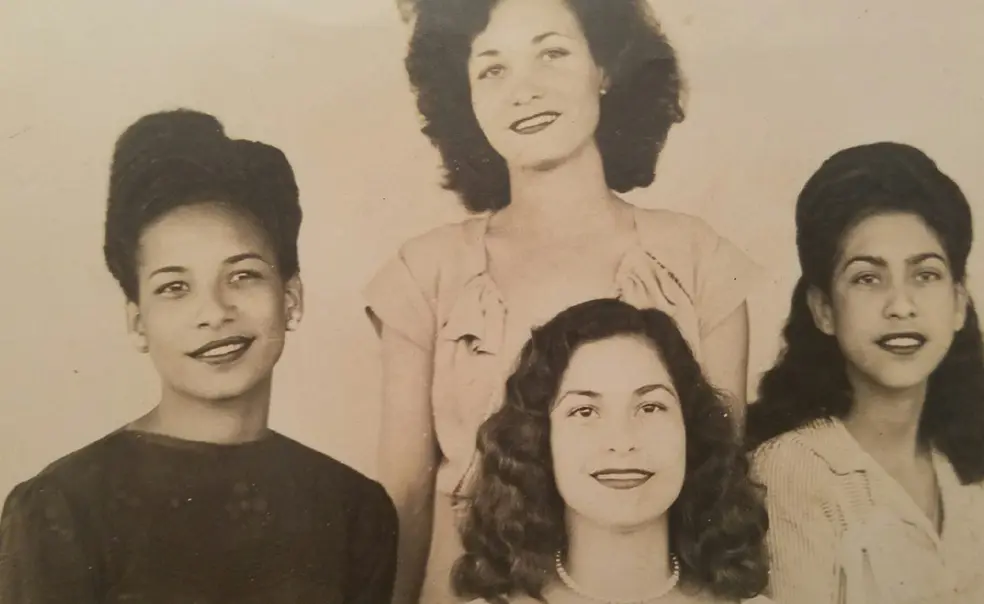

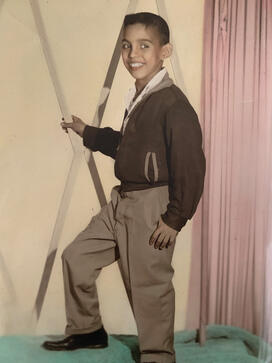
In 1963, in the wake of the Cuban Revolution, Ada Ferrer’s mother brought her infant daughter to the United States and reluctantly left Ada’s 9-year-old half-brother, Poly, with relatives in Cuba. Poly’s father had refused to let him leave the island. But the separation, never meant to be permanent, would warp their family’s life for decades.
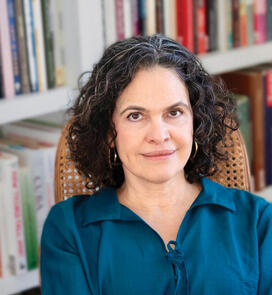
“I grew up knowing that I was taken, and my brother was left behind,” says Ferrer, a history professor at Princeton. When, in his 20s, Poly finally arrived in Florida with the 1980 Mariel boatlift, a government-sanctioned mass emigration from Cuba, his emotional wounds were still raw. “He said he was here to ruin my mother’s life, the way that she had ruined his by leaving,” Ferrer says. “And I saw all his struggles and all his hardship, and the toll that they took on him, but also the toll they took on my mother and the family.”
Poly’s story of migration and trauma, told in part through his letters, is at the core of Ferrer’s new book, Keeper of My Kin: Memoir of an Immigrant Daughter (Scribner), published in May. It also has shaped Ferrer’s study of Cuba’s turbulent past and the country’s shifting relationship with the United States. Her previous book, Cuba: An American History, won the 2022 Pulitzer Prize for History.
“My working on Cuba was about understanding the family, understanding myself,” she says. “I know that at the very heart of our family is this original sin.” She knew, too, that she would write about it, and she urged her parents to throw nothing out. They bequeathed her an invaluable family archive, which she supplemented with more traditional archival research in Cuba and the United States.
The deaths of most of the story’s principals permitted Ferrer a degree of candor. “I would have been scared to write it while my brother was still alive,” she says. Her senior status as a historian was another prerequisite. “You feel like you need to prove yourself as a scholar at first,” she says. “It’s interesting that more historians and scholars are starting to do this kind of work now.”
Aided by the genealogist Lourdes del Pino, who investigated the ancestry of Pope Leo XIV, Ferrer traces her maternal lineage to a kidnapped and enslaved African ancestor, Encarnación García. In Cuba, she completes another piece of her family puzzle by meeting a paternal half-brother, Juan José. In a parallel to Poly’s story, he, too, was abandoned by a parent: Ada’s father declined to marry the boy’s mother and had minimal contact with his son for decades.
But there the two narrative arcs diverged. Poly was an elementary school dropout, struggled with his mental health and violent impulses, and spent time in prison. Meanwhile, Juan José thrived. He became a professor of Spanish language and literature, married and had a family, and led a seemingly happy life. He and his father eventually reconnected, mostly by letters, and developed a warm, loving relationship.
By contrast, Poly was slow to forgive his mother, even though she had never wanted to leave him. Over time, they began talking regularly. “She was feeling much better about him at the end and vice versa,” Ferrer says, “but there was still so much pain there.”
In 2021, Ferrer, then a professor at New York University, developed a “road map” for the memoir in a New Yorker essay, “My Brother’s Keeper.” She remembers telling her editor that the story “has no monsters or saints.”
The memoir serves, above all, as a “love letter” to Ferrer’s family, as well as to the Cuban people more generally. “It is a plea for forgiveness from the people hurt by our leaving,” she writes, “a clamoring to the wind that we were here, that we still are, that we always will be.”
The book also arrives at a time when immigration, in all its complexity, is prominent in the national conversation. “There’s such a connection between older immigration stories and present immigration stories. I want to humanize the question more,” Ferrer says. “These are real lives and real people and real relationships and families that right now are vulnerable in a way that feels unprecedented to me.”
Her personal history is one reason, Ferrer says, that she approaches her craft the way she does. “My idea is always to write what I call ‘peopled histories’ that are not about abstract categories. They’re about real people acting in ways that don’t always make sense” and aren’t predictable merely by their class identity, Ferrer says.
“I want people to think about history in a way that feels more intimate. We live our lives embedded in history,” she says. “I’m writing for all these people who are now gone. I didn’t want to leave my parents behind, even though I was dying to leave them behind. I didn’t want to remain in that world, but there was a part of me that always wanted to bring them with me, which is also part of doing what I do.
“In some sense,” she adds, “I write to make amends, meaning I didn’t forget.”
The Latest
See all


Related News

Janice Lee ’09 Worked to Renovate One of Hollywood’s Best-Kept Secrets
An engineer by training, Lee has been deputy project manager on the renovation of Hollywood Burbank Airport

1 Response
Sabina Clarke
4 Months AgoRelatable Story
I can very well relate to this story in a personal way — the pain of separation never goes away