

Robert Hammond ’92 Hosted a Sauna Festival During a Brooklyn Blizzard

On Sunday, Feb. 22, a bomb blizzard struck New York City. With 15 inches of snow landing in Central Park and more than 22 inches on parts of Long Island, most city residents stayed home. It was a good day to dig up some canned beans from the cupboard and binge-watch the viral Heated Rivalry.
But one group of New Yorkers had a different idea: They cracked open their summer closets, pulled out whichever bathing suit they hated the least, and trekked to Brooklyn’s Domino Park. A declared state of emergency wasn’t enough to stop these so-called healthy hedonists. By midmorning, Culture of Bathe-ing was in full swing.
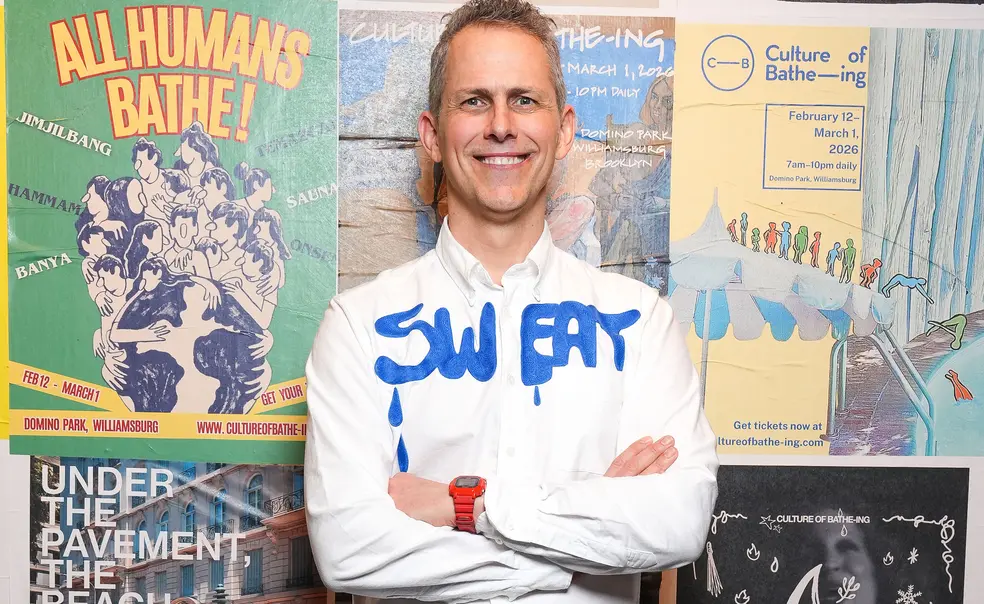
Somewhere in the crowd of sauna-philes was Robert Hammond ’92. This 17-day Williamsburg pop-up was his latest passion project. Many people first discovered Hammond’s tendency to “make the crazy credible” when, just six years out of Princeton, at age 29, he co-founded Friends of the High Line. Built along a 1.45 mile stretch of the city’s West Side, the High Line first opened in 2009. The elevated greenway has continued to attract roughly eight million visitors per year — more than The Metropolitan Museum of Art. Now, “it seems like a really good idea, and obvious, but at the time, people thought it was really crazy,” Hammond says.
The same is true of his most recent venture: On the last day of the festival, Hammond stepped off to the side to chat with Dmitry Shapiro, co-owner of Manhattan’s Russian & Turkish Baths. “When you told me about this, I thought you were crazy, and that you would never get it done,” Shapiro told him. “You got it done, and you’re still crazy.”
In addition to various side projects, Hammond has a day job. As president of Therme Group’s U.S. branch, Hammond is reimagining the Roman baths for contemporary cities. Austrian-founded Therme Group, a large-scale well-being destination developer, sponsors Culture of Bathe-ing. Hammond is quick to note that the festival isn’t reflective of the full Therme experience, but rather, its essential message: that well-being can be fun.
He says that what’s happening with bathing today is what happened with yoga when he first moved to New York in the ’90s. As it gains popularity, Hammond wants to preserve the magic of bathing. “The physical, the spiritual, and the social,” he says — quoting Mikkel Aaland, the “godfather of sweat” — are the three components of a good sweat. “Culture of Bathe-ing is about the last two — the spiritual and the social.”
Early birds arrived right at 7 a.m., when the festival opened (noon on weekdays) — and night owls kept sweating right up until 10 p.m. close. Fifteen saunas sat side-by-side in Domino Park, each one architecturally distinct. One was modeled inside a vintage airstream; another, a cedar barrel. Most of the structures had at least one glass wall, typically on their west side, giving bathers a chance to gaze out at the frozen East River.
As the storm raged on, the schedule of events unfolded as planned. Along with guided breathwork, herbal rituals, and daily meditation, Secular Sabbath, a project focused on healing through ambient music, led a morning sound journey. Renowned psychoanalyst Jamieson Webster ran two workshops in “Liberatory Orgasmic Breath.” Laced throughout the day were Aufguss shows, wherein Aufgussmeisters (“sauna masters”) used towels to direct scented steam onto guests. Eyes closed, New Yorkers sat shoulder-to-shoulder, clapping, swaying, and stomping into the night.
“My greatest skill,” Hammond says, “is finding really smart people. Every single thing I’ve ever done, it’s all come from talking to other people.” He talked to people at Therme, people in the sauna world, bathers, performers, organizers, and builders. At some point, with plans for the festival moving forward, he’d been asked for a logo. But Hammond didn’t want one. Instead, he reached out to around 200 people, and told them, “Make me a poster for this event.”
His 8-year-old son made one. A girl in his son’s second grade class made one. Dmitry Shapiro made one. Even Victoria Tentler-Krylov, famed for her New Yorker covers, made one. The posters were Hammond’s favorite part of the whole endeavor. Any time a permit fell through, or the project went over budget, looking at the posters reinvigorated him.
At 10 p.m. on Sunday night, bathers filed out of saunas, toweling off in the cold before traipsing through the snow and back into bed. Hammond always intended for Culture of Bathe-ing to be ephemeral — the festival closed March 1 with no plans for a rerun. The few thousand lucky enough to attend can say they bore witness to a once-in-a lifetime bather’s Woodstock. Hammond, meanwhile, looks forward to seeing bathing continue to grow, in both scale and accessibility.
The Latest
See all


Related News
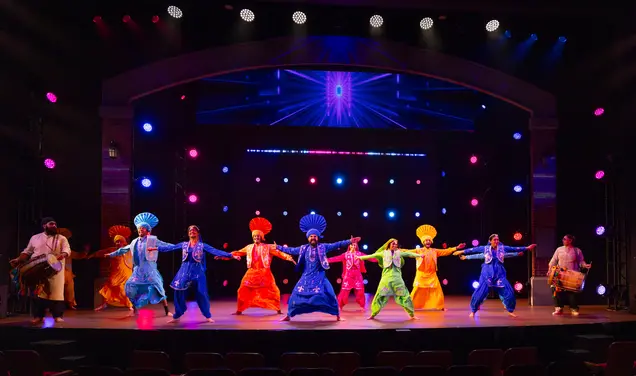
McCarter Theatre’s First South Asian Musical Took Me Back to Forbes Basement
A Beat of Our Own is about a college dance team not unlike Princeton South Asian Theatrics


1 Response
George Gorman ’63
2 Months AgoSafe and Sure Vitality Enhancers
Wonderful! Romans, Japanese, and even Churchill all loved and/or still love bathe-ing, as do I. Saunas, hot tubs, cold plunges, and ocean swimming are all safe and sure vitality enhancers!