

The Ultimate Newport, Rhode Island, Itinerary for History Lovers

As the U.S. continues to celebrate its 250th anniversary, Newport, Rhode Island, offers a unique lens into the evolution of American aspiration. Though I'm from Texas, I learned this last summer during a visit with friends who are Newport natives and gave me an insider look at all the city has to offer. For nearly three centuries, this city-by-the-sea has been a stage where Americans experiment. It has a walkable shoreline in which you can both relax and absorb the history of several versions of America all in one day.
In that sense, it’s not only a destination but also a place that tells a story of Americans from the colonial era to the present — serving as a reflection of changing American ideals. Today, its preserved architecture, waterfront landscapes, and enduring traditions make it one of the nation’s most compelling living museums. Here are a few ways to dive into American history in Newport:
Scenic Hike and Sunset

Long before Newport became synonymous with mansions and yacht clubs, it attracted visitors for its natural environment. During the 18th century, Americans believed ocean air and saltwater possessed therapeutic qualities. Wealthy families from Boston, New York, and Philadelphia traveled to Newport to escape summer heat and illness while enjoying the cooling breezes of Narragansett Bay. This early form of wellness tourism established Newport as one of America’s first resort destinations, and it remains popular today.
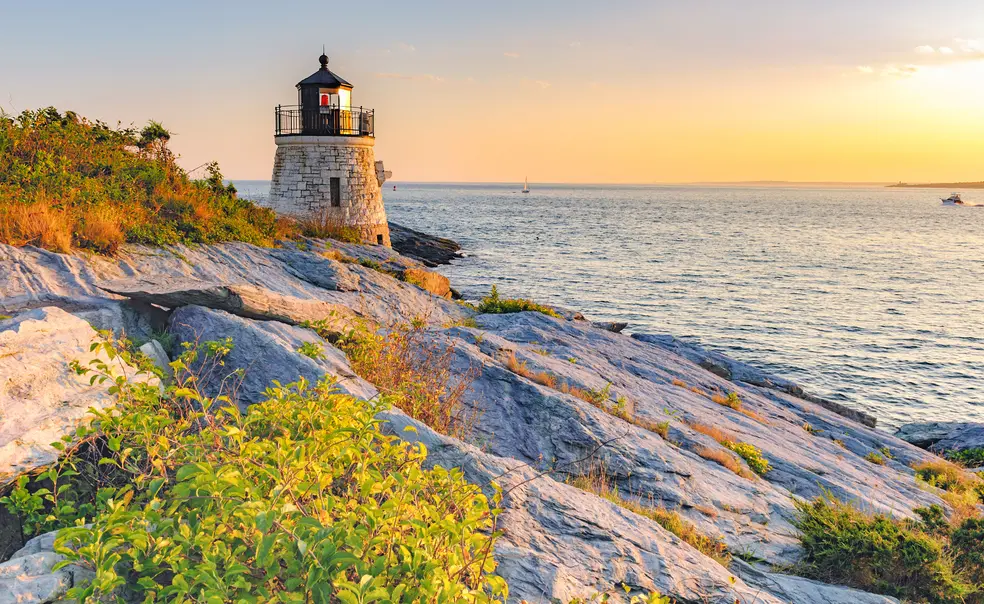
Explore the Cliff Walk, a 3½ mile coastal path that runs between ocean cliffs and the back of the Gilded Age mansions. This is the most iconic and photogenic public path. Pro tip: Some parts of the path are paved and easy to navigate, while others are rugged rock, so consider good shoes if you want to walk the whole path.
View the sunset on the lawn at Castle Hill Inn. The landscape itself becomes the event. This ritual involves arriving in the late afternoon, sitting in Adirondack chairs overlooking Narragansett Bay, and watching the day end as sailboats move across the harbor. Pro tip: Seats are first come, first served, so try to get there with enough time to get settled.
‘Cottages’ of the Gilded Age
The 19th century transformed Newport from a modest seaside retreat into the center of elite American summer life. After the Revolutionary War, the city’s economy declined, but artists, writers, and wealthy families eventually rediscovered its charm. By the late 19th century, industrial fortunes had arrived in force. Prominent families including the Vanderbilts, Astors, and Berwinds constructed enormous summer residences along Bellevue Avenue. Although these estates became known as “cottages,” they were among the grandest private homes in America. Today visitors can step back in time by touring these grandiose homes.
- Take the Newport Trolley Tour, a narrated sightseeing ride that loops through Ocean Drive, one of the most scenic coastal roads in the United States. The tour guide is an excellent source of historical context and gossip, as many of the institutions in Newport still frown upon the storied tales being written! Pro tip: Ask about Jackie and John F. Kennedy’s wedding, for example, for an interesting tale.
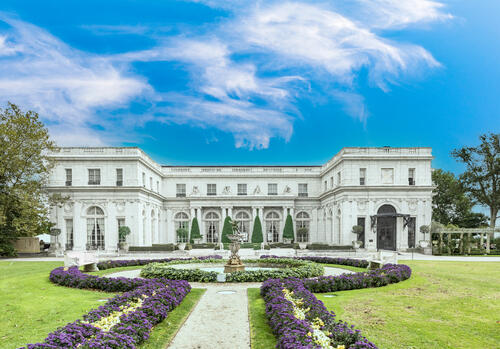
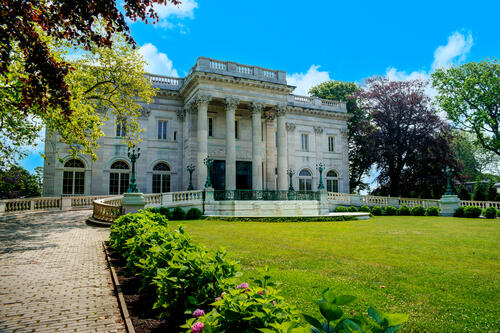
- Many of the most famous “cottages” on Bellevue Avenue are open as museum estates managed by the Preservation Society. After the trolley tour of the entire area on Ocean Avenue and then get dropped off to tour the insides of the estates, including The Breakers (1895), Marble House (1892), Rosecliff (1902), and Rough Point (the house and gardens of Doris Duke).
- Princeton wink: The 1974 film adaptation of F. Scott Fitzgerald 1917’s The Great Gatsby was filmed at Rosecliff. The estate’s grand ballroom and oceanfront terrace made a perfect backdrop for Gatsby’s wild Jazz Age parties. The iconic scene where revelers dance in the backyard fountain was filmed on the grounds.
Summering, Sailing, and Song
By the late 19th and early 20th centuries, Newport helped define what Americans came to understand as “summering.” The city’s social season revolved around sailing, tennis, garden parties, music, and cultural events that attracted visitors from across the country. Visitors can embody the spirit of summering through these experiences:
- Sailing remains central to Newport’s identity. Narragansett Bay provides ideal conditions for competitive and recreational sailing. Newport hosted the America’s Cup for more than 50 years and is home to the famous Newport-Bermuda Race. The city’s maritime traditions continue through regattas, harbor cruises, and sailing schools that draw visitors every summer. Book a Newport Classic Cruise for a two-hour sail through Narragansett Bay and visit the Sailing Museum in the historic Armory on Thames Street, opened in 2022 as the National Sailing Hall of Fame’s permanent home.
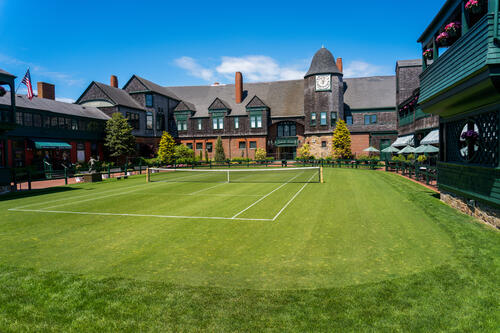
- Tennis occupies a similarly important place in Newport’s history. The International Tennis Hall of Fame, located in the historic Newport Casino, stands on the site where the first U.S. National Lawn Tennis Championships were held in 1881. The venue helped establish tennis as a major American sport.
- Right next door is the Audrain Auto Museum, which has added a distinctive note to the city’s cultural life, with rotating exhibitions of rare and significant automobiles, often organized around themes such as Porsche racing cars, supercars, mini cars, or automotive design. Seasonal motoring events culminate in the annual Audrian Newport Concours and Motor Week.
- Music also became part of Newport’s cultural legacy. The Newport Jazz Festival, founded in 1954, introduced generations of audiences to artists such as Louis Armstrong, Duke Ellington, Ella Fitzgerald, and Miles Davis. Today, the festival remains one of the most celebrated events in American music. The Newport Folk Festival takes place at the historic Fort Adams State Park and celebrates folk, roots, and Americana traditions. It is also where Bob Dylan famously “went electric” in 1965.
Preserving the Past
What distinguishes Newport from many of the newer resort communities in America is its commitment to preservation, thanks to the Preservation Society of Newport County, which allows visitors to experience centuries of American history in a remarkably intact setting. To get a sense of the different eras in American history and see history not in a museum, but woven into everyday life, check out:
- Touro Synagogue, the oldest synagogue in the United States. In 1790, George Washington addressed Newport’s Jewish community in a letter that remains one of the nation’s most important statements on religious liberty.
- The Redwood Library and Athenaeum, America’s oldest lending library, further illustrates Newport’s role in preserving the intellectual and cultural history of the nation.
- White Horse Tavern, which opened its doors in 1673, is America’s oldest restaurant. The walls have seen revolutions — political, social, and cocktail-related.
The Latest
See all


Related News


Janice Lee ’09 Worked to Renovate One of Hollywood’s Best-Kept Secrets
An engineer by training, Lee has been deputy project manager on the renovation of Hollywood Burbank Airport


1 Response
Brian Foran ’01
1 Month AgoAdding a Favorite Hike to the List
Great recommendations. Sachuest Point is the main one I’d add for a hike/nature walk really any time of day.