

Visiting Professor Kevin Sack Researches Black Faith Amid Violence

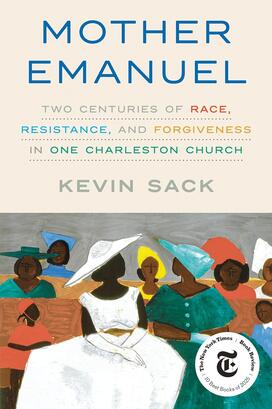
The book: On June 17, 2015, a 21-year-old white supremacist killed nine people during a Bible study at Emanuel African Methodist Episcopal Church in Charleston, South Carolina. While the story made national headlines, in Mother Emanuel (Crown) Sack zooms out to look at the history of the first AME church in the South to explore what led up to the events that unfolded that tragic day. Through the experiences of this one congregation, Sack tells the story of Black perseverance in Charleston from the first Black families to settle into the city to the Civil War, the Civil Rights Movement, and present day. Mother Emanuel details the rich and complex history of Black faith in the face of white violence.
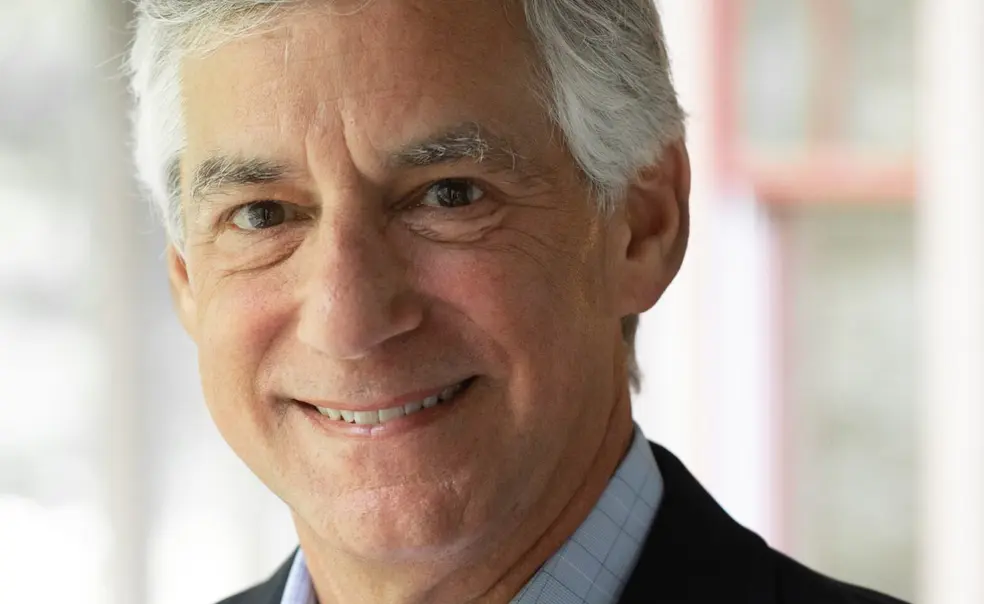
The author: Kevin Sack is a visiting lecturer in Princeton’s Humanities Council and a Ferris Professor of Journalism. Sack was a journalist for The New York Times for 30 years specializing in long-form and investigative reporting related to race. He’s also written for the Los Angeles Times and The Atlanta Journal-Constitution. His course at Princeton, America in Black and White: Approaches to Telling the Story, explores reporting and writing on race relations.
Excerpt:
The Open Door
“For in the day of trouble he will keep me safe in his dwelling; he will hide me in the shelter of
his sacred tent and set me high upon a rock.” — Psalm 27:5 (NIV)
Preachers like to proclaim from the pulpit that the doors of the church are always open. As with so much that preachers proclaim, this can intend more than one meaning. It is on the one hand a spiritual invitation, a welcome, an insistence that there is but one body of Christ, and that all are encouraged to join it, the faithful and fallen alike, the well-heeled alongside the unwashed. Christian belief holds that it is never too late to walk the path of righteousness, or to pass through the gates of salvation. And while the physical church may keep office hours, the succor provided by faith and the embrace of fellow adherents is available at all times, or at least is supposed to be.
In the African American church, the open-doors metaphor conveys something extra, an assertion of defiance, and resilience. It is meant to affirm the place of the church as a refuge, both physically and spiritually, not just from the universal stresses of life but from the particular ones born of four hundred years of enslavement, repression, and state-sanctioned discrimination. In these sanctuaries, it is a vow that the people of God will not be cleaved from their faith or their hope, not by centuries of subjugation or the basest attempts at dehumanization, not by dynamite secreted beneath church stairwells or Molotov cocktails hurled through stained glass.
At the most historic Black church in the South’s most historic city — Emanuel African Methodist Episcopal Church in Charleston, South Carolina — the gospel of the open door was not merely figurative. In the summer of 2015, it was not uncommon to find the weighty, wood-paneled double doors leading from the parking lot into the ground-level fellowship hall unlatched. They could be locked, of course, and a motion-activated security camera had been mounted recently above the doorway on a white stucco buttress. The imposing Gothic Revival edifice, built in the early 1890s, sat near the intersection of two busy downtown thoroughfares and a stone’s throw from Marion Square, the city’s central plaza. T-shirted tourists and College of Charleston students sometimes stumbled unwittingly into Bible studies and board meetings, and there had been concerns about homeless men seen wandering about. Nonetheless, the incessant activity in Emanuel’s fellowship hall, the coming and going of members to seniors’ luncheons and stewards’ meetings and choir rehearsals, dictated that the doors be kept open much of the time. So it was on the unholy night of June 17, 2015, when hate walked in without knocking.
What happened that night — the mass murder of nine innocent worshippers in one of the most horrific racist attacks in American history — catapulted “Mother Emanuel” to global prominence, its brilliant white façade and witch’s-hat steeple recognizable around the world. What happened two days later, when victims’ family members volunteered public expressions of forgiveness for the unrepentant killer, and two days after that, when ten thousand people of varied hues linked hands across the two-and-a-half-mile arc of the Ravenel Bridge, and five days after that, when the first Black president of the United States delivered a eulogy unlike any in the country’s experience, made for defining markers in America’s ongoing struggle with the psychosis of race. Once again, history had been made in Charleston, the slave port where nearly half of all captive Africans disembarked in North America and where the Civil War began at Fort Sumter.
Yet, unbeknownst to many, the oldest African Methodist Episcopal congregation in the South already had a backstory as remarkable as any of the nearly four hundred thousand church bodies in the United States, a captivating saga of resistance through faith that dated back two centuries. Charleston’s African Methodists had been pummeled time and again by man and by nature and still they rose, ever resurrected. Whether the killer fully appreciated it — and the limited evidence is that he did not — it very much mattered that he had selected this church as his target. Without provocation, he had attacked a historically sacred space, not while people were protesting but while they were praying. It was an assault not merely on the nine faithful who died and the five survivors and their families, but on an entire community, an entire people, a symbolic genocide, at least in intent. Although the authorities would not formally label it as such, it was an act of domestic terrorism with few parallels in the nation’s history.
By assailing a church, the killer connected his act to a long line of such desecrations, including the fatal bombing of Birmingham’s Sixteenth Street Baptist Church in 1963 and arson attacks against dozens of Black churches in the mid-1990s. The shooter’s target had been what Barack Obama, in his eulogy for Emanuel’s slain pastor, would call “our beating heart, the place where our dignity as a people is inviolate.” And yet, it had been violated, with premeditated deliberateness, a sickening rebuke to the fantasy of a “post-racial” America that briefly accompanied Obama’s election. Even before the white suspect’s identity and noxious rantings were discovered, it was clear that he had at least a surface understanding of the centrality of the Black church in the timeline of African American survival and self-determination. At some level, his purpose had been not simply to assail whichever Black people he happened to find inside. Rather, he took aim at the audacity of Black resistance to white supremacy, and the still-unrealized promise that 50 million African Americans might live without fear that their skin tone could cost them their lives. That threat had been real enough across nearly four centuries, in Charleston as elsewhere. Recent news of fatal shootings of unarmed Black men by white police officers, including that of Walter Scott two months earlier in neighboring North Charleston, had reinforced its durability.
As I came to learn about Emanuel AME while covering the aftermath of the massacre for The New York Times, it occurred to me that the journey that brought the church to that moment provided a unique vantage point, simultaneously microcosmic and panoramic, for surveying two centuries of African American life in Charleston and, by extension, across my native South. The church’s very founding had been an act of insurgency. But its culture of defiance had fluctuated over time, the crosscurrents exposing how the struggle for racial dignity competed in dynamic tension with the instinct for racial self-preservation. Emanuel had been an incubator and an agitator over a continuum long enough to show the connectedness of eras and movements across a vast expanse of African American history, from enslavement and Reconstruction to Jim Crow and the Civil Rights Movement to the Obama presidency and the Black Lives Matter summer of 2020. In tracing the congregation’s journey to June 2015 in the most caste-conscious of Southern cities — the center of the slave trade, the cauldron of nullification and secession, the birthplace of the Civil War — the epic tale of the Black church’s role in America’s uneven racial progress seemed to unfold all under one metaphorical roof.
It also seemed that by studying the church’s historical and theological origins, and those of its denomination, one might better understand the grace summoned by those who so quickly voiced mercy for the twenty-one-year-old racist who had just slaughtered their loved ones. Many found it almost impossible to process, including devout Christians. What did it really mean in the context of the Black church and of Black suffering? Was it a show of radical Black love or of regressive Black accommodation? For those unable to grasp it, President Obama made clear in his eulogy — before awing the crowd with an a cappella rendition of “Amazing Grace”— that the watchwords of African American faith were best translated through the prism of four hundred years of struggle.
Excerpted from MOTHER EMANUEL: Two Centuries of Race, Resistance, and Forgiveness in One Charleston Church by Kevin Sack. Copyright © 2025 by Kevin Sack. Published in the United States by Crown, an imprint of the Crown Publishing Group, a division of Penguin Random House LLC.
Reviews:
“Race, religion, and terror combine for an extraordinary story of America, the resilience of a people, and their capacity to forgive in order to live with unimaginable grief. A powerful book—especially for times such as these.”— Eddie S. Glaude, Jr. *97 bestselling author of Begin Again
“In Mother Emanuel, Sack puts forth a gripping exploration into how centuries of white supremacy impacted the church and the witness of faith against a deluge of hatred. … Poetic and captivating.” — Christianity Today
The Latest
See all


Related News
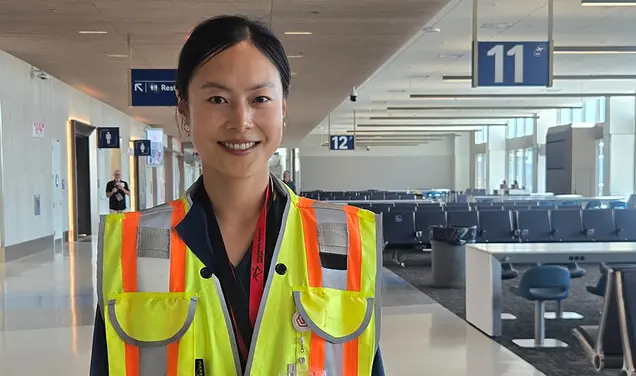
Janice Lee ’09 Worked to Renovate One of Hollywood’s Best-Kept Secrets
An engineer by training, Lee has been deputy project manager on the renovation of Hollywood Burbank Airport

No responses yet