

What Zimbabwean Students Taught Me About the Purpose of Art
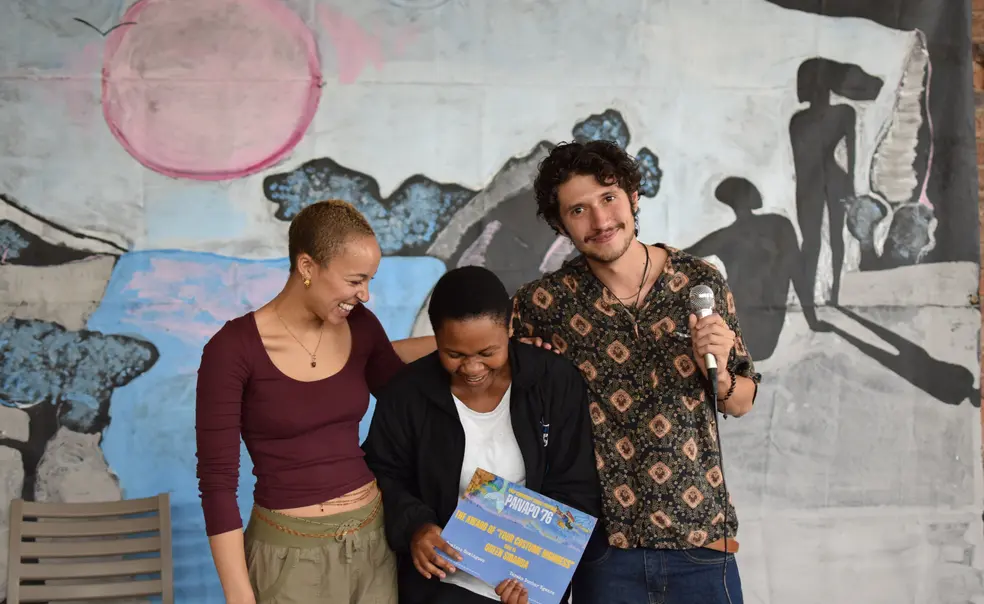


Dominic Dominguez ’25 is a Princeton in Africa Fellow and teacher at the United Students Achievers Program Community School in Marondera, Zimbabwe.
What is the impact of art? We consume so much content it’s hard not to feel that everything goes in one ear and out the other without leaving a trace. When I decided to put on a musical at the USAP Community School, I was hoping that its message might change the way people thought about religious acceptance and cultural representation. Instead, I found there was something more powerful in the act of performance itself, and the beauty of knowing someone you love is in the audience. I also discovered a new level of exhaustion known only to those who direct student theater.
The United Students Achievers Program (USAP) Community School is a nonprofit boarding school in rural Marondera that provides high-achieving low-income students quality education and college access. These 11th and 12th graders are brilliant and stressed out. Anyone who has stepped foot in a high-achieving environment will recognize the scent of pressure, hope, and shame that hangs in the air. USAP seniors start their days studying at 5 a.m., trying to get a head start on their six classes and senior thesis. They see their education as a ticket to a good college, a better life, and practical financial support for their families. But in this academic pressure cooker, students also crave creative expression. They arrange open mics and talent shows, aching to close their eyes and belt church songs or anonymous love poems in front of their peers. I saw their artistic potential and wanted to make something great with them.
When I talk to students about the movies they like and the media they connect with, I hear more about the film Black Panther than any other piece of so-called African media. Students even jokingly included Wakanda in their Africa Day celebration. This is why I was so excited to put on Paivapo ’76, a musical that takes place in Domboshava, Zimbabwe, during the country’s fight for independence against the British-descended Rhodesian government. The musical was written and produced by Zimbabwean-American Tanaka Dunbar Ngwara ’24 — who happens to be my girlfriend — for her senior thesis, and I sound designed it.
At Princeton, it was extraordinary because it authentically represented Zimbabwe and Africa in a foreign context. However, here in its homeland, the symbols and cultural motifs carry more weight and meaning. My greatest fear was that the piece’s central theme, the colonial erasure of African Traditional Religion (ATR), would spark student boycotts. One of the most difficult elements of culture shock for me has been immersion in a conservative Christian society where a random healthcare worker may try to convert you after you don’t laugh at his joke about saving people to get to heaven. Students at this school who practice ATR have been afraid to openly display symbols of their religion, and others mock and laugh at symbols of “witchcraft.” I was worried no one would want to play Svikiro (the spiritual medium) or dance at a ceremony to appease the Njuzu (water spirits).
However, when the show ended, there were 54 students and teacher assistants involved (more than half the school) and one drowning faculty member — me.
I found myself at the piano teaching harmonies like a choir teacher, even though I sing like a sick dog and haven’t read music since high school. Rehearsals had an 80% attendance rate, which had me crying to my mom and close to quitting. But hope was regained whenever I heard our bubbly lead — who had a pop star’s voice — memorizing her seven songs through recordings Tanaka made. The last week was the most incredible and sanity draining. I worked 103 hours in seven days. Our first run through was twice the length it was supposed to be, and by the end I was cackling drunkenly as our two leads stumbled through a 10-page scene they had one day to memorize. I was twitching in my seat opening night when the first song began, but as our chorus sang and moved in harmony a wave of euphoria washed over me.
The next day we packed into a bus and headed to the Arundel School in Harare. The school graciously let us use its auditorium for free so we could perform in a big city. In five hours, we restaged the entire show. At the end we danced together, bouncing like electric tennis balls, and my stage manager held the gravestone from a solemn funeral scene above his head like a trophy. Our students ran out to an audience mostly composed of the parents and siblings they had not seen for months. It was a heartwarming gift to see these families smiling together in the sun, and to tell parents what a pleasure it was to have their child in the show. That night I slept for 12 hours, in my khakis, on top of the covers, with the lights on.
When Tanaka and I decided to do this show, I had high-minded ideas about Zimbabwean representation, cultural expression, and the destigmatization of ATR. But I realized the most powerful thing we did was produce a high school musical and make it possible for parents to come watch their kids do something wonderful. We all just want our parents to be proud of us. Still, as the music-directing TA told me, “There are 54 countries to love in Africa and Wakanda means more to these students than Guinea-Bissau.” Hopefully that changed a little bit.
The Latest
See all


Related News
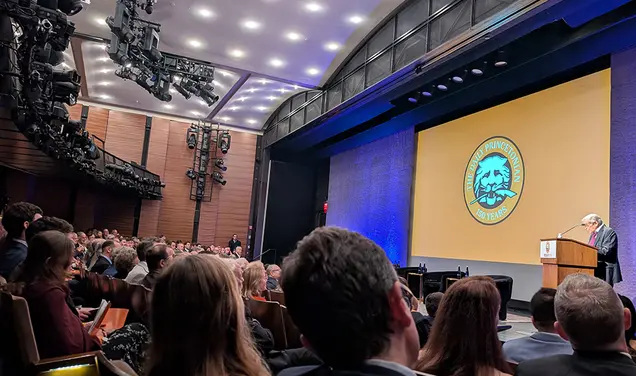
With Prominent Journalists and Hoagies, the ‘Prince’ Celebrates 150 Years
A gala at the New York Historical raised roughly $400,000 for the independent student newspaper

1 Response
Donata Katai ’27
4 Months AgoIntroducing a Different Narrative
As an international Zimbabwean student, I can attest that the “Wakanda- mindset,” as I’ll chose to refer to it as, is something I am still battling to get rid of. The Western superiority over appreciation of the continent is so prevalent throughout the school systems, from as young as 3 years old, where we learn about how the wheels on a yellow school bus go round and round (a yellow school bus doesn’t exist in Zimbabwe). I think it’s so awesome that you took this opportunity to introduce a different narrative to these students, and I absolutely loved this read!