

When Cancer Puts Young Lives on Hold


Christina Badaracco ’12 recalls sitting in a waiting room surrounded by men and women much older than her, retirees in their 70s who reminded her of her parents. She was in her late 20s and had taken the day off work to receive cancer treatment.
“I just remember feeling like I stood out like a sore thumb,” she says.
Badaracco, who had the common skin cancer called basal cell carcinoma, underwent successful outpatient surgery and was able to return to work the next day.
Cancer diagnoses are shocking at any age, but more young people are receiving the news before the age of 50. A 2023 study published in BMJ Oncology found the rate of cancer cases for individuals between 14 and 49 increased 79% between 1990 and 2019, and breast, tracheal, lung, stomach, and colorectal cancers had the highest mortality rates. Cancer is one of the leading causes of death and long-term health complications for individuals 15 to 39, according to a 2022 study published in The Lancet Oncology.
By the end of 2026, the National Cancer Institute estimates there will be around 88,000 new cases of cancer among those ages 15 to 39.
Tigers are no exception, and some have openly shared their experiences. In her 2021 book Between Two Kingdoms: A Memoir of Life Interrupted, Emmy Award-winning writer Suleika Jaouad ’10 unpacked cancer’s effects on her life as a young woman. More recently, Christopher Beha ’02 published Why I Am Not an Atheist: The Confessions of a Skeptical Believer, which touches on his diagnosis with the blood cancer Hodgkin’s lymphoma during his senior year at Princeton.
Like Jaouad and Beha, other young alumni who receive cancer diagnoses say the disruptions to their lives and careers have left them feeling like they’ve fallen behind.
Related coverage
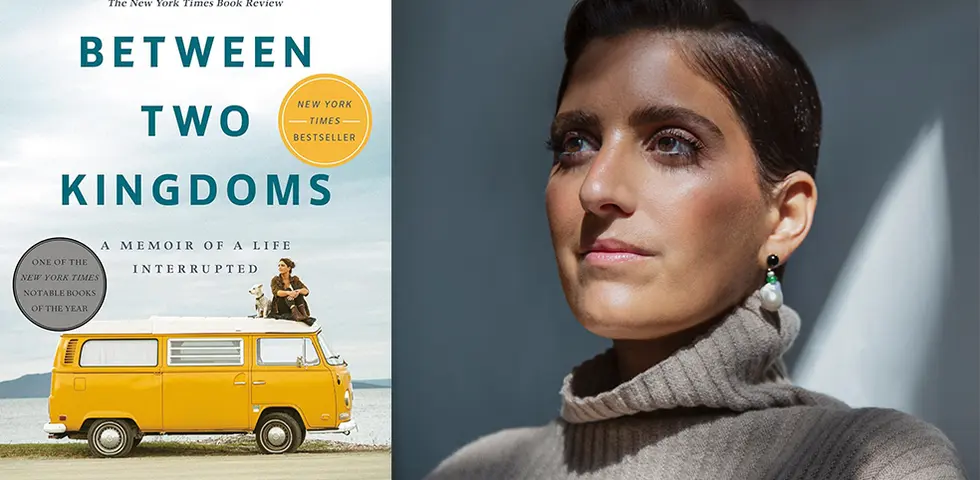
Suleika Jaouad ’10 Navigates Illness and Life by Pen
‘There’s a kind of power when you dare to inhabit the first person with unvarnished vulnerability and honesty’
Melody Sánchez-Luca ’16 was in her early 30s when she met up with a friend from Princeton who happened to work in medicine. The friend noticed a new mole on her face and recommended she get it checked out. When it was confirmed to be melanoma, one of the deadliest forms of skin cancer when not caught early, the doctors immediately scheduled her for a procedure the next day.
“It felt like they basically took a cookie-sized chunk of my face away and then closed it up again,” Sánchez-Luca says.
The surgery took an immense toll on her body, and it took months to recover.
“My wife, I’m so grateful for her,” Sánchez-Luca says. “She needed to help me with so much of the basic activities of daily living.”
Before her cancer diagnosis, Sánchez-Luca worked as the program director for the InterVarsity Christian Fellowship at Emory University and was interviewing for new roles. Then the cancer hit, and she was forced to pause her search.
Since her recovery, Sánchez-Luca says it has been challenging to get interviews, partly due to the gap in her résumé left by the cancer treatment.
Explaining résumé gaps is a common struggle for cancer survivors, according to the nonprofit Cancer and Careers. While addressing the gap is a major concern for job seekers, the organization reminds individuals that they are not required by law to disclose their cancer, recommending instead that they lead with their career skills.
Sánchez-Luca says that if nothing else, having cancer helped clarify for her the kind of impact she wants to have in the world. She says she hopes to return to higher education administration.
“The most devastating aspect of this whole [cancer] process is the chasm between what I feel I’m capable of doing and how I want to contribute to the world, and not getting to do it,” Sánchez-Luca says.
Three years ago, Rachel Marek ’17, a structural engineer in New York, had been on a promotion track when she was diagnosed with Hodgkin’s lymphoma. For the next six months, she received 12 rounds of chemotherapy and immunotherapy every other week and continued working in a reduced capacity. Marek says it took a year after treatment for her to feel more recovered.
Even though her team was very supportive of her treatment, she says she felt frustrated with her professional progress.
“I had been going somewhere, and I felt like, career-wise, I’d hit a bit of a stall,” she says.
She did not get promoted that year but eventually did the following year. Still, she remembers being wary of her perception within the company.
“I had a colleague who, when I finished treatment, was like, ‘Maybe you need to take more time off, you still have all these appointments.’ And I was like, ‘Well, am I not doing a good job?’”
Despite protections in the Americans with Disabilities Act, cancer survivors continue to experience workplace discrimination. These include employers’ failure to hire, dismissals, and insurance denial, according to the U.S. Equal Employment Opportunity Commission.
In addition to transitioning back to work, many young cancer surviviors face challenges after treatment, says Chelsea Donahue, managing director of mission and strategy for Stupid Cancer, a nonprofit that supports young adults with cancer.
“When you’re in treatment, you’re fighting for your life. There’s a support team. You know what you’re doing, even though it’s awful,” Donahue says. “When you’re done, for most folks, there’s no roadmap.” She adds that survivors face challenges with “sex, dating, relationships, intimacy, [and] family building” after treatment.
When several of her friends got married last spring, Marek says she felt grief for the time she lost to cancer.
“I wasn’t actively dating or looking for a relationship because I was healing,” she says, but she can’t help wondering how her life would have turned out without the disruption.
Marek says finding a community of young adult cancer survivors online and in person has helped her process survivorship. A member of Stupid Cancer, Marek flew to Texas to attend the annual conference CancerCon and says the event was “a big game changer.”
Last year, the conference drew more than 300 young cancer survivors, caretakers, and healthcare providers and included workshops, survivor panels, and fun social programming.
This past summer, Marek says she had been thinking about her experience during the anniversary of her cancer diagnosis. While she’s far from grateful for the cancer, she is grateful for the opportunities and the lessons it gave her.
“I have a great group of friends. I’ve learned how to stand up for myself and advocate for myself,” she says. And when it comes to work, she’s learned to set boundaries. “Work’s not everything. Work needs to get done, but I also need to live my life.”



No responses yet