

Kate Kaneko ’16 Turns Unused Restaurant Spaces Into Daytime Cafés
Asano is currently in two New York City restaurants, Sandro’s and The Noortwyck
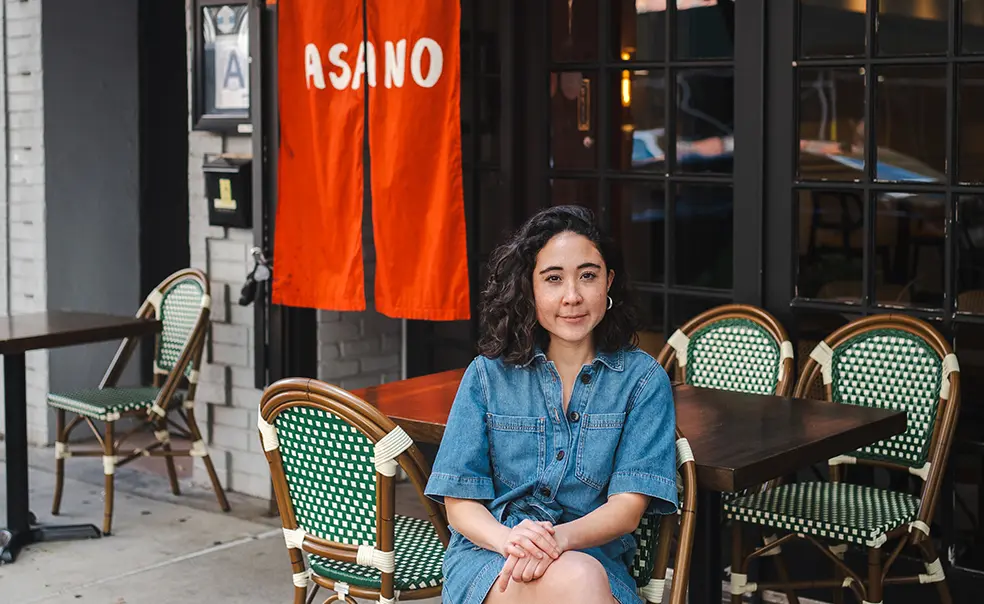

Kate Kaneko ’16 has never loved the idea of waste. Growing up in a Japanese-American family, she was taught that everything has inherent value.
Working in the food industry after graduation, she noticed that spacious, beautiful restaurants sat completely unused during the early hours of the day. What if she approached these restaurants and offered to use the space to sell delicious coffees, teas, and pastries to people in search of their morning go-to? The company she co-founded last year, Asano, now operates out of two spots in New York City. “We turn restaurants that are closed during the days into daytime cafés,” Kaneko says.
At Princeton, Kaneko followed her curiosity about the wider world, studying international relations and global health in the Woodrow Wilson School (now the School of Public and International Affairs). She also ran the Princeton Traveler, a travel magazine with a website that garnered more than 30,000 views during its run. Under the broad umbrella of international affairs, Kaneko took a specific interest in the food industry. “I took a more generalist approach in college, and have always loved different cultures, so from that food became a big love,” she says.
Since then, Kaneko’s experience in the food industry has been wide-reaching. She has been chief of staff at Mercato Metropolitano, London’s first community and sustainability food market; chief of staff to the CEO of Panera Bread; and director of strategy, planning, and products at Hawksmoor, a renowned London-based steakhouse with locations across the U.K. and U.S.
From that experience, she became interested in an overarching problem: Regardless of how busy they are, restaurants run on tight margins. She wanted to find a way to make them wider. So she built Asano to use a restaurant’s storefront during the day and give the host restaurant a split of the revenue. For Sandro’s and The Noortwyck in New York, that means a dining room that would otherwise sit empty until evening now earns money in the morning, too.
Kaneko’s Japanese-American heritage inspired more than her disdain for waste. In Japanese, “asa” means morning, and “no” is short for “noren,” the curtains that hang in the entryways of Japanese restaurants and cafés to signal that they’re open. Asano hangs its own noren in its host restaurants’ preexisting storefronts. They’re poppy-colored, branded with the Asano name, and, as Kaneko puts it, “symbolically show a transition between spaces.” It certainly helps that the bright curtains are also highly Instagrammable.
The menu includes ceremonial-grade matcha from Japan, single-origin coffee from Brazil, pastries from local bakers, and house-made, seasonal syrups. Kaneko sees her cafés as a great addition to anyone’s morning routine. “You just want people to get it once, and then people come back,” she says. Asano’s hope is that these newfound morning regulars will add to the bottom lines all of the well-loved restaurants it partners with.
For now, Asano has two locations in New York, but Kaneko hopes to open more, and she has a clear vision of where it could go. “My goal would be that you’ll be walking down any city one day and see these bright orange curtains and know that’s a café inside.”
The Latest
See all


Related News

Follow Angela Han ’28 and Spend a Day in China’s Snow Town
Despite the tourists, Xuěxiāng retains a distinctly northeastern character, Han writes
Before Orientation Change, Administrators Say They Should Have Talked to More Students
Administrators said they should have gathered more input from upperclassmen


No responses yet