


Dating at Princeton: It’s Complicated
Three seniors spill the tea on what it’s like to look for love on campus these days

Once upon a time, a boy and a girl at Princeton liked each other. They shared a friend group, but a fear of complicating things kept them from making a move. That changed when Marriage Pact, a matchmaking tool that pairs students based on a questionnaire, declared they were a fit.
The boy texted her the news. “Well, if the algorithm says it, it must be true,” she replied. He sent a Google Calendar invite for a date from 6 to 7 p.m. at the New College West/Yeh dining hall, one of their two meals each week outside of their eating club. She clicked “Yes,” and they lived happily ever after ... or at least for the rest of the semester.
Dating at Princeton has always been tricky, but somehow today’s students have found new ways to complicate it. The hypothetical romance above demonstrates the shift toward algorithm-driven matches, blurred definitions — ever been in a situationship? — and courtship managed down to the calendar invite. Still, some things haven’t changed: the intimacy of a small campus, shared living spaces, and the inevitability of awkward breakups.
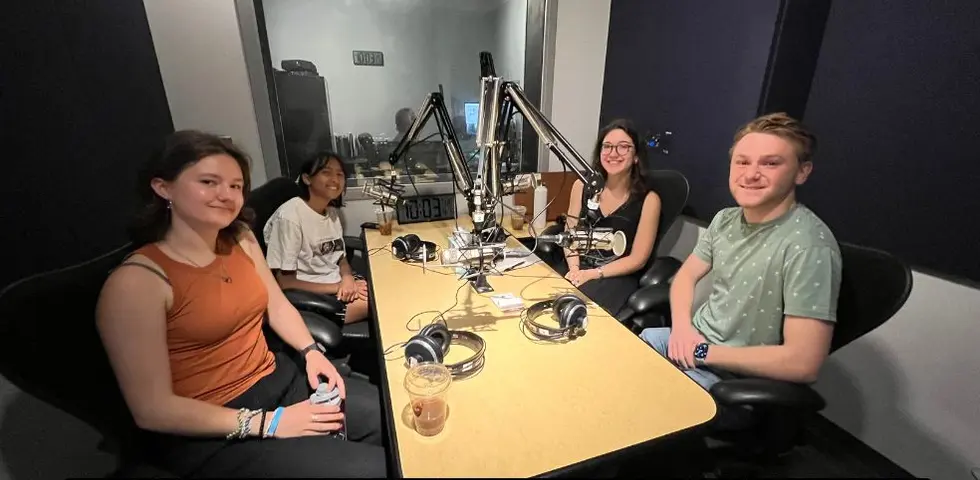
PAW explored the dating scene with three seniors on the latest PAWcast: Roberto Lachner, who wrote a 2025 opinion piece in The Daily Princetonian urging students to date across ideological differences; Suthi Navaratnam-Tomayko, who said she has tried all of the algorithms, apps, and traditional methods; and Lianne Chapin, who is in a relationship that she credits in part to the Terrace F. Club.
This interview has been edited and condensed. Listen to the podcast online and read the full transcript online here.

Lia Opperman ’25: What’s dating culture like at Princeton these days?
Lianne Chapin ’26: Princeton is a unique campus in that we’re all sort of packed into the same area of land, and we all see each other all the time.
Roberto Lachner ’26: Because of that, it’s very rare for people to ask out strangers, just because there aren’t so many strangers. Usually how it happens is you already have a nice friendship with the person, and then eventually one day you decide to take it a step further. But rarely do you just see a cute girl at the café, and then you go up and ask for her number.
Lia: Are there certain circles within the campus community where people are meeting each other? Sports teams, residential colleges?
Roberto: It’s wherever you’re making your friends on campus. I’m a very active member of the Aquinas Institute, which is our Catholic campus ministry. There’s between 50 and 100 very active students. And so those are the people that I’m seeing basically every day. And eventually those are the people I’m going to become friends with and maybe ask out.
And I think this phenomenon kind of extrapolates to other campus subgroups. Certainly religious groups, also for clubs, especially your eating clubs, and, especially at the start, your residential colleges.

Lia: There are a lot of new dating apps that use algorithms to match people. Datamatch attempts to match you with your top romantic partners and friendships based on a survey you fill out. With Marriage Pact, you get matched with your optimal match, and with Date Drop, each week you opt in, you get a new match. And then there are the traditional dating apps, such as Hinge, Bumble, Grindr, and Tinder. Are students using these apps instead of meeting each other in person?
Lianne: A lot of Princeton students are very busy. And our minds are often occupied with our coursework and our jobs and all sorts of things that we’re doing. I can see a world in which people would prefer the convenience of, or at least the false confidence of knowing, that this person is algorithmically the best person for me. And I can stop searching and worrying, and that can be one thing off my plate because I know that this person, through some measure, is compatible with me. And I think Datamatch and even Date Drop appeal to that mentality where you can just fill out a form and some computer science majors who had some extra time on their hands will magically facilitate something for you.
Then you can talk to the person that you’ve matched with and be like, “So we’ve matched on this kooky little thing, maybe we can go get coffee together.” That also takes away the need to have any sort of boldness or confidence because your hands are tied by this digital thing.
Suthi Navaratnam-Tomayko ’26: There is now a fourth one, it’s called Crush. The idea is everyone puts their crush’s email in, and then if the person you have a crush on has a crush on you, you get notified. But if you don’t, if there’s no match, no one ever has to know. So that’s sort of the big selling point here: You’re able to figure out if your crush likes you back without any kind of friction, without having to do anything scary, without any sort of fear of rejection. I think this is wimping out.
I don’t really think people use these very much. At least in my experience, people will fill out Marriage Pact and stuff, but you’re not actually going to go get married to that person. I know very few people who have actually gone on dates off these things. It’s mostly just to look at it, and you’re like, “LOL, I know that person,” and that’s it.
Lianne: The fun is in the fact that it is not that serious.
Lia: What do you think students are looking for? Love, marriage, a hookup?
Lianne: It depends. I know a lot of people who are in very wholesome and fulfilling relationships and have been for a long time. But I also know a lot of people who are very sure that they do not want that, and that they are going to take college as a time to explore and to have hookups and to figure out who they are as a person, as a partner, just see the landscape.
Then there are also, of course, situationships. There’s poor communication, there are people who have a mismatch where one of them is still in the exploration era and then another one is maybe wanting to lock something down. But I think that is a tale as old as time.
Roberto: As we’ve progressed through being freshmen to seniors, you see more people looking for longer-term relationships. Maybe because we have had more experience and know what we’re looking for.
Another advantage I think of dating within communities you’re familiar with and your friends is that typically you do know what the other person wants, especially if you are within communities where there are shared values, shared understandings of what dating is.
Suthi: I also think it changes when you join an eating club. That environment is just more conducive to relationships than it is to hooking up. It can be kind of awkward after a hookup. Maybe you wouldn’t want to do that if you have to see that person all the time.

Lia: What do breakups look like on campus?
Roberto: It’s certainly harder than perhaps it would be outside Princeton, because the community is so tight-knit. Especially if you started dating because you have a shared community. You might even be in the same eating club, in which case you’ll see each other at almost every meal.
And this makes the Princeton breakup a little different, When I talk to my parents or even my friends at other schools, a breakup is really synonymous with “you never see this person again.” I think in some respects, it’s probably a good experience to still be around your ex on campus, just because it hopefully teaches you how to remain both friendly and respectful with that other person who you did and probably do still care a whole lot about.
Lia: Lianne, I remember you mentioning that Princetonians put everything on their Google Calendars, including dates, hookups, anything along those lines. The Wall Street Journal published an article about students dropping calendar invites instead of asking someone out. Can you speak about that?
Lianne: I am a big Google Calendar user and so is everybody I know. The first time I thought about GCal-ing a date, it did give me pause, but then I realized that is a thing that people do here.
And now I think it can be a very romantic thing because then you — I’m just sort of laughing at myself right now — you can make a separate color for your dates. You can put nice heart emojis in the calendar invitations. You can keep a record also of your time together, which is also a very nice thing.
Roberto: GCal is such a ubiquitous part of Princeton that I almost wonder how alumni in the Stone Age before Google worked and functioned. The first date I ever asked someone out on here, I was like, “Oh, do you want to go on a date?” and she said, “Yes.” I pulled out my Google Calendar and looked for an open spot, and then right there sent her the invite. And that night I got a little email in my inbox that she had accepted the invite to lunch at Say Cheez Cafe. It was just such a great moment, such a romantic moment.
Suthi: There’s something that’s kind of sweet and romantic about saying, “And I have blocked off this two-hour window just for you. There’s so much going on in my life, but I’m telling you from 5 to 7 p.m. on Saturday, I’m all yours.”
Lia: In 2013, Susan Patton ’77 wrote an op-ed encouraging women to find a husband at Princeton. According to The Daily Princetonian senior survey from 2025, 40% of people said two months before graduation that they were in a relationship with someone from Princeton. Do people still think about the op-ed? And is there this pressure to find a life partner while you’re here?
Suthi: People definitely still think about Susan Patton’s op-ed. My mom talked about it before I came to Princeton. Let me be very clear, my mother is a very progressive person. She has a career, a really cool career. She’s not telling me to lock it down and be a trad wife. But she was also like, “This is probably one of the best dating pools you’ll ever have in your entire life. So maybe think about that.” And I was like, “OK.” I didn’t really know how to respond.
Now coming out of Princeton, my thoughts on it are, one, that’s definitely true. The people here are, on the whole, fantastic. But also, I don’t know if I want to be necessarily looking to commit myself to someone for life right now. I have my own ambitions. I want to go to grad school. That requires me moving somewhere. I didn’t know where I was going to be moving as of two months ago, and it could have been anywhere in the country. It feels like maybe a lot to ask someone to hitch themselves to that.
Roberto: From what I gathered, the initial response to this op-ed was quite negative. Today it’s more of, she lowkey was right. Being here for four years changes you a lot, and so ideally you would maybe want someone who understands that part of you. But there’s always grad school and there’s always Reunions, too.
Lia: What are the successes with Princeton’s dating culture and what are the frustrations? What has worked and hasn’t worked over your four years?
Related coverage
Dating at Princeton? Part 1: It’s Complicated
‘I have a feeling that, always at Princeton, it will be the friendship-to-dating pipeline that will be the most successful’
Lianne: I do think a lot about the gift that it is to live together with all of my friends within five minutes of walking distance from one another and to be able to see them every day. And to live also in a walkable place and in a place where the environment is designed for social flourishing and for connection. So that is definitely a success. But also the fast pace of the semester, 12 weeks, and the amount of work that everybody is doing means that there are fewer opportunities to take a breath and to meet a person and to really see a person. That’s a barrier.
I think that’s one of the reasons why a lot of people prefer more casual relationships or situationships or hookups, because they know that they can’t fully dedicate themselves to a very wholesome and fulfilling relationship, because they have so much to do. But then also on the flip side, I’ve seen ways that it has worked. I think it’s working for me right now.
Lia Opperman ’25 is PAW’s reporting fellow.
Related News

McCarter Theatre’s First South Asian Musical Took Me Back to Forbes Basement
A Beat of Our Own is about a college dance team not unlike Princeton South Asian Theatrics


2 Responses
Gary Watts ’69
2 Months AgoComputer Matchmaking, Circa 1965
Reading “Dating at Princeton. It’s Complicated” in the June issue reminds me of an experience during my freshman year as a member of Princeton’s last all-male graduating Class of 1969. My roommates and I received by mail or other distribution paper invitations to fill out a questionnaire and send in with a fee for processing. My internet search reveals that it was probably the Harvard-based Operation Match, conducted in 1965. In response we participants received by mail the names of at least three women attending college in the broader area. My roommates, pretending they were also submitting questionnaires, encouraged me to rate myself higher in every category hoping to get a list of dateable women at my expense. I answered honestly and followed through by contacting two or three of the women. I know I met one in Manhattan who was attending college in NYC for a fun movie and dinner date; I may have met another as well. There was no second date. That summer I met my Linda in our hometown of Tulsa and we enjoyed 55 wonderful years together before her passing.
John Wilheim ’75
4 Months AgoLove Story From a Simpler Time for Dating
Dating was much simpler when I was a student.
I arrived on campus my sophomore year before the dining halls opened, to learn how to operate new typesetting equipment at The Daily Princetonian.
I bumped into a student who had lived next door to me the previous year and we headed for Nassau Street to find something to eat for dinner. He spotted an attractive young woman sitting on the grass along a path in front of Nassau Hall and stopped to say hello. He introduced her as Cathy. She was reading a science fiction novel. I told her some of us watched Star Trek reruns in my dorm room every night at 6 and invited her to join us some night.
A night or two later, she was reading the novel in front of the closed door to my room, waiting for me. We watched the show, after which I walked her back to her dorm and up to her room. Then we talked until dawn.
With a few bumps along the way, we were together from then on. She moved into my dorm room at the start of my junior year and the following spring, in May of 1974, we married, so we could qualify for extremely rare married student housing as seniors and cook for ourselves.
Some of our friends said the marriage wouldn’t last a year. Our joke was they didn’t say which year. It turned out to be 2020, when she died, at age 68.