

Gifted with the Right Stuff, He Helped Put Men on the Moon

When we think of Princeton’s prominent role in the history of 20th-century science, we might conjure the image of theoretical physicists like Richard Feynman *42 scrawling dense formulas on chalkboards. Yet, in the 1950s, Princeton was also playing host to a much more visceral expression of scientific innovation, with perhaps the only ivy-covered “rocket pit” in existence.
Princeton’s aerospace legacy owes a debt to Harry F. Guggenheim, one of several scions of the family also known for its art museums in New York City and Bilbao, Spain. This Guggenheim sponsored key figures in aviation, including Charles Lindbergh’s tour across America following his historic 1927 transatlantic flight and Robert H. Goddard’s experiments in rocketry. In 1948, Guggenheim funded the expansion of the Jet Propulsion Laboratory on the Caltech campus, and the creation of a second lab at Princeton, initially hosted in cinderblock buildings next to the old Palmer Stadium and relocated in 1951 to the newly established Forrestal Campus. Guggenheim also endowed a professorship in jet propulsion named for Goddard.
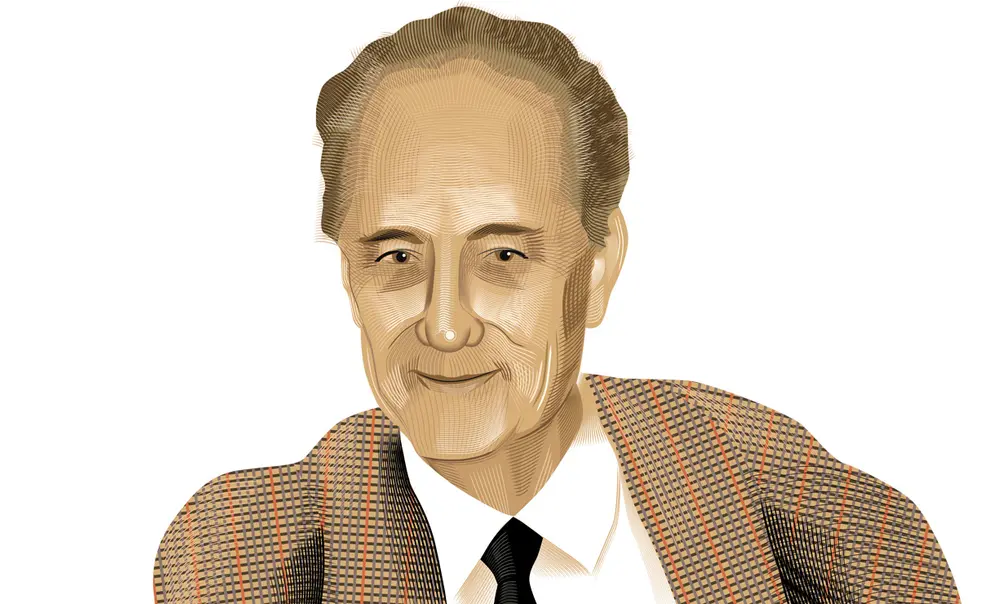
To fill this position, Princeton hired Italian aeronautical engineer Luigi Crocco, whom his former student Thomas Brzustowski *63 recalled as “a patrician Italian, white-haired, distantly related to Pope Pius XII, and with a fabulous accent he cultivated.” Aeronautics ran in Crocco’s blood: His father was Gaetano Crocco, a pioneer of Italian aviation, designing airships that saw combat in World War I. Later in life, the elder Crocco also looked to the stars, modeling how a spacecraft could make a transit of Mars, Venus, and Earth in one year, a forerunner of the “gravity assist” technique used by most unmanned NASA probes today.
But before such extraterrestrial missions could be pursued, Gaetano’s son would have to develop better rockets. While Luigi studied at the University of Rome in the late 1920s, he conducted rocketry experiments under his father’s watch. In 1930, Luigi successfully tested a regeneratively cooling rocket motor, meaning that the motor was cooled by one of its own propellants during its firing. In doing so, he had developed a technology eight years ahead ahead of his American peers. In 1935, Crocco wrote a study that became the theoretical “bible” of supersonic wind tunnels, thereafter a crucial part of aerodynamic testing.
Around the same time, Crocco conducted rocketry experiments that employed nitromethane as a propellant (a chemical now used in some motorsports), and in one of these experiments the rocket blew up. According to his protégé, Princeton professor Irvin Glassman, Crocco was “seriously wounded, acquiring an enormous scar where a piece of shrapnel had pierced his arm.” The injury sent him back to the classroom in Rome, where he taught from 1937 until his 1949 Princeton appointment, becoming a figure of the campus community, eventually building an Italian villa for himself on Fitzrandolph Road.
After World War II, many former Axis-aligned scientists were pulled into the competing sides of the Cold War space race, such as Wernher von Braun, the architect of Nazi Germany’s V-2 missile, who then oversaw the development of the Apollo lunar missions. Crocco’s work at Princeton also played a key role in the U.S. space program. High-frequency combustion instability — the tendency of rockets to tear themselves apart due to acoustic resonance — was plaguing American efforts. Crocco’s investigations were crucial to the success of the F-1 rocket engine, part of the Saturn V primary stage that brought Neil Armstrong and his succeeding astronauts to the moon.
Often, Crocco’s work at Princeton generated scenes reminiscent of Tom Wolfe’s 1979 book about the space race, The Right Stuff. In a 1951 New York Times article, reporter B.K. Thorne observed Crocco encouraging his students to “relax more” during a rocket test, their hearing protection only consisting of pencil erasers.
In that same article, when asked if the Soviets could beat Americans in rocket research, Crocco insisted the U.S. held the long-term advantage. The Soviets “have profited by German help,” he said, “but it’s not likely that they’ll get ahead of us.” Sputnik’s fateful 1957 orbit may have proved Crocco wrong, but it was only with his help that the U.S. won the race to the moon.
The Latest
See all


Related News


McCarter Theatre’s First South Asian Musical Took Me Back to Forbes Basement
A Beat of Our Own is about a college dance team not unlike Princeton South Asian Theatrics


3 Responses
Edward Gronenthal ’87
5 Months AgoA Scrubbed Launch at Forrestal
I may have been one of the last students to use the rocket test cells at Forrestal. For my senior independent work in the MAE department, I designed and built a gaseous oxygen-hydrogen rocket engine. My adviser, professor Irv Glassman, directed me to use one of the remaining cells at Forrestal for testing. My guess is that he had not actually visited the site in many years, as in the winter/spring of 1987 I found the area long abandoned and overgrown with plants and debris. It took me several weeks to clean up one cell for use. In the end, and after I had mounted my rocket engine to a test structure and installed its supporting equipment and systems, I was told by the University to cease work while they reviewed their insurance and liability. I never got to test fire my rocket engine; I was told another student was interested in picking up where I left off, but I never heard if this ever happened.
Frank Hurley *65
6 Months AgoGreeting His Space Mechanics Students
A versatile fellow. Various fluid dynamics formulations were originated by him, and he also taught space mechanics while I was a grad student out at Forrestal in the 1960s. He typically opened his class with a hearty, Italian-accented “Good morning!” (On one occasion an attempt to steal a march on Professor Crocco was made by a student who had written “Buon giorno” on the blackboard — but he had misspelled it.)
Princeton Alumni Weekly
6 Months AgoGuggenheim Laboratories Faculty and Staff
Courtesy of Michael Littman
Michael Littman, professor of mechanical and aerospace engineering and director of the Program in Engineering Physics, shared this photo of Luigi Crocco with the faculty and staff of Guggenheim Laboratories, circa 1960.