

Novelist Roberta A. Harold ’73 Imagines the World of Civil War Widow Annie Shaw

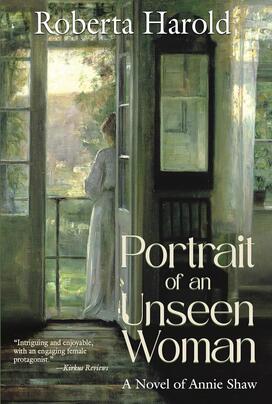
The book: This historical novel reimagines the life of Annie Shaw, who lived in the late 19th century when no historical records existed. Portrait of an Unseen Woman (Rootstock Publishing) takes place in Paris in 1892, where Shaw has lived as the widow of a Civil War soldier for the last 20 years. Her dreams of pursuing art are threatened by her domineering mother-in-law who wants Annie to become her caregiver. Portrait of an Unseen Woman explores the tension between the roles society expects women to play and the freedom many yearn for.
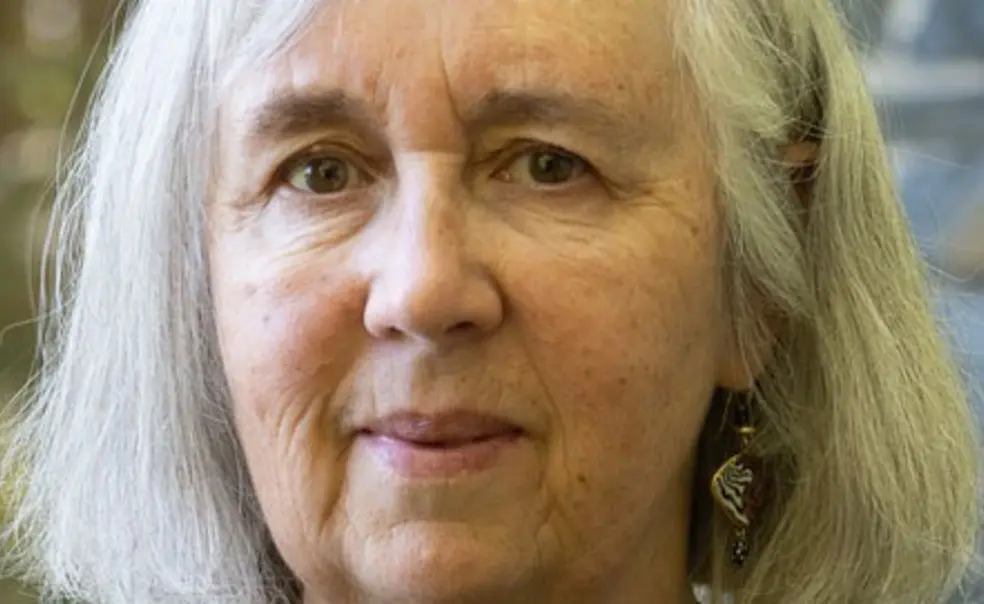
The author: Born in Glasgow, Scotland, Roberta A. Harold ’73 joined one of Princeton’s first classes of women and graduated with a degree in sociology. She spent more than 20 years working in community and economic development jobs before returning to school to earn a master’s degree from the Middlebury Bread Loaf School of English in 2001. She’s the author of two other historical fiction novels, Heron Island and Murdered Sleep.
Excerpt:
Sunlight slanted through the lancet windows of the Sainte-Chapelle, splashing rainbows on a small, stooped woman in gray seated near the front of its narrow nave. To Annie Shaw’s eye, the medieval chapel the Baedekers called a jewel-box seemed itself made of jewels, its thousands of tiny panes glowing in lacy columns of sapphire, ruby, emerald, and amber. Impossible not to feel the Divine presence in such a place, cool and perfumed after the early summer warmth outdoors. On one side of the altar, a fountain of white roses and stephanotis sprayed over its pedestal like a bride’s abandoned bouquet.
Anna Kneeland Haggerty Shaw, 56 years old, widowed for nearly 30, was Mrs. Annie Shaw to her expatriate American circle, Madame Robert Gould Shaw to strangers and authorities. The relict of a young, seraphically handsome hero of America’s Civil War, Annie had lost everything she loved most by the time she turned 30: her small brother Oggie, sweet-natured heir and hope of her mercantile Haggerty clan; George Kneeland, the cousin she first meant to marry, and Rob Shaw, shot through the heart on the walls of an island sand-fort two months after their wedding, leaving her only his name. Even his child was denied her, miscarried amid civic upheaval in her native New York days before word came of her beloved’s death. My love is cursed, she had concluded. It kills everything it touches.
She chose a rickety chair just off the center aisle, the better to watch the fingers of the pianist, the young composer Debussy, fly and hover and caress the keys. And here he came, tugging nervously at his maroon cravat. Perhaps 30, perhaps younger, shock-headed, like a little boy in Sunday clothes who had escaped his mamma’s ministrations and gone rough-housing with the family terrier. Yet something masculine and compelling in the gaze he ventured around the small audience, the dark eyes glancing for a thrilling instant off hers before he sat, bounced a few times on the stool, and let his fingers drop, gentle as rain, onto the keyboard.
The beauty bursting so suddenly from silence triggered a flow of tears, as it often did for Annie. The feeling kept building — the composition simple yet exquisitely melodic, and when the third movement, which he had titled “Promenade Sentimentale,” began its glissandos and arpeggios, she closed her eyes. The notes melded into the sparkle of moonlight on the old Stockbridge Bowl near Lenox, and she felt again the soft eddies of an August breeze, a tug in her belly of youthful ecstasy — was it beloved George Kneeland who had rowed the little boat that night, or some later, soon-discarded beau? Only the sensation of her fingers trailing in the silky black water remained.
She rummaged for a handkerchief. Foolish to dwell on vanished joys with this new one unfolding in her ears. But perhaps they were all of a piece. Music pierced defenses, erased time’s boundaries. She closed her eyes again and drifted on its lovely ripples. Debussy played another piece of his own, lyrical and haunting, and then a strange, deceptively simple trio of short pieces he called “Gymnopédies” by “mon ami, Satie.”
The spell broken by hearty applause, she felt bereft, only wanting to lose herself in it all over again. But the composer rose, bowed, and withdrew with a shy, triumphant smile. She blew her nose and rose stiffly, retrieving her cane and stepping into the aisle.
“Annie Shaw, isn’t it?” said an American voice behind her. She turned to see a tall, white-haired woman heading toward her, her face alight with pleasure. She looked familiar… of course! — Rob Shaw’s aunt, Julia Shaw Greene, his father’s younger sister.
“Madame Greene?”
Her sister-in-law Effie Lowell’s letters had mentioned that “Tante Greene” lived in Paris, but neither she nor Annie had sought out the other, and their paths had not crossed until now. Reed-slim in aquamarine silk, Julia Greene carried an elegant ebony cane that seemed merely decorative, her movements easier and more vigorous than Annie’s own. Her bright blue eyes — so like Rob’s — sparkled. For a moment Annie’s throat tightened.
Julia caught up and laid a hand on her shoulder. “We’ll have none of that ‘Madame’ — it used to be Aunt Julia, but ‘Julia’ will suffice now — we’re still family, aren’t we?”
Annie suppressed a wince. Having her reasons for resisting the Shaws’ persistent attempts to claim her as family, she had evaded the clutches of that insatiably idealistic tribe only by removing permanently to Paris with her own. Might the need to proselytize everyone in one’s orbit be a familial trait? “We are,” she managed finally. “Please call me Annie. Didn’t I hear from Effie Lowell that you’re living in Paris now?”
“I’ve lived here for years, near my son Will and his wife — I’m four times a grandmamma.” Julia hesitated. “Would you have time for a café? Or a lemonade, since the day’s turned so warm? Or must you be off somewhere?”
Annie hesitated in turn — only inwardly, she hoped. Four grandchildren — a potentially stultifying catalogue that could take days, all too familiar from Colony teas. And Julia’s late husband, Colonel William Greene, had been a notorious utopianizer, beloved of social revolutionaries everywhere. But his widow’s eyes held a glint, not of fanaticism but of the wicked humor Annie had seen in the eyes of the Shaw she had loved. And in the days from their engagement until the end of all hope for Rob’s return, the lively and at times scandalmongering wit of Julia’s letters had brought respite from the Shaw clan’s abolitionist preoccupations.
“I should like that,” she said finally. “I know a nice little spot on the Île St. Louis, if you don’t
mind the walk.”
They set out eastward by the north quays of the Île de la Cité, cooler near the water and free of the touristic hordes who swarmed around Notre Dame Cathedral to the south. Julia Greene slowed her vigorous pace to match Annie’s.
“You find me newly sans famille — I think you met my younger sister Clemence, before she married James Crafts? She and her daughters left for Boston a week ago. My brother-in-law has taken a chemistry professorship there.”
“They went without you?” Julia searched Annie’s face and nodded. “I shouldn’t care to live in Boston again myself. I’ve spent more than enough time in that suffocating little hamlet.”
Annie roared at the thought of that in the ears of James Crafts, a devoted son of his native city. “I’ve spent little time there. Only when Rob was training the regiment — you remember. In any case, it didn’t appeal.”
There had been more to it than that. For years Annie had played mother’s helper, nursemaid, and listening ear to her four nieces. She had even thought herself of some little value to James; despite joining in the girls’ teasing about his foul chemistry experiments, she was the one member of the ménage with any interest in scientific matters. She remembered with a pang the episode of accidental eavesdropping that had led her to stay in Paris — James asking Clem, with a weary note in his voice, What are we going to do about Annie?
Excerpted from Portrait of an Unseen Woman: A Novel of Annie Shaw by Roberta Harold. Published by Rootstock Publishing. Copyright ©2024 Roberta A. Harold. Reprinted with permission of the author.
Reviews:
“Roberta Harold knows how to put a good story together. Annie Shaw, who has endured half her adult life in the shadows as the widow of Robert Shaw, a revered Civil War hero, is struggling to shed the suffocating role society has assigned her and find her own identity. Harold follows her into the brash and heady art world of Paris during its Golden Age where the real-life Annie Shaw disappeared into history and completes her story. The food descriptions will make you ravenous.” — Mary Hays, author of Learning to Drive
“A vivid sense of the exuberant, artistic world of late 19th century Paris.” — Harriet S. Chessman, author of Lydia Cassatt Reading the Morning Paper
The Latest
See all


Related News


McCarter Theatre’s First South Asian Musical Took Me Back to Forbes Basement
A Beat of Our Own is about a college dance team not unlike Princeton South Asian Theatrics


No responses yet