

Iran War Is ‘Frightening’ and ‘Unnerving,’ Say Princetonians and Professors
‘I’m at home in Kuwait and I can hear missiles flying,’ said Sheikh Nawaf al-Sabah ’94
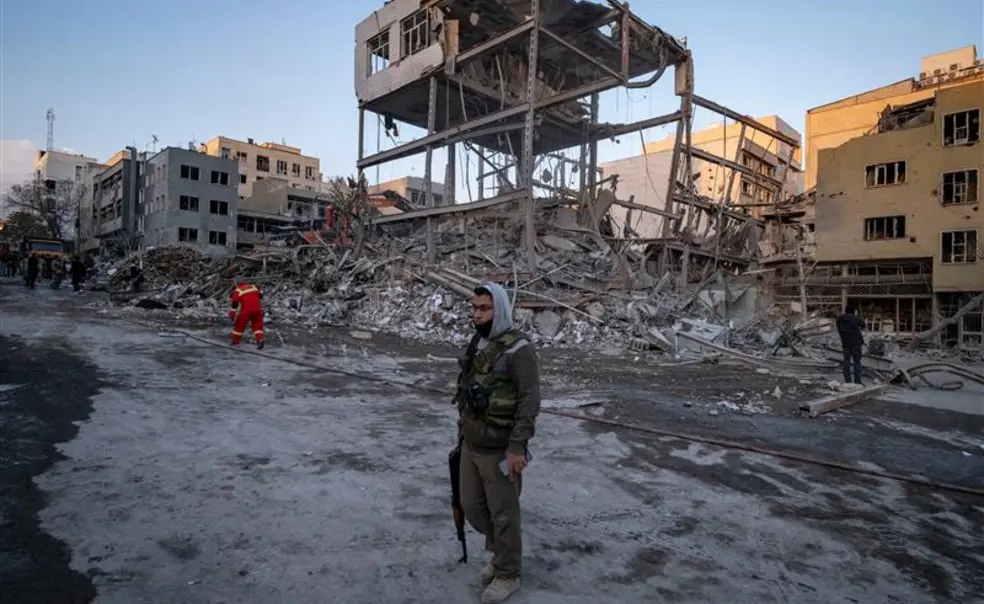
Many Iranian citizens “see this moment” — following Israeli and American airstrikes against Iran on Feb. 28 — “as the only conceivable path toward finally being free of the Islamic regime,” said Poorya Mollahosseini, a graduate student from Iran studying electrical and computer engineering at Princeton.
The war is the fault of the regime, Mollahosseini said, because its leaders refuse “to relinquish power despite lacking public support and relying solely on violence to maintain control.”
Reactions to the initial days of war and Iran’s retaliation, which has stretched across the Middle East, have varied on campus and with alumni in the region, from terror to outrage to questioning America’s long-term strategy. As Mollahosseini described, the war is “frightening, of course. But what is far more frightening is watching IRGC [Islamic Revolutionary Guard Corps, a branch of Iran’s armed military] forces kill unarmed civilians with live ammunition.”
Sheikh Nawaf al-Sabah ’94, CEO of the Kuwait Petroleum Corporation, one of the largest oil companies in the world, told PAW on Thursday that “Kuwaitis are outraged. Iran is specifically targeting us and trying to drag us into a fight that is not ours. We are longtime friends and allies of the United States and certainly have been targeted by Iran in the past, but we have always maintained that dialogue is the best way to resolve differences.”
He added that the Iranian regime is “flouting every norm of international law and good neighborliness to drag us and the rest of the Gulf countries into the fight.”
In his first interview since the start of the war, Al-Sabah provided a firsthand account of life under Iranian attack and his assessment of the geopolitical situation.
“I’m at home in Kuwait and I can hear missiles flying. It’s now day six [of the war] coming on, and it is unnerving,” said Al-Sabah.
Related coverage

Pariah or Partner?
Nawaf al-Sabah ’94 believes Kuwait Petroleum can address climate change even as it produces thousands of barrels of oil a day
In addition to, by some estimates, thousands of casualties, the ongoing attacks and counterstrikes have caused oil shipping through the Strait of Hormuz to be closed, roiling financial markets.
“After eight decades, we have now entered a new era of geopolitics in the region, where we now have five or six days of practically zero traffic through the Strait of Hormuz, which is where you get 20% of the world’s oil supply,” said Al-Sabah.
Referencing countries such as Kuwait, Saudi Arabia, the United Arab Emirates, Oman, Lebanon, and Israel that have seen military action over the past week, he said, “There is a distinct fear that this could spiral into an uncontrollable situation.”
Abdulaziz al-Sabah ’28, Nawaf’s son, was supposed to take a flight to Kuwait for spring break, but Nawaf said he will instead stay with family and friends.
University spokesperson Jennifer Morrill told PAW that planned spring break travel to the region has been canceled. In addition, Princeton International’s Global Safety & Security (GS&S) unit “has been in direct contact with each person currently in the region on University travel and continues to actively engage with them to monitor conditions and support any needs that arise as the situation evolves.”
The GS&S team has “increased the destination risk level for multiple countries in the region,” according to Morrill.
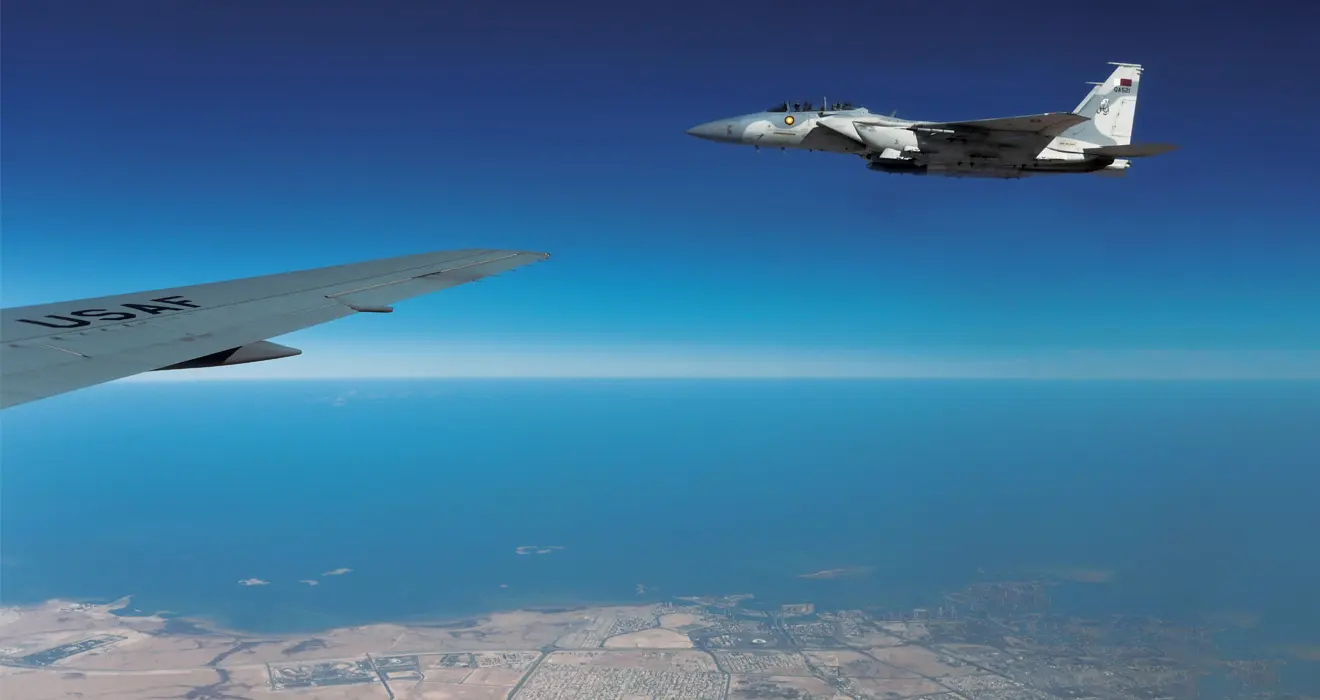
Michael Holl ’03, a U.S. Air Force veteran with 20 years of combat experience, has lived in Qatar since 2024 as a civilian helping train the Qatari air force to fly F-15 fighters purchased from the U.S. He told PAW this week that his family had already been planning to leave the country, but that “at the end of January, we made a decision to get the kids out of Qatar ahead of schedule” because they noticed warning signs similar to what occurred prior to the June 2025 U.S. bombing of Iranian nuclear facilities.
Related coverage
Turbulence Times
Longtime U.S. F-15 pilot Michael Holl ’03 reenters the Middle East tinder box working with the Qatari air force
“How do you explain to a 5-year-old why are people fighting?” Holl asked, adding that his eldest son, who is 5, called the strike in June of last year “the boom boom night.”
At 2 a.m. on a day in late January, the Holl family made the decision to leave, and they were on a flight out 16 hours later. However, most people Holl knows in Qatar are “hunkering down,” particularly foreign nationals, who may not have the ability to leave.
Holl praised his former colleagues in the Qatari air force for shooting down “more than 25 drones so far,” as well as a report of “two Iranian Su-24 fighter bombers that were just two minutes from their targets when they engaged them. So, pretty good work.”
Gregory Treverton ’69, professor emeritus at the University of Southern California and chair of the U.S. National Intelligence Council from 2014 to 2017, said he believes President Donald Trump should declare victory in degrading Iran’s nuclear and offensive capabilities and leave Iran to work out its own regime change. “If we did that, I think we could still prevent this from spiraling into a regional war,” he said.
He compared the current situation to the U.S. invasion of Iraq in 2003, when “we blundered into war in Iraq with no plan for it.”
Princeton professors offered thoughts on another point of contention: that President Trump did not seek congressional approval before the attack, even though “the Constitution says only Congress has the power to declare war,” Sam Wang, a professor of neuroscience at Princeton who is currently running for Congress, explained via email. “The failure of the branches of government to work together, or even to deliberate in public view, has led to domestic and foreign policies that contradict the public will and, in this case, violate international law.”
Julian Zelizer, a professor of history and public affairs at Princeton, described congressional approval of war as “a way to force presidents to outline their arguments for sending troops before that is done, to test the basic proposition in the court of democratic opinion, and to give Congress a chance to push back. While this has not been a cure-all for the erosion of congressional power, it has checked a dangerous long-term trend where presidents feel increasingly able to make decisions about war and peace simply based on the preferences of themselves and their advisers.”
Princeton professors disagree as to what the U.S. should do next.
Amaney Jamal, dean of the School of Public and International Affairs (SPIA), said in an article published by the department in June, “There’s an alternate path to this senseless destruction on the table, one that sees peace, normalization, and prosperity for all Middle Eastern countries, including Israel, Iran, the Palestinians, and all regional states. Diplomacy and negotiations are needed now more than ever.”
On March 18, Jamal is planning to moderate a panel discussion on the war.
Frank N. von Hippel, emeritus professor of public and international affairs, said in the June SPIA article that because Iran has enough highly enriched uranium to make nuclear weapons, “I don’t see a way to assure destruction of that material without the invasion and occupation of Iran.”
In a recent exchange with PAW, von Hippel added, “I did not and do not support the military option. For the past 15 years, I have supported diplomacy not war. That succeeded in 2015, with the Iran Nuclear Deal, under which Iran agreed not to produce highly enriched uranium for at least 15 years and accepted extraordinarily intrusive inspections by the International Atomic Energy Agency.
“Iran complied until Trump took the U.S. out of that deal in 2018, saying he could negotiate a much better deal, and reimposed the pre-deal sanctions. Iran waited for three years (2021) and then decided to put pressure on the U.S. by producing weapon-useable highly enriched uranium.
“Iran has been willing to give up that material in exchange for sanctions relief. That is what the negotiations have been about, which Netanyahu and Trump have now interrupted twice with bombing.”
Just three days before the initial Feb. 28 attack, Daniel Kurtzer, professor of Middle East policy studies at Princeton and the former U.S. Ambassador to Israel and Egypt, said in a Q&A published by SPIA that “the introduction of ground troops in Iran would open a fraught chapter both in regional affairs and domestic U.S. politics.”
Editor’s note: This has been updated with additional comments from Frank N. von Hippel about the negotiations between the United States and Iran over Iran’s nuclear program.
The Latest
See all


Related News

McCarter Theatre’s First South Asian Musical Took Me Back to Forbes Basement
A Beat of Our Own is about a college dance team not unlike Princeton South Asian Theatrics

4 Responses
William Miller ’66
6 Months AgoBigger Questions Must Be Answered
The article “Perspectives on the Iran War” provided only a very limited set of opinions about the war with a perspective that avoided providing information needed to help create better critical thinking about solving problems in “the nation’s service and the service of humanity” in a better-informed Princeton alumni and Princeton University. The opinions which were provided came from a Princeton graduate student from Iran, a Princeton ’94 alum who is CEO of the Kuwait Petroleum Corp, a University spokesperson from the Global Safety and Security unit regarding travel to the middle east, a Princeton ’03 alum who is U.S. Air Force combat veteran who was helping train F-15 pilots in Qatar until leaving in 2026, and Julian Zelizer, a Princeton professor of history and public affairs who described the benefits of having congressional approval of war. A broader perspective should have mentioned an opinion that the Iran War is repeating the American “lies, arrogance, and stupidity” of Vietnam and further consider the question what, how, and who will end the war with Iran?
The war will end only with the opening of the Strait of Hormuz and a deterrent that stops any continued U.S. and Israel bombings. China is in the best position to end the war.
J. Kenneth Lipner p’90
7 Months AgoMore to Come, and More Perspectives to Include
First and foremost, all those involved should seek safety and security. While not having information about all contingencies, it’s necessary to ponder that the attack plan should have contained the possibility of an economic response to damage world oil supplies and market prices. Unfortunately, pragmatic traders tend to seek profitability, not righteousness nor morality. Friends and allies should have been informed prior to the attack, for their own responsibilities.
It appears that didn’t occur, or did it? There are members of the Princeton community with different perspectives from all sides of this disturbing event. To use a discomforting sports metaphor, we’re only in the first quarter.
David L. McLellan ’74
7 Months AgoMore News, Reactions to the War
Keep us posted, please.
Meaghan Byrne ’10
7 Months AgoA Time of Profound Concern and Uncertainty
I appreciate Poorya’s perspective and his personal experience is obviously valid. I would gently note that “many” doesn’t necessarily mean “all.” I’m married to a Kurdish Iranian-American who came here as a teenager, and what I’ve witnessed has been profound concern and anxiety. Among his family, there is deep worry about the safety of family still there, frustration at the lack of clear information from the administration, and an underlying sense of dread rooted in lived history. The fear is that this may follow the same painful pattern as past conflicts: that outside powers will intervene, create instability, and then withdraw, or that the Kurds in Erbil will once again be armed and left to face a fight they cannot win alone.
Communication has been incredibly difficult. Updates come only through a hard line that we are unable to dial back into, so we can only wait to hear from them. We’ve received word once every few days that his family is safe, and even that small reassurance comes with the knowledge that they are surely going through something traumatic. I think many of us, regardless of background, share a sense of uncertainty about what comes next, particularly as the approach from the White House continues to evolve.