

Justice Sonia Sotomayor ’76 Urges Acts of Care as Service to Humanity
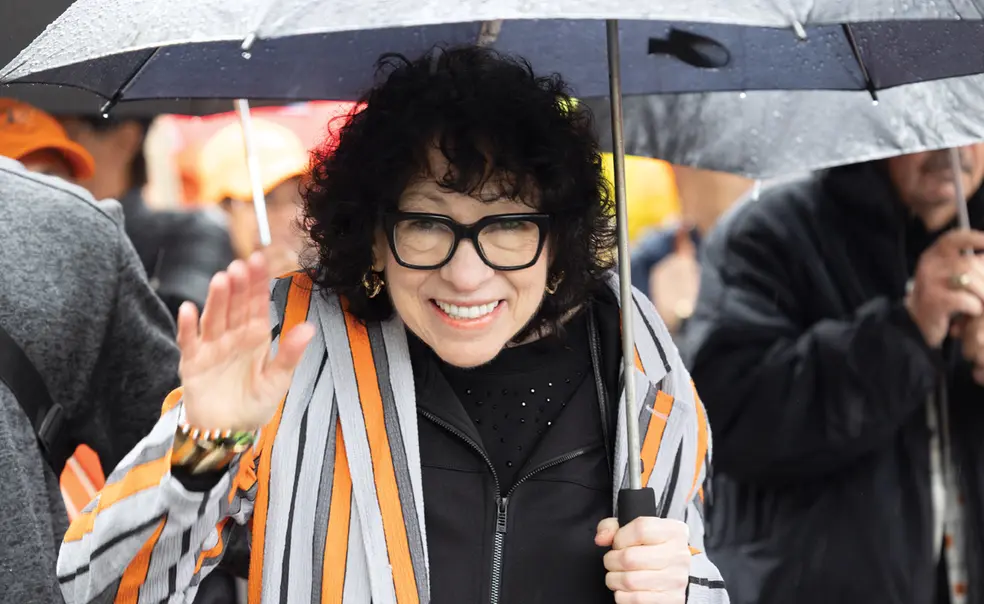

On Saturday morning of Reunions weekend, Jordan Thomas ’18 asked Supreme Court Justice Sonia Sotomayor ’76 a very Princeton question for the current political moment: When humanity, empathy, and decency seem lacking among people in power, what does it mean to be “in the service of humanity”?
Sotomayor famously added that bit to Princeton’s unofficial motto, “In the nation’s service,” in a 2016 Alumni Day speech. And through a winding story, she explained it to Thomas and the hundreds of other alumni who braved the cold and rain to see her speak at McCarter Theatre.
One day as an undergrad, she said, she stumbled across an article about a man who landed at a local psychiatric hospital and had to wait some time for a Spanish translator to be brought in to sort out his story. “How could this happen?” she thought, and she gathered a group of Spanish-speaking friends who began translating for patients at the hospital. At Christmas, the students cooked for them.
Sotomayor said that was her first experience with one-on-one community service, something she’s tried to continue all her life. “We have to think about living as part of our community and taking personal responsibility for improving the human condition,” she said. It’s what she meant when she gave that speech in 2016.
“Because we think of ‘in the nation’s service’ as elected positions, but it’s not just elected positions. It’s individual activities of caring,” she said. The audience erupted in applause.
The event was organized by and for the Class of ’76 and later opened to others who registered for Reunions. Sotomayor spoke with Melanie Lawson ’76, whose long career as a broadcast journalist in her hometown of Houston, Texas, was celebrated by the city when she retired this winter.
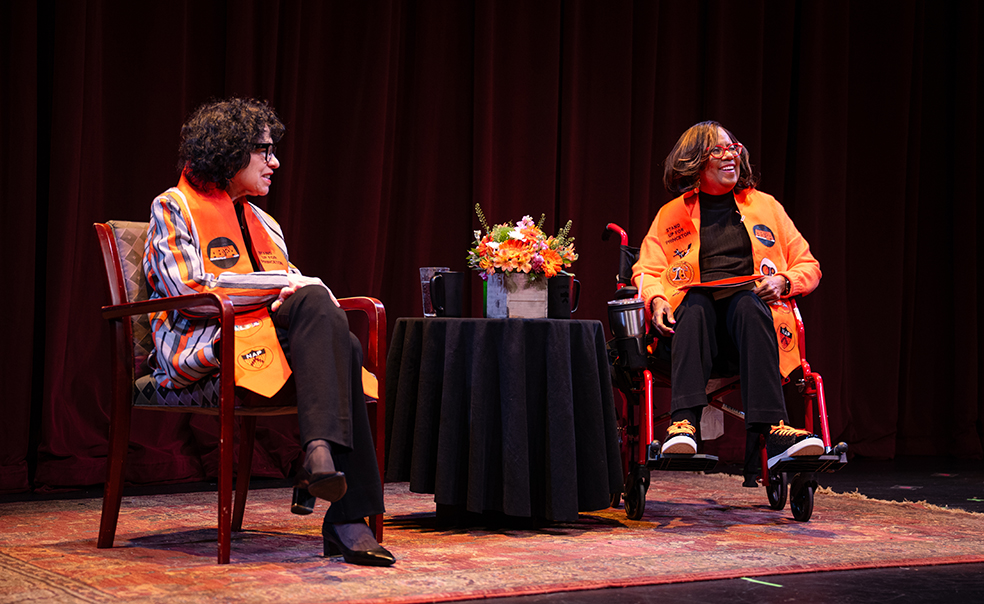
Caring for others became a thread that wound through Sotomayor’s talk, as she described growing up in the Bronx with her Puerto Rican family, getting diagnosed with Type 1 diabetes when she was 7, and eventually picking Princeton partly because it wasn’t far from home. It’s taken her decades, she said, to fully understand how much some of her classmates at the time suffered being away from their families and struggling to fit in.
“We all suffer private pain,” Sotomayor said, “yet we rarely talk about it, and I think that’s a mistake.” But eventually the class formed friendships, “and I come back to my 50th reunion, and it’s pretty wonderful. We belong now.”
At Princeton, she said, she used her fear as a stimulant to learn, and she set small, achievable goals. In her first semester she aimed for three B’s and one A and did it. Over time she upped the goal until she got straight A’s and eventually the prestigious Pyne Prize. When years later President Barack Obama called to say he was nominating her for the Supreme Court, she — a tough New Yorker — started crying.
“Judge, you don’t have to cry. I’ve put together the most fabulous team to get you confirmed,” Sotomayor recalled the president saying.
“I may be one of the few people — and I hope this is true for a lot of you, for a lot of us — who has lived further than I ever dreamed,” she said.
Without touching on politics or pending cases — two topics the audience was warned she wouldn’t discuss — Sotomayor described her fellow justices as rather like siblings. They spend a great deal of time together, they argue and disagree, and “you sometimes wish your mother hadn’t had them.” For example, Sotomayor said she very often disagrees with Justice Clarence Thomas but still appreciates how much he cares about those around him, learning the names and personal stories of everyone who works for the court.
“There’s good in every one of my colleagues,” she said. “We all believe in the Constitution. We all believe in our system of government. We all care deeply about this country. The fact that they’re misguided” — and here she paused while the audience laughed and applauded — “it doesn’t mean they’re bad people.”
The Latest
See all


Related News
Janice Lee ’09 Worked to Renovate One of Hollywood’s Best-Kept Secrets
An engineer by training, Lee has been deputy project manager on the renovation of Hollywood Burbank Airport

1 Response
Nivea Teresa Velázquez ’76
4 Months AgoSotomayor’s Caring Impact
Great memories! Sorry to have missed seeing you, but everyone sent me great photos. Keep up your excellent work and caring! Abrazos y bendiciones!