

Laura Clarke ’11 Offers Books to Inspire Children’s Moral Imaginations
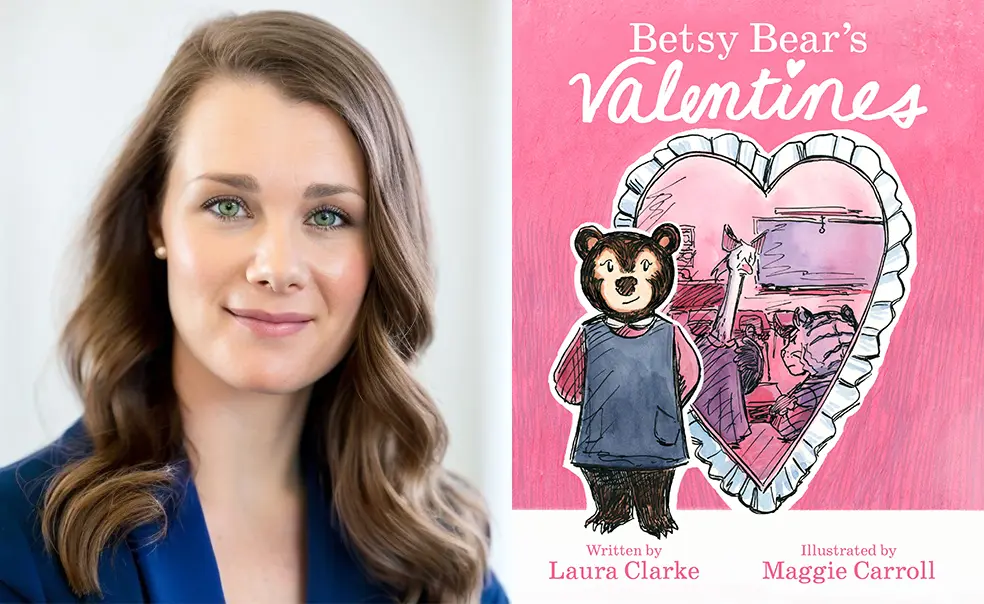

Laura Clarke ’11 is an electricity consultant and former CIA economic analyst — and also a mom and longtime Sunday school teacher near her home in Virginia. Now, with the publication in January of Betsy Bear’s Valentines, she’s also a children’s book author.
Her sweet story with charming illustrations of animal characters was inspired by tales she invented for her own children, and it aims to explore a little age-appropriate moral complexity. The lead character has an opportunity to help a new kid in school handle a bully and she takes it, eventually finding a way to help the bully (a tiger, but don’t read anything into that) find his own kindness as well.
PAW asked Clarke to suggest three more books to inspire children’s moral imaginations, and she suggested these.

By Virginia Lee Burton, 1952
Maybelle the Cable Car is my favorite picture book. The illustrations are skillfully composed but charmingly screwy. The half-rhyming, rhythmic words are a pleasure to read aloud. Watch the people of San Francisco insist that, “We, the people, are the city!” and save their cable cars from the depredations of municipal bean counters. The plot proceeds at a few levels, examining civic and private responsibility and how a city’s life unspools across time in a Burkean ribbon. Plus the anthropomorphized buses and cable cars are a hit with the under-5 crowd.
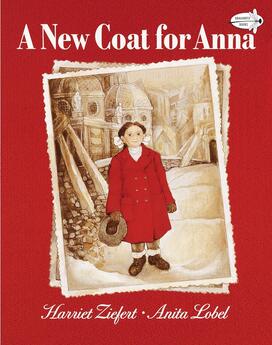
By Harriet Ziefert and Anita Lobel, 1988
As a Christian who thinks about energy economics for a living, I often wonder: Why scarcity? When God was inventing physics, why didn’t He turn the knob to a more commodious place? Why do we all have to scrape along? I don’t think we’ll know the full answer in this life, but here’s a partial one, maybe. Scarcity is the engine of creation, the thing that makes us overcome fear and laziness to go, explore, act, speciate. Scarcity also gives rise to markets, which are a venue for what Charles Williams called coinherence: mutual burden-bearing, interdependence, and reciprocity. A New Coat for Anna is a gentle meditation on scarcity driving exploration and community. A little girl and her mother collect new friends and the components of a new winter coat, in a post-Hitler Mitteleuropa society knitting itself back together. Anna and her mother show young readers how to be good neighbors and counterparties.
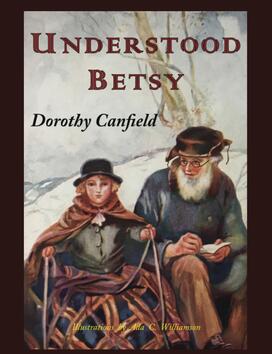
By Dorothy Canfield Fisher, 1917
Do Louisa May Alcott’s later novels, like Rose in Bloom, underwhelm you? Good premises, but executed in too mawkish and obvious a way? Then Understood Betsy is for you! It’s a chapter book that subtly illustrates how an oversheltered town girl blooms when her country cousins give her independence, responsibility, and a chance to fail. A salutary lesson for min-maxing parents in prosperous suburbs (gulp). Another good lesson for little meritocrats and their parents: The book argues that academic achievement is good if it fits children for independence but is not a worthwhile end in itself. Double gulp!
The Latest
See all


Related News

With Prominent Journalists and Hoagies, the ‘Prince’ Celebrates 150 Years
A gala at the New York Historical raised roughly $400,000 for the independent student newspaper



No responses yet