

Melat Bekele ’24 is Rebuilding an Ethiopian and Eritrean Community
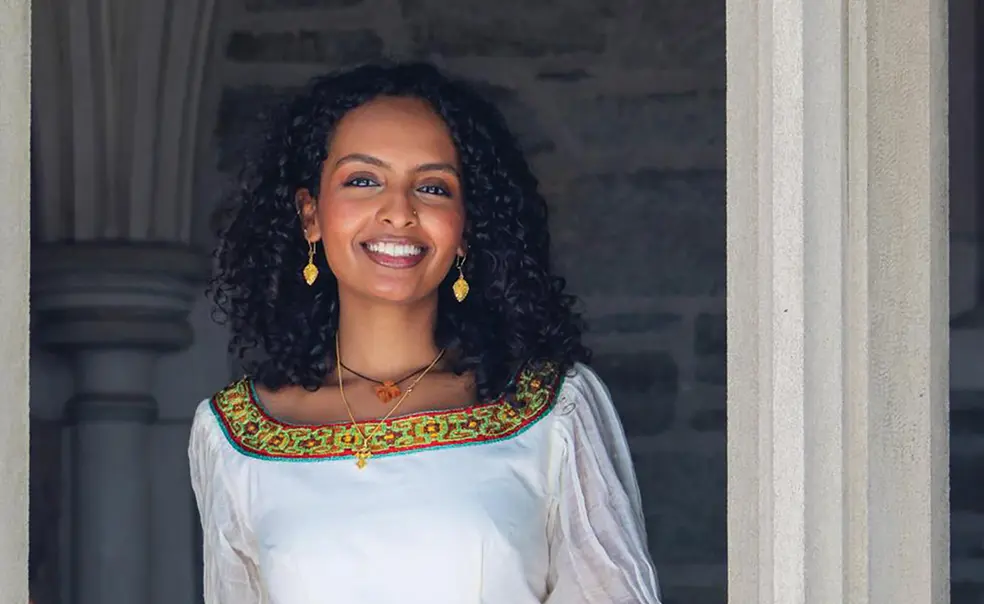

Growing up in Rochester, New York, Melat Bekele ’24 looked forward to the Ethiopian and Eritrean community’s annual picnics and New Year celebrations where youth and families gathered. Outside of those celebrations, however, opportunities for connection were limited.
“In Rochester, there’s not one place to bring everyone together,” Bekele says. “A lot of the parents’ ideology is ‘stay with their own ethnic group.’ There are a lot of people here we would never ever talk to just because our parents are like, ‘Don’t do that,’ or because they taught them one way.”
To bridge these divides, Bekele founded the Habesha Association for Success and Beyond (HASAB), a nonprofit that empowers Ethiopian and Eritrean kids and young adults through mentorship, leadership development, and cultural programming. The organization uses the term “Habesha” to create a space for people who may identify more broadly with the Ethiopian and Eritrean diaspora.
The idea grew out of conversations with parents seeking advice on helping their children navigate applying to college admissions and growing up between cultures. After graduation, Bekele and several friends turned those conversations into a mentorship program.
Since then, HASAB has partnered with several local universities and organizations, including the Rochester Institute of Technology’s Eritrean and Ethiopian Student Association, with whom it hosted its first Diaspora Dialogue, exploring what it means for Gen Z to navigate identity, family, and friendship as a diaspora.
“Not only Ethiopians and Eritreans have been coming to our events,” Bekele says. “We always encourage people to bring a friend, and a lot of university students bring friends. That turns into some of the best discussions.”
At Princeton, Bekele developed the leadership skills she would later bring back to Rochester. She served on the executive boards of the Pan-African Student Association and the Dorobucci African dance group, helped revive the Ethiopian and Eritrean Student Association, and studied and worked abroad in Kenya, Ghana, and South Africa.
“Having studied African studies and politics, I learned the importance of infrastructure and community,” says Bekele. “When I came home, I wanted to encourage and inspire the younger generations who didn’t have access to the same resources and opportunities I had at Princeton.
“Princeton really opened my eyes to the world,” Bekele says. “It showed me the importance of mentorship and alumni networks. When you come back for Reunions, you see how deeply people care about supporting one another. I thought, ‘Why can’t I bring that kind of spirit here?’
“Being Black at Princeton is a unique experience, and especially being first-generation and low-income, there were so many things I wasn’t aware of before I came,” Bekele says. “I was able to build a community for myself and acquire skills to become a leader. I learned that leadership is also a learning process — bringing people together around a common goal.”
HASAB is exploring creative programming as another way to help young people connect with their culture and one another. Most recently, the organization hosted its first public workshop at Elevate Dance Center in Rochester, where more than 20 young people registered to learn traditional Eritrean and Ethiopian dance.
Looking ahead, Bekele hopes to introduce additional programming, including art exhibitions and film screenings, while growing HASAB’s reach throughout upstate New York.
“I’m proud that we’ve gotten people excited again,” she says. “You can actually do something — you can go and make something of yourself.”
Nominate Other Inspiring Alumni. This story is part of a series highlighting the stories of alumni doing inspiring work. To nominate others, please email your ideas to paw@princeton.edu.
The Latest
See all


Related News

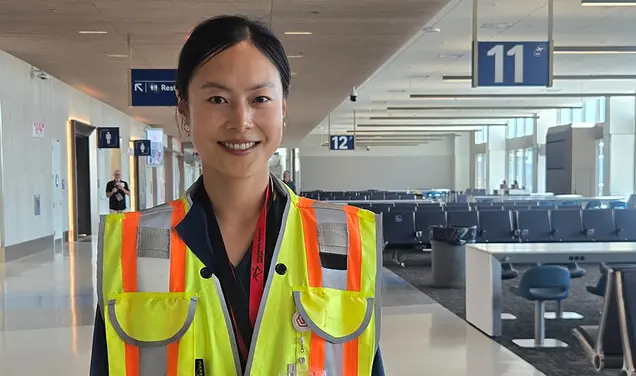
Janice Lee ’09 Worked to Renovate One of Hollywood’s Best-Kept Secrets
An engineer by training, Lee has been deputy project manager on the renovation of Hollywood Burbank Airport

1 Response
Astaire Selassie ’86
2 Days AgoThankful for Your Work
Thanks for creating this network!