

New Book Explores Justice Samuel Alito’s ’72 Impact

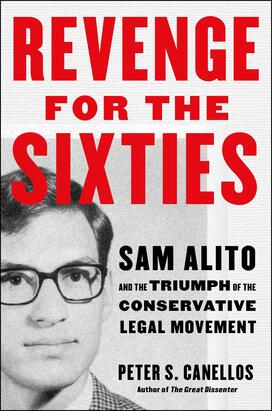
The Book: Blending political biography with contemporary legal history, Revenge for the Sixties (Simon & Schuster) is the first major account of Supreme Court Justice Samuel Anthony Alito Jr. ’72. The book examines Alito’s rise from his Italian American, middle-class upbringing where he was shaped by experiences of religious prejudice and shifting cultural values to his central role in the conservative legal movement. Charting his path through institutions like Princeton and the Federalist Society and eventually the nation’s highest court, Revenge for the Sixties explores how Alito’s deeply held convictions have helped shape landmark decisions on issues ranging from religious rights to environmental regulation. Ultimately, it portrays both the man and the movement behind the profound transformation of the Supreme Court's role in contemporary America.
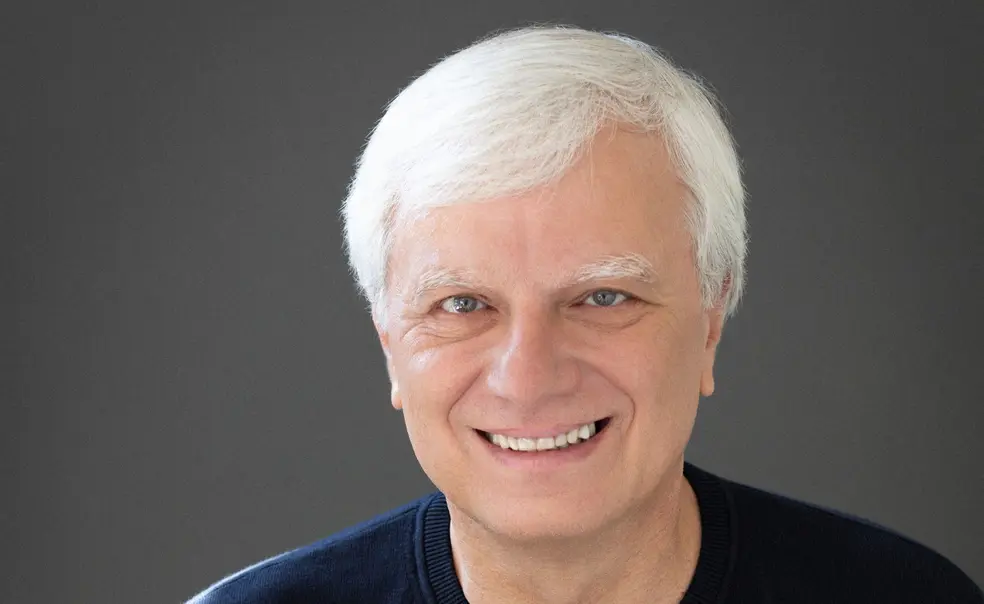
The Author: Peter S. Canellos is the author of several books and was Politico’s executive editor, where he led the newsroom during the coverage of the 2016 presidential election. He was also the editorial page editor of The Boston Globe. Among numerous awards, he is a Pulitzer Prize finalist and a recipient of the American Society of Newspaper Editors award in 2011. He'll be in Princeton May 4 for a book talk about Revenge for the Sixties.
Excerpt:
Before the start of the fall term of 1968, Princeton University administrators hosted a reception for certain incoming freshmen. Andy Napolitano [’72], then an outgoing 18-year-old from Newark, remembers it distinctly as a gathering of scholarship students, a group that Princeton was struggling to integrate. There, Napolitano met a shy valedictorian from Steinert High School named Sam Alito.
The two had a lot in common, from a curiosity about politics to a sense that they were carrying the hopes of their Italian American ancestors on their backs. Admission to Princeton was the surest sign that the Napolitanos and the Alitos had really arrived in the United States. The two young men were also nervous. To go from a New Jersey public high school to Princeton, the Ivy League university that was in their state but not necessarily of it, was to make a leap into the unknown, to jump the fence of the richest, plushest, most beautiful house in town.
That Princeton administrators felt the need to host a special welcome for these kids was a bit curious. Did they assume that poorer students would band together, marshaling their defenses against the school’s rigid social hierarchy? Did they expect them to express gratitude for the financial assistance? Or perhaps the reception was merely meant to acknowledge their achievements, and the students themselves felt singled out because they didn’t fit the Princeton mold.
Throughout much of its then-222-year history, as it ascended the ranks of the world’s finest universities, Princeton wrestled with its own elitism. Even by the standards of Ivy League universities, all of which were seen as snobbish in some quarters, Princeton stood out for its emphasis on social cachet and conformity. “For the coming football games, we are ready with charlie caps, white bucks, gray flannels, Princeton ties — naturally all on the rebate system,” assured a 1949 advertisement for the Princeton University Store.
Much of the university’s mystique stemmed from its so-called eating clubs. In 1855, Princeton banned fraternities, but in doing so, it opened itself to a new form of exclusivity. Unlike many other universities that shunned the Greek system, Princeton wasn’t in a city big enough to feed and entertain its students. They soon organized themselves into clubs of like-minded individuals.
At first, the purpose was nothing other than to have a place for meals, but over the decades, the eating clubs evolved into societies as insular and personality driven as any fraternities; the richest among them ruled the campus from Gilded Age mansions lining Prospect Avenue. By 1907, Princeton’s president, Woodrow Wilson, was bemoaning the clubs’ dominance over university life. They selected members through a process known as “bickering”; the one-third of students who were deemed unworthy of the clubs — the poor kids, the nerds, those of disfavored religions or social backgrounds — lived a life that was, in Wilson’s words, “a little less than deplorable.” While the clubs provided lifelong bonds for privileged students, they conferred shame and worthlessness on others.
Despite Wilson’s admonitions, however, the clubs thrived — and in just 13 years, they became subjects of swooning envy among admirers of Princeton grad F. Scott Fitzgerald’s [1917] romantic bestseller This Side of Paradise. Initially a far bigger hit than The Great Gatsby, This Side of Paradise provided a primer on the manly attributes of the various Princeton clubs: “Ivy, detached and breathlessly aristocratic; Cottage, an impressive mélange of brilliant adventurers and well-dressed philanderers; Tiger Inn, broad-shouldered and athletic . . .”
By the late 1950s — just a decade before Alito and Napolitano were to arrive on campus — the university had given up its attempts to quell the clubs’ influence and aspired to what it hoped would be a happy equilibrium: with more than a dozen clubs of varying interests, every student could find a place of welcome. That optimism quickly dissolved with the “Dirty Bicker” of 1958, in which 23 students were turned away from every club. Most of those given the universal thumbs-down were Jewish, adding a patina of antisemitism to Princeton’s reputation.
The university hastened to establish a non-competitive dining hall, shrewdly named for Princeton grad Adlai Stevenson II [1922]. He was a scholarly governor of Illinois whom the Democratic Party had nominated for president twice in the previous six years. The name sent multiple messages: not all Princeton men were card-carrying Republicans, but then again, Stevenson’s liberalism had twice been rejected at the polls. This would be the home for the other half — a group that inevitably came to include outcasts, principled objectors, and some nice, modest kids who simply had no patience for the bickering and pomposity of the eating clubs.
The arrival of a non-competitive dining option accompanied a shift in Princeton’s demographics. Its all-male student body had long been drawn mostly from northeastern preparatory schools, many of which were associated with Protestant denominations. But the university’s youthful new president, Bob Goheen [’40 *48] — nicknamed BoGo by students — pushed for steadily increasing admissions from public high schools.
This wasn’t merely a progressive reform; it was a realization that some of the best minds were coming out of the postwar middle class. The meritocracy that had elevated the likes of Sam Alito was starting to make inroads at Princeton. By Alito’s class of 1972, public school boys — some, admittedly, from very wealthy communities — outnumbered prep school graduates 481 to 344.
Students’ political preferences began to change as well. In 1960, Princeton men favored Republican Richard Nixon over Democrat John F. Kennedy by a robust 70–30 margin. Just four years later, in the last election before Alito’s arrival, Democrat Lyndon Johnson outpaced Barry Goldwater 66–27. For the first time since campus polling began in 1916, a Democrat had come out ahead.
The clash of old traditions and new viewpoints was starting to be felt, like the advance tremors of an earthquake. Princeton’s tectonic plates were shifting in ways that would scramble the experiences of just about everybody on campus. For some, the turbulence would be energizing. “It was a great era to be in college in the United States, especially at Princeton,” enthused Richard Balfour, who was an editorial writer for The Daily Princetonian in the class of 1971. “You cannot imagine more going on in a four-year period.”
Those same upheavals would leave deep and lasting bruises on the shy boy from Mercerville. The collision of wealth, class, and politics on the bucolic campus shaped his worldview. As Princeton became more agitated, older alumni began to blame the democratization of the admissions process — all those public school kids came to Nassau Hall with liberal politics in their steamer trunks. Alito saw essentially the opposite: his discomfort with his wealthier classmates was conflated with his distress over the campus’s left-ward shift. In his assessment, the rich kids felt free to challenge authority because they had nothing to lose. Their position in the global hierarchy was secure. They didn’t need good grades, so they skipped exams to rail against injustices toward others. He, the superior student, relied on good grades to prove his mettle. But those same privileged kids went on to question the value of the entire grading system. It was just the start of feelings of unfairness and distrust that he would carry forward from his Princeton years.
“I saw some very smart people and very privileged people behaving irresponsibly, and I couldn’t help making a contrast between some of the worst of what I saw on the campus and the good sense and decency of the people back in my own community,” he would say at his confirmation hearing, casting his Princeton years as a period of disruption after his frictionless upbringing in Mercerville.
Later, he would elaborate: “One thing I saw was at the time, there was a feeling among a lot of college students, including my fellow students at Princeton, who came from much more privileged backgrounds than I did, that there was something wrong with their parents’ values and the kinds of lives that their parents lived — that they had sold out, that they had taken advantage of other people, that they had bad values, that they were very materialistic, that they were very status conscious. I didn’t feel that way at all about my parents or about my family. They weren’t privileged. By that point they were solidly middle class, but everything they had achieved, they had achieved on their own through hard work and sacrifice. So I thought that entire view of the generation to which my parents belonged was false.” A different perspective isn’t a falsehood, however. Alito’s later ruminations were an illustration of what many classmates saw in him at a very young age: the tendency to reduce complicated issues to a choice of right or wrong, a simple equation with a clear answer. Other students, for their part, would dispute the idea that their activism was a manifestation of privilege. Yes, they were asserting different values from their parents, but their parents weren’t the main issue. The issues were poverty, discrimination, and a bloody war in Vietnam that made them ashamed to be Americans. Maybe everyone on campus needed to pause and take a breath a little more often, but meaningful lines were being drawn. And while they were drawing lines, so too was Sam Alito.
From REVENGE FOR THE SIXTIES: Sam Alito and the Triumph of the Conservative Legal Movement by Peter S. Canellos. Copyright © 2026 by Peter Canellos. Reprinted by permission of Simon & Schuster, LLC.
Review:
“Provocative reading for students of the Supremes, of whatever stripe.” — Kirkus Reviews
The Latest
See all


Related News
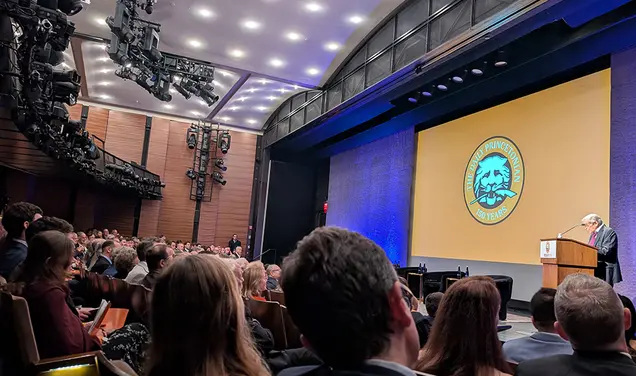
With Prominent Journalists and Hoagies, the ‘Prince’ Celebrates 150 Years
A gala at the New York Historical raised roughly $400,000 for the independent student newspaper


2 Responses
John R. Rosenberg ’68
5 Months AgoNot a Fan of Alito
A blight on Princeton’s reputation and a disgrace to all Phillies fans. A scoundrel for the ages.
Lamar Oxford ’71
6 Months AgoAlito’s Views in Context
While a multi-cultured, multi-faceted, multi-socialized student body necessarily includes those of varied political stripes, it shames me to think that our times at Princeton in the late, great ’60s somehow shaped Alito’s horrific mindset. Implicit or explicit in so many of his writings and public declarations are the very closed-minded prejudices that we fought so hard in those halcyon days to overcome: racism, ageism, sexism, even antisemitism. I am ashamed that the great majority of us in the student body back then who had our minds opened by teach-ins and brilliant professors could not also succeed in prying open Alito’s very narrow, closed mind. And heart.