
‘Prince’ Tenure Stands Out in More Than 60 Years of Princeton Connections

It was a shocking piece of news that garnered a banner front-page headline in The Daily Princetonian: Nassau Hall was raising student fees for the 1966-67 academic year. The total cost of admission at Princeton — including tuition, room, board, and “incidentals such as supplies, books, and dates” — would approach (gasp!) $3,700.
By today’s standards, it seems a bargain. Adjusted for inflation, that total would be roughly $37,000 in 2026 dollars, not even half the estimated cost today (about $94,000). But at the time, $3,700 was considered downright scandalous. In the next day’s Daily Prince, a front-page story asked: “Will the University price itself out of existence?”
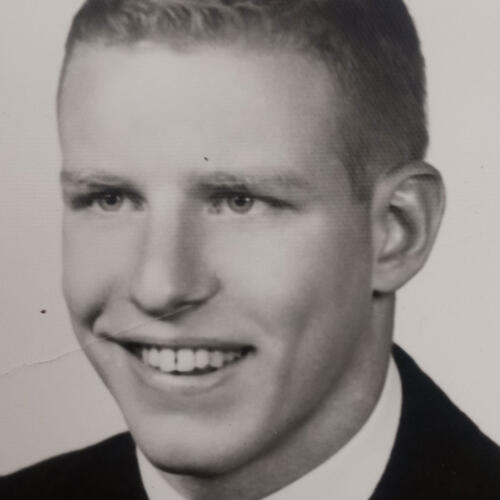
And that’s just one of the striking differences that stand out when you travel back to Old Nassau six decades ago, as seen through the pages of the student newspaper. I embarked on that adventure this spring. With the Class of ’66 heading back for our 60th reunion, my son, Homer Reid ’98, asked me about my days on the Prince staff. So I hauled out the huge bound volume in my basement containing every issue of The Daily Princetonian for 1965-66, when members of ’66 comprised the paper’s senior board of editors. I started reading, and reminiscing.
It was a time when a Princeton class had just over 800 members, of whom 20% were legacies, or “alumni sons,” as the Daily Prince referred to them. And Princeton was still all-male — well, almost all. One of the biggest stories of the year — I wrote a column enthusiastically cheering the news — was the report that number of undergraduate women would increase in 1966, from 10 to 12. Those dozen “Tigeresses,” as the Prince called them, were admitted under the Critical Languages Program, which allowed a small number of female students majoring in languages such as Chinese, Russian, and Persian to take their junior year at Princeton. This sparked new interest in those difficult languages among male undergrads as well.
Other than complaints about the male-female ratio (Prince headline: “Barren Social Life Plagues Students”), we seem to have been a contented lot. The University ended the much-deplored “Chapel Rule,” which had required attendance at some religious service half the weekends of the year. Jobs were plentiful for new grads, with corporate recruiting ads dotting the Princetonian. After a week of failed attempts, two frosh from the Class of ’69 succeeded in stealing the clapper from the Nassau Hall bell. Major rock-’n’-rollers, including the Coasters, the Drifters, Little Richard, and Conway Twitty, played at the big dances and Prospect Street parties. America’s most famous pianist, Van Cliburn, performed a recital in Dillon Gym.
The campus was expanding. Minoru Yamasaki’s neoclassical building for the school of international affairs — “Woodrow Wilson Hall” back then, Robertson Hall today — opened in 1966. President Lyndon Johnson came to campus to dedicate it, but only after Princeton agreed to give him an honorary degree. Princeton created a new department and a new major in statistics.
There was furious controversy about Nassau Hall’s proposal to build a 13-story mathematics building near the football stadium — at 170 feet, it would tower over everything. Angry undergrads formed SCAR (“Student Committee for Architectural Responsibility”) to campaign against its construction; the Prince published blistering anti-tower editorials. Nonetheless, Princeton Township granted a zoning waiver to allow construction of the towering new Fine Hall — and, that, too, was a major front-page story.
On the sports pages, Princeton was in the midst of a golden era. In one year, we were Ivy champs in football, basketball, lacrosse, baseball, tennis, cycling, and fencing. The basketball team went to the NCAA Final Four — some students hitchhiked to Oregon to attend the games — and Bill Bradley ’65 was the tournament MVP. We beat Rutgers in football, and had the Big Three bonfire three straight years. Two players from my class — Charlie Gogolak and Stas Maliszewski — were drafted by pro football teams; Gogolak, a pioneer of soccer-style kicking, was a first-round pick.
All those winning teams required considerable dexterity for our headline writers. We wrote about the Stickmen (lacrosse), the Netmen (tennis), the Mermen (swimming), the Swordsmen (fencing), the Wheelmen (cycling), the Thinclads (track), the Harriers (cross-country), the Grapplers (wrestling), the Gridders (football), the Booters (soccer), the Ruggers (rugby), the Skaters (hockey), and, of course, the Five (basketball) and the Nine (baseball).
We didn’t have the term “Orange Bubble” back then, but the bubble existed. It was a time of major political and social upheaval — the war in Vietnam and the civil rights struggle, among much else — but the Tigers, for the most part, weren’t involved. When 15,000 students along the East Coast gathered in Washington for an anti-war demonstration, the Princeton contingent numbered fewer than 25. (Instead, 1,002 Princeton students signed a telegram “endorsing American policy in Vietnam.”)
Related coverage
Revisiting My PAW Columns After 50 Years
Still, American policy in Vietnam hung heavily over our senior year, because there was still a military draft. “Three Students Cite 1-A Reclassifications,” read the Daily Prince headline in January 1966; it was followed by several more reports about Princeton undergrads whose local draft boards had revoked their student deferments. That spring, busloads of us seniors were sent to Fort Dix for physicals to determine if we were fit for military service; a healthy rating (“1-A”) meant you were subject to mandatory military service as soon as you left school.
The Daily Princetonian complained angrily about “arbitrary and irrational student conscription,” but our editorials didn’t impress anybody in the Pentagon. The Class of ’66 eventually sent more than a quarter of its members into the military. Inspired by my days on the Prince, I became a reporter — but not until I finished five years in the Navy.
In 1966, the most popular majors were history and English. Grades were issued on a scale of 1 to 7, and some guys actually flunked out. Some 90% of the class were members of eating clubs. And yet, many aspects of Princeton have not changed over six decades. Back then, the Tiger Band’s halftime jokes provoked outrage at Penn and Harvard. The Triangle show (“Grape Expectations — A Dickens of a Show”) included the famous kickline. And a Princetonian headline in early June reported that “Alumni Return to Campus for Reunion Celebrations,” as thousands of grads headed back to parade through the best old place of all.
They’ll be back this year, and I’ll be among them. Sixty years out and living 2,000 miles from Nassau Hall, I still feel close to Princeton — and never closer than when I’m marching along in the P-rade, suffused with a powerful sense of belonging, of family. I’ve been a Princeton undergrad, parent (twice), board member, and (for one semester) professor. But I’d say my finest campus reveries hark back to those afternoons banging out copy in the Princetonian offices above the U-Store, with the imposing vista of Blair Arch right outside the window. I can remember one day when I had this fabulous, stunning front-page story about … I’d better not start down that path, or this article will never end.
The Latest
See all


Related News
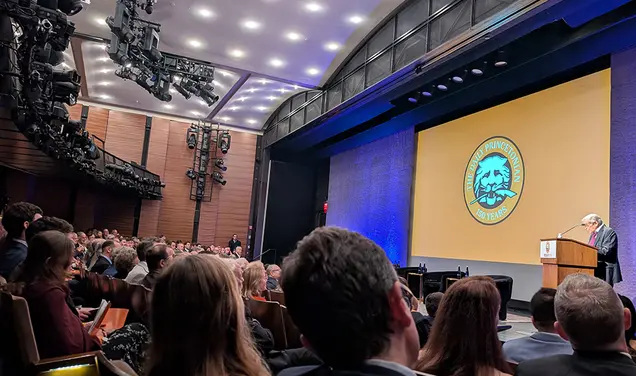
With Prominent Journalists and Hoagies, the ‘Prince’ Celebrates 150 Years
A gala at the New York Historical raised roughly $400,000 for the independent student newspaper


No responses yet