

Revisiting My PAW Columns After 50 Years
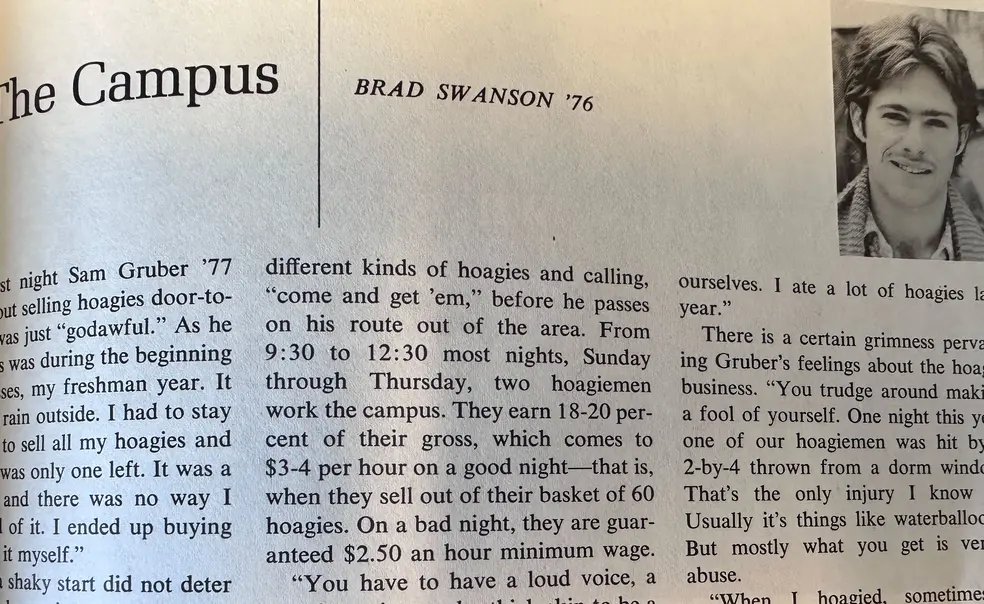

Brad Swanson ’76 is the author of Profit vs. Progress: Why Socially Responsible Investment Doesn’t Work and How to Fix It. He manages sustainable investments, teaches finance as an adjunct professor, and formerly was a Foreign Service Officer.
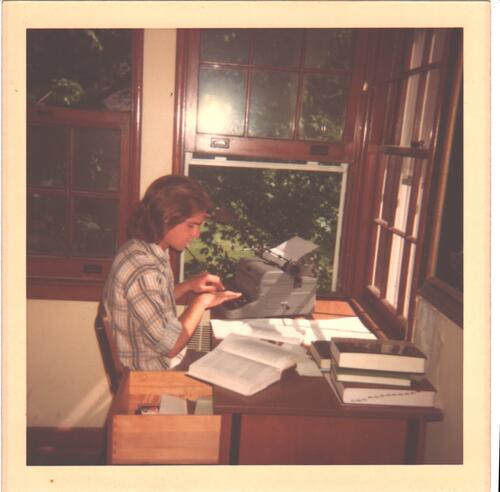
As the Great Class of 1976 approaches its 50th, PAW has asked me to reread the On the Campus columns that I wrote for the magazine from fall of my sophomore year to spring of my senior. What does this extended take on undergraduate life look like a half-century on?

I accepted the challenge, suppressed a premonition of embarrassment, and started to troll through the ancient magazines. They are available on PAW’s website, but are bundled together in annual volumes, with a rickety search function, so it took quite of bit of digital page-flipping.
I found I had covered a lot of ground: 39 columns, averaging about 1,000 words each.
Some columns highlighted the subcultures of different majors. I went to early-morning organic chemistry with pre-meds and listened to their multicolor pens clicking “like plastic crickets” as the professor filled the blackboard with complex diagrams. I was taken aback by the overwhelming awe of “computer jocks” before their hulking mainframes. “The problem with the computer is it becomes God,” said one comp-sci major. “It just becomes a sickness.” I admired the prototypes of devices that mechanical engineers were tasked with inventing, and then building, in a full-year marathon course. The aptly named Tom Swift ’76, for example, created an “antidazzle outside rear-view mirror.”
My columns also probed extracurricular activities, from singing group tryouts (“nasal … weak … a small, tight voice,” as a music director condemned one unfortunate candidate), to the stalwart sellers of the Student Hoagie Agency, canvassing the campus at night pitching sandwiches. “You have to have a loud voice, a lot of stamina, and a thick skin to be a hoagieman,” advised a veteran of the trade, Sam Gruber ’77.
The dreamlike ambience of the campus served as its own subject for some pieces, such as the Chapel at night: “Inside, it is vast and shadowy, and organ music propagates down the long nave and echoes off the stained glass and stone walls.” Or the changing of seasons, and what it portended. “For weeks the campus had bathed in the red and yellow glow of Indian summer. Leaves loosened from branches and fluttered along the sidewalks … . The next day midterm exams began.”
Instead of reporting student life objectively, I used my own voice. Like many young adults, I sounded ironic, bemused, and a bit out of my depth. But sometimes I delivered sharp opinions, which not everyone shared. My most criticized column tried to show, in a dialogue with a student I named only as Doug, and described as “Princeton’s last living campus radical,” that the ’60s were dead.
Yes, the times they were a-changin’ — changin’ back to what they had been. Instead of the old order giving way to the new, as Bob Dylan had foreseen, looming economic precarity (these were the days of oil shocks and “stagflation”) was forcing young people to reconcile with “the Establishment” and mute social protest.
I had demonstrated with Doug against ROTC on campus the previous year, as a sophomore. But now, “I definitely don’t believe anymore that either you or I can change the world,” I told him. The reaction was swift, copious, and negative. PAW printed a sample — three letters refuting me, two from alumni and one from a classmate, Robert J. Freedland, who termed my column an “insult to all Princetonians,” and sought “to assure the alumni that idealism still thrives at Princeton.” Touché!
One column that passed unremarked should have brought outrage. It described Princeton men’s sexual predation on “townie” girls. “The town is an open pit from which girls of all sizes, shapes, and temperaments can be quarried,” I wrote. “Princeton men are often literally playing with children.”
But my distaste did not go far enough. In the column, a classmate revealed that he had once spent the night with a high school freshman girl from the town. Now he regretted it, but rather than reporting him, I only said that his “sudden emergence of conscience is probably not deserving of sympathy.” PAW let the column pass without question. The magazine even commissioned a satirical cartoon to adorn it, showing a burly male tiger about to embrace a young girl. Today, thankfully, statutory rape is no longer viewed as a male rite of passage.
Like most men students hungry for female interaction, I found the 3-1 men-women ratio frustrating. But I failed to examine the issue with any seriousness from the women’s point of view. I delivered my most insightful comment in a column about dorm room furnishings: “As opposed to men’s bathrooms, which are always bare except for a discarded jockstrap kicked in the corner, women’s are filled with drying lingerie on wooden stands, toothbrushes, towels, cosmetics, shower caps, and other paraphernalia, all left blithely unguarded.”
As a non-athlete tinged by a dissolute lifestyle, I mostly ignored sports. I wrote the obligatory piece about hard partying on a football weekend, this one rainy, ending the odyssey at the clubs, where “spiked punch flowed like the water in the gutters outside.” But a year later, I took one for journalism, accepting a plea from Bob Ireland ’76, the co-captain of the cheerleading squad, to fill in for a missing member at an upcoming game.

The piece dripped with ridicule, mostly about my interaction with alumni fans who found my school spirit deficient. But I had to admit that at one dramatic turn of play, with “everyone on his feet, the stadium-rattling ‘Go! Go! Go!’ blasting us with its volume and its imperative urgency,” the magic worked. For a moment, I became “a willing leader of the insensate mob, lusting with them after a victory. A cheerleader.”
An innate sense of Princeton’s charm and excellence ripples throughout the columns, appearing in the most unlikely places, as the final selection for this article shows. For me, it stands as a timeless reminder of why we came to Princeton, and why we cherish the experience.
The editor asked me to report on the troubling appearance on campus of an ideology that was much despised at the time: socialism. I duly turned in a column with this introduction:
“For radicals, members of the Working Socialist Study Group of Princeton University are almost respectable. They are open in expressing their views, assiduously productive, scrupulously self-critical, unremittingly polite when listening to other opinions, and they usually talk in well-rounded sentences. They are, after all, Princeton students.”
Click here to read some of Swanson's On The Campus columns.
The Latest
See all


Related News
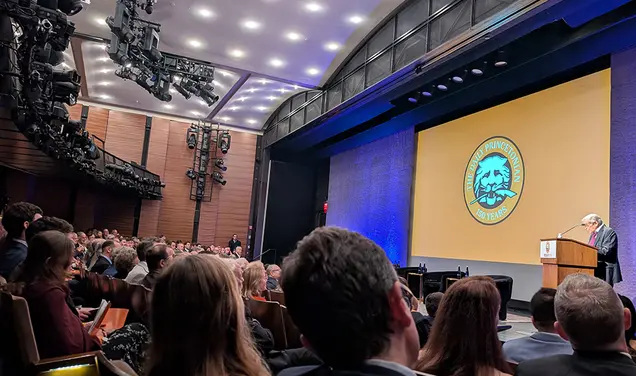
With Prominent Journalists and Hoagies, the ‘Prince’ Celebrates 150 Years
A gala at the New York Historical raised roughly $400,000 for the independent student newspaper


No responses yet