
One Question Can Change the Way Kids View the World


Raquel Whiting Gilmer ’93 is the founder and CEO of Perfectly Me, a Maryland-based company founded in 2007 offering values-based camp and club programming for children.
Ask your kid to help with something. Anything. Clear the table. Rake the neighbor’s leaves. Carry in groceries. Watch what happens before they move.
They’re calculating. Effort versus reward. “What’s in it for me?” “What do I get?” “Will you pay me?”
I’ve been running youth programs in Maryland for nearly 20 years, and I’ve watched that question — “What do I get?” — become the first thing more and more kids ask. Not the second or third. The first one. The automatic one.
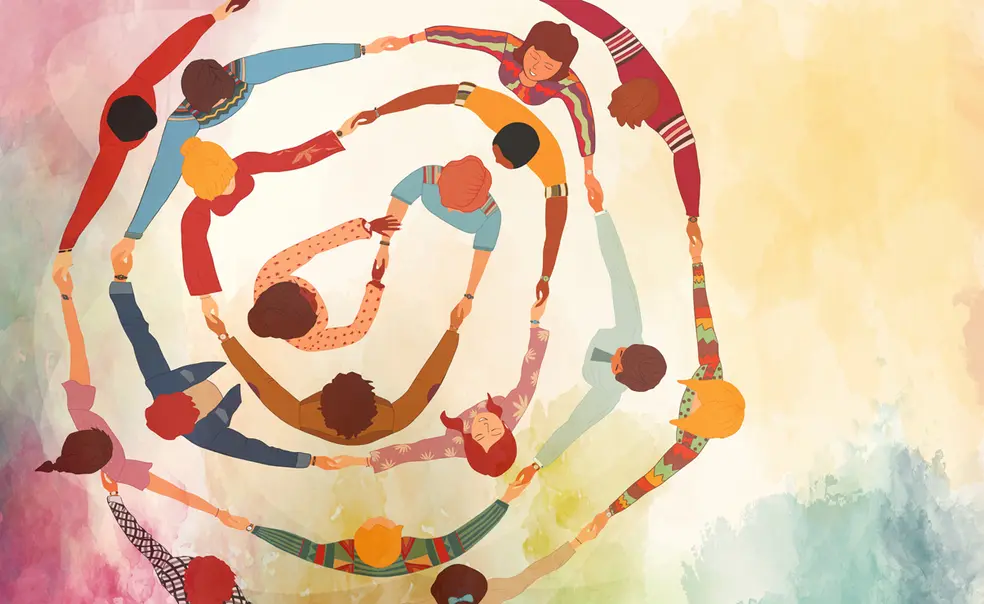
Where did they learn to lead with it? Then I realized: We taught them. We’ve been raising them as consumers. And we forgot to raise them as citizens.
Princeton gave us a lot of things. But perhaps its most enduring gift was a conviction that education exists in service of something larger than ourselves. I think about this a lot in my work. Because what I’m watching happen in American childhood right now is precisely its opposite.
We’ve organized nearly every aspect of kids’ lives around a transactional model. Soccer comes with professional coaching and tournament travel. Birthdays happen at venues that handle everything. None of this is inherently bad — we’re busy, these services solve real problems. But here’s what gets lost: When everything is purchased and packaged, kids don’t learn that belonging requires contribution. They show up, consume what’s been provided, and leave. Belonging becomes something you access, not something you build.
And that teaches something specific, whether we intend it or not: The world exists to serve your needs. Your job is to evaluate options and select what benefits you most. Of course kids ask, “What do I get out of it?” They’re applying exactly the framework we’ve handed them.
We see the consequences. Youth civic participation continues to decline. When researchers ask young adults why they don’t engage, the answers trace back to the same logic: I can’t see the direct benefit to me, so I opt out. Even among high achievers, I see this pattern. The résumé-building mindset. Service as a credential. Volunteerism as a line item.
That’s not what Princeton meant, and I don’t think it’s what most of us mean either.
Last summer, something happened that reminded me what’s still possible. Three girls at our Roland Park camp — Rebecca, Charlotte, and Florie, ranging in ages 8 to 9 — heard about a snack drive for kids at our West Baltimore location. Different neighborhood, different zip code, different worlds. They asked, “What can we do to help?”
Not, what do we get if we help? Just what can we do?
I expected them to bring in a box of granola bars. Instead, they launched a business. They made friendship bracelets and sold them to campers, staff, and parents, calling themselves “The Bracelet Trio.” Every dollar went to the snack drive. No personal profit. No résumé entry. They raised $110. Enough to buy 345 snacks.
Then nine other campers saw what they were doing and started their own projects. Within two weeks, 12 young entrepreneurs were at camp, all asking “What can we do?” instead of “What do I get?”
Two mothers, moved by what their daughters had started, bought 500 additional snacks.
What began with three girls asking one question became a cascade of contribution none of us had planned.
These girls weren’t unusually mature or selfless. They’d simply been practicing. Through Perfectly Me — the youth development company I founded in 2007 — we build “what can we do?” into the fabric of our programs deliberately and consistently. Every week, through our Community Connection projects, kids get small, low-stakes opportunities to notice what’s needed and do something about it. Showing up for their community. Not for credit. Not for a grade. Just because something was needed.
The answer, I’ve found, is simpler than most people expect. Not grand gestures or required service hours. Those approaches tend to just make contribution another transaction: I give my time, you give me credit. What works is repetition. Small moments, practiced regularly, until “What can we do?” stops being a prompted question and starts being an instinct.
Harvard’s Making Caring Common Project, a research initiative focused on raising ethical, caring children, confirms what I’ve witnessed firsthand: When kids engage in genuine acts of service, it strengthens their sense of purpose, belonging, and resilience. They discover that “What’s needed here?” is often a more interesting question than “What’s in it for me?”
This is the shift I’m after. Not raising kids who never ask “What do I get?” Raising kids who don’t lead with that question. Kids who’ve practiced “What can I do?” enough times that it becomes instinct.
Princeton alumni built careers and institutions on the premise that education is not just personal enrichment — it’s preparation for contribution. That idea doesn’t have to end there. It can start in a summer camp bracelet business. It can start at a kitchen table.
It can start with the question we teach our kids to ask first.
The Latest
See all


Related News
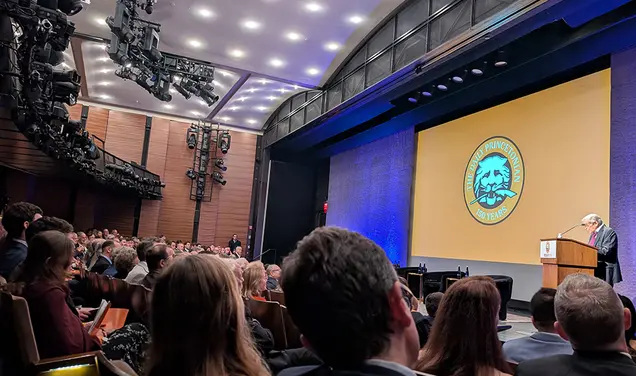
With Prominent Journalists and Hoagies, the ‘Prince’ Celebrates 150 Years
A gala at the New York Historical raised roughly $400,000 for the independent student newspaper

2 Responses
Mary Stenson
5 Months AgoLooking for More Info About Perfectly Me
I really enjoyed this article and would love to know how people that aren’t in the Maryland area could find out more about Perfectly Me, maybe even how to get materials to start their own clubs in other states.
Raquel Whiting Gilmer ’93
5 Months AgoHow to Connect with Perfectly Me
Hi Mary, thank you for your interest. We definitely want to expand our reach beyond Maryland and would love to connect! Please visit perfectlyme.com and submit an inquiry via the contact us form.