

Princeton Students Have Long Worked to Preserve New Jersey’s Pine Barrens
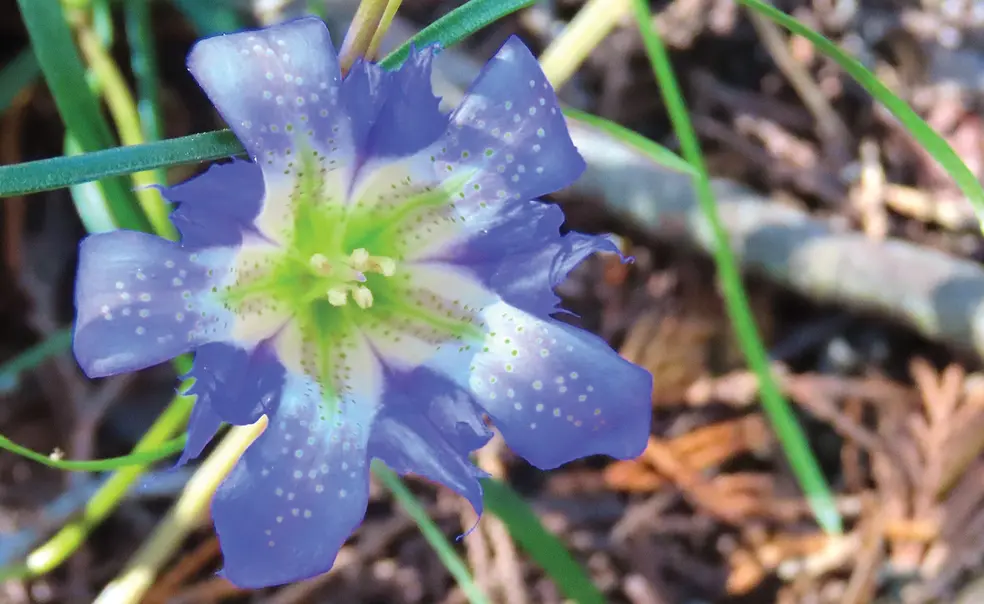


Less than an hour south of Princeton’s stone archways and ivy-covered walls, the landscape transforms dramatically. Suburbia gives way to one-lane traffic in both directions, the sides of the road decorated by the rich greens of cedars and pines and, in the fall, the kaleidoscopic golds and reds of oaks and beeches. The soil underfoot becomes sandy white and acidic, and the air thickens with the scent of sun-warmed pine resin. This is the New Jersey Pine Barrens, over one million acres of some of the last remnants of the Atlantic coastal pine barrens ecosystem. Despite its proximity to campus, the region remains largely unknown to most Princeton students and even some lifelong New Jersey residents.
I first set foot in the Pine Barrens two months into my freshman year at Princeton. I grew up near Boulder, Colorado, where pine forests belonged, in my mind, to mountains and to the West. So, when I heard about a weekend trip sponsored by the student-run Princeton Conservation Society (PCS) to a “pine forest” in New Jersey, I was immediately intrigued. I clambered into the crowded backseat of a rental car with other students, watching the familiar Princeton landscape whiz by and the Pine Barrens take shape.
That crisp October morning, we met with Jason Howell, the public lands advocate for the Pinelands Alliance. He took us on a tour of parts of Wharton State Forest, explaining how the ecosystem’s sandy, nutrient-poor soils shape everything from native plant biodiversity to water flow — and how fire is a necessary and natural component of how the Pine Barrens function. He picked up a peeling pinecone, telling us that this was from a pitch pine, a species that depends on recurring fires to reproduce.
PCS continues to work closely with the Pinelands Alliance, returning annually for fall outings and participating in local activism. For example, in December 2023, PCS members, alongside dozens of local supporters and residents, were involved in a successful effort to advocate for the repeal of a redevelopment agreement at a Pemberton Township Council meeting. The council voted 4–1 in favor of the repeal. For me, this off-campus activism and engagement has been integral to my experience as a Princeton student: learning not only in lecture halls and seminar discussions, but also in civic spaces beyond the University’s borders.
At the time of that first visit, I was unaware of a rich history of Princeton student and alumni involvement in the Pine Barrens. But months later, as a PAW student intern, I stumbled across the Pine Barrens in an April 1971 issue of the magazine.
In the 1970s, Princeton student Tom Givnish ’73 *77 — along with a team of other undergraduates and Professor David Kinsman — were awarded a National Science Foundation grant to study the potential impacts of a water withdrawal scheme on the cedar swamps of the Pine Barrens. Over a series of email correspondence and Zoom meetings with Givnish, now professor emeritus of botany at the University of Wisconsin, I learned more about this project spanning ecology, geology, chemistry, and land use issues. Givnish recalled how drawing down water tables could leave these rare wetland habitats “high and dry.” Such exposure effectively eliminated the natural barrier to potentially rapid wildfire spread. Additionally, cedar swamps support some of the rarest plants in the Pine Barrens, and draining these areas degrades the soil until they are essentially unlivable for these species. In another conversation, Givnish told me that the project received attention at the time and that now, decades later, groundwater protection still demands public attention.
Just before Givnish came to Princeton, another Princeton alumnus was also exploring these sandy backroads. John McPhee ’53’s The Pine Barrens first appeared in The New Yorker in 1967 and was published as a book in 1968, helping to make this region legible to a national audience. Last fall, I visited McPhee, the longtime Ferris Professor of Journalism, at his home in Princeton, where we chatted about his decades-long involvement in the Pine Barrens. White-tailed deer ambled across his backyard as McPhee told me how he initially went looking for a story to write for The New Yorker, discovering the Pine Barrens almost by accident after a friend suggested it to him. He remembers it as a wild place that simply existed, with little political oversight. When I asked him how the landscape has changed, I was surprised to hear him say that it still seems the same to him. Nevertheless, McPhee worries, saying he hopes “that some semblance of it still exists” in the future.
I returned to the Pine Barrens again in November, this time with a notebook and pen in hand. Speaking again with Howell, I more clearly appreciated how the pressures Givnish recognized decades ago persist, in addition to newer challenges with recurring land disputes and disruptions in natural fire cycles. As Howell wove deftly around potholes down winding backroads, he pointed out groves of blackened trunks from large fires, as well as yellow signs demarcating a confusing web of public and private lands. We stopped at one point to look at a bulldozer parked in a clearing where he reflected on the “race” to buy private land and protect it for future generations.
We visited the Black Run Preserve, a hotbed of activism today and also reminiscent of Givnish’s concerns from half a century ago. The area is a critical watershed, and old zoning rules would have allowed the habitat to be built over, degrading special habitat and water quality. Howell and the Pinelands Alliance are currently advocating for a total protection of this land. Development proposals still surface, and successful, enduring preservation will depend on sustained vigilance and engagement.
For Princeton, the Pine Barrens is a place that has been repeatedly encountered, interpreted, studied, and defended by a small but dedicated cadre of students and alumni. Whether experienced through coursework, storytelling, or a weekend visit, the Pine Barrens continue to ask what role future Princetonians will have.
The Latest
See all


Related News

McCarter Theatre’s First South Asian Musical Took Me Back to Forbes Basement
A Beat of Our Own is about a college dance team not unlike Princeton South Asian Theatrics


3 Responses
Daniel L. Jassby *70
5 Months AgoPreservation Work of the Pinelands Commission
Amazingly, Floyd’s article does not even mention the New Jersey Pinelands Commission, whose regulations came into effect in 1980. That the Pine Barrens “still seem the same” (in McPhee’s words) is largely due to two factors: The acquisition of land by conservation organizations, including NJ Green Acres, and the enforcement of regulations of the Pinelands Commission that restrict and oversee development.
Kari Kohl ’92
6 Months AgoOutdoor Action in the Pine Barrens
I loved reading Hannah Floyd ’27’s article about the Pine Barrens. She left out one important Princeton connection:
I went to the Pine Barrens on my freshman year Outdoor Action trip in 1988. I believe we were not the first or the last group of Princeton students to have the opportunity to explore the beautiful region while learning just how strong, brave, and self-sufficient we could be.
This trip cemented a lifelong love of nature and hiking. I hike on the Appalachian Trail every summer, with the eventual goal of section hiking the whole thing!
Thanks for highlighting this beautiful part of New Jersey.
Peter Dickson ’73
6 Months AgoGov. Byrne’s Pinelands Preservation Legacy
I read with interest the excellent article by PAW intern Hannah Floyd ’27 on the New Jersey Pinelands and Princeton student and alumni involvement. She quotes John McPhee ’53 as expressing concern that “some semblance” of the region will still exist in the future. It will, thanks to another Princeton alumnus, Brendan Byrne ’49. I went to work in his first gubernatorial campaign when I graduated (as did classmates Henry Furst and Tony Tolles) and spent two years an assistant in his Governor’s Office. (Disclaimer: I later married his niece.) At the beginning of his second term he signed an executive order halting all development in the Pinelands, which was immediately challenged. I was by then a law clerk to the chief justice of the New Jersey Supreme Court, which immediately heard the appeal, with Byrne arguing the case himself as I got to watch. The state legislature passed the comprehensive preservation legislation and so the court never issued any opinion. In 2004, a considerable portion was renamed the Brendan Byrne State Forest in his honor. But continued preservation still requires attention and advocacy. Thank you, Hannah and classmate professor Tom Givnish, for your preservation work.