

Princeton Summer Theater Is Still Thriving Nearly Six Decades Later
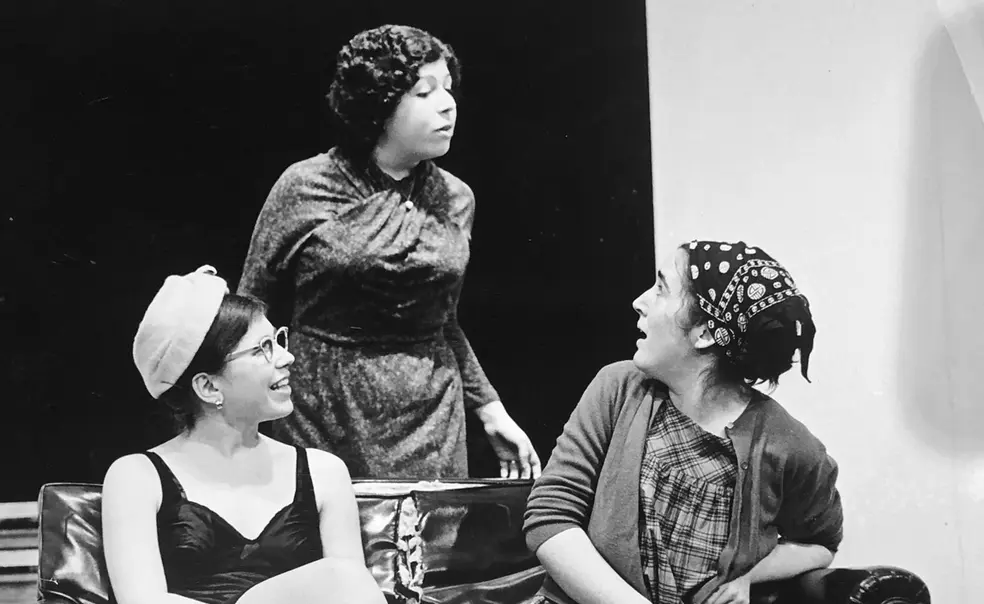

Nearly six decades ago, Geoff Peterson ’69 and two fellow Princeton students looked around the Hamilton Murray Theater and wondered why it should sit empty all summer.
Peterson had been working on a Theatre Intime production of The Misanthrope with Charles Bernstein ’68 when Bernstein floated the idea of returning to Chicago to start a summer theater. But Peterson had another thought. “I said, ‘Well, wait a minute. We’re standing in this absolute gem of a little theater here, 200 seats. Why don’t we do it here?’” he recalls.
Along with Jon Lorrain ’69, the students persuaded the University to let them use the theater and build an ensemble. In 1968, they launched Summer Intime, which would eventually become Princeton Summer Theater. The inaugural season proved successful enough that the University subsequently installed air conditioning in Hamilton Murray.
This Princeton tradition has passed from one generation to the next. But back then, that goal wasn’t top of mind for the co-founders.
“I don’t think we were thinking about long-lasting,” Peterson says. “We were thinking about, ‘Can we get through this summer?’” The University provided the building but no operating cash, he says, meaning the fledgling company had to raise money, sell tickets, and keep its finances afloat. Late at night, Peterson would pore over the books to see whether their experiment was actually working.
It did. Princeton Summer Theater remains a fixture, producing professional-caliber productions largely through the work of Princeton students and recent graduates. From acting and directing to design, marketing, fundraising, and administration, participants take responsibility for virtually every aspect of mounting a season.
“There are a lot of places you can go around the country in the summer and be an actor or be a director,” Peterson says, “but there are not that many where you could be a producer at that early an age or in that earlier part of your career.”
Kim Myers ’75 participated in three seasons of Summer Intime and helped administer the theater as executive director while also acting. Everybody did a little of everything, she recalls. If a poster was needed, someone in the company designed it. Flyers were physically hung around Princeton. Students chose the plays, handled marketing, monitored the finances, and even bought lumber and hung stage lights.
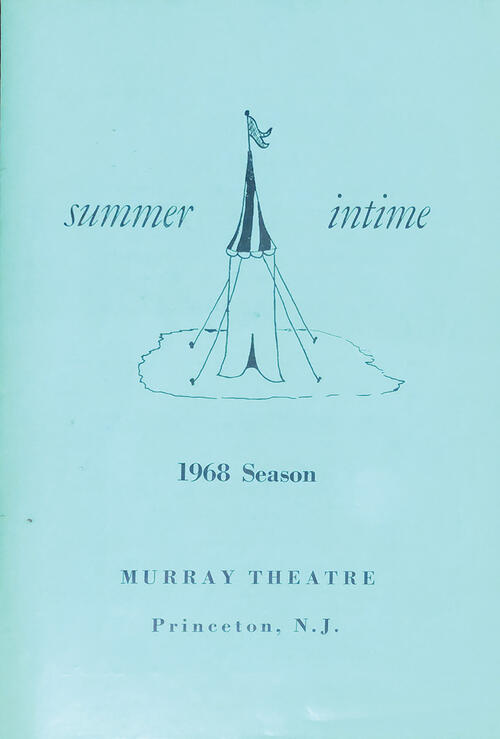
“One of the great things was we did it all ourselves,” Myers says. “There was no University adviser. There was no one looking over our shoulder.”
The experience became a training ground for her eventual career in television. Myers went on to work at WNET, the nonprofit parent company of New York’s PBS station, and later in Los Angeles, developing projects, working with writers, and overseeing productions. Looking back, she points to Princeton.
“I’ve always said that everything I learned as a television producer, which is what I became, I learned at Summer Intime,” Myers says. “Everything.”
Mitchell Ivers ’77 began at Intime as a box-office manager because, as he remembers it, nobody else wanted the job. Soon he became the executive producer, running the theater alongside Myers. The students enjoyed great artistic freedom and used it to stage experimental works alongside Shakespeare, classics, and contemporary plays. Ivers fondly remembers his thesis production of William Inge’s Picnic: “Directing it gave me a sense of myself that I had never thought was part of me. That was such a big point in our theatrical lives.”
His career eventually shifted from theater to publishing, and he spent decades working at Random House. The professions seemed different, but Ivers recognized the same impulse at the heart of both. “My role was enabling someone’s artistic work to flourish,” he says. “And that was definitely something that became part of me at Theater Intime and Summer Intime. Intime, in many ways, made me who I am today.”
Winnie Holzman ’76 remembers the theater’s community as nearly idyllic. Long before writing the musical Wicked or creating television’s My So-Called Life, Holzman spent her summers acting, singing in weekend cabarets, performing children’s theater, and living alongside fellow company members.
“There was so much creativity to be part of,” Holzman says. “It just reinforced for me how much I loved it and that this is where I wanted to spend my life. It’s like, ‘Yes, this is where I belong. This feels right.’”
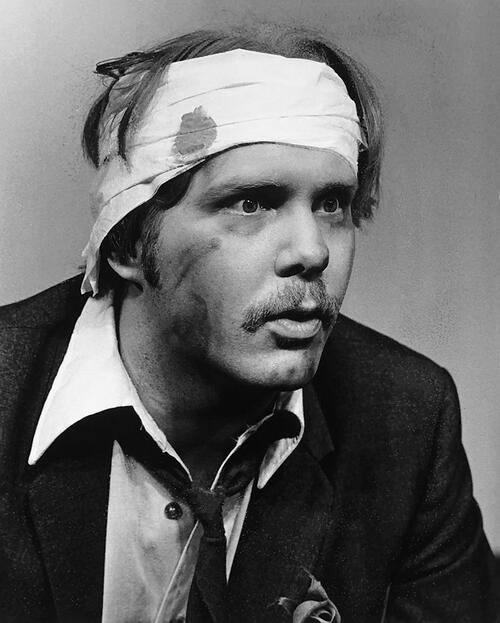
For Holzman, the smallness of the Hamilton Murray Theater was part of its power. “You can feel it when people are riveted, but also when people are deeply entertained, deeply involved, or having an emotional reaction of any sort,” she says. “We knew we were doing something that was connecting with people. And there’s no better feeling than that.”
Lucy Shea ’27, artistic director for the theater’s 2026 season, and Executive Director Orion Lopez-Ramirez ’26, called it an incubator and a lab. “You get to see your ideas come to life and you get to see them fail and sometimes you get to see them succeed,” says Lopez-Ramirez. “There’s no better teacher than experience.” It is, he adds, “really a trial by fire.”
That trial now involves balancing an institution’s history with attracting contemporary audiences. The 2026 company has moved toward virtual ticketing and short-form digital content while maintaining its long-standing focus on producing accessible theater for the community.
One thing that’s never changed is the friendships. Peterson, one of the founders, says some of his closest relationships date to that inaugural period, including a designer who remains his friend 58 years later — and another company member whom he married.
“There’s an intense collaboration that happens in such a short period of time,” he says. “It makes for a strong bond.”
The Latest
See all


Related News
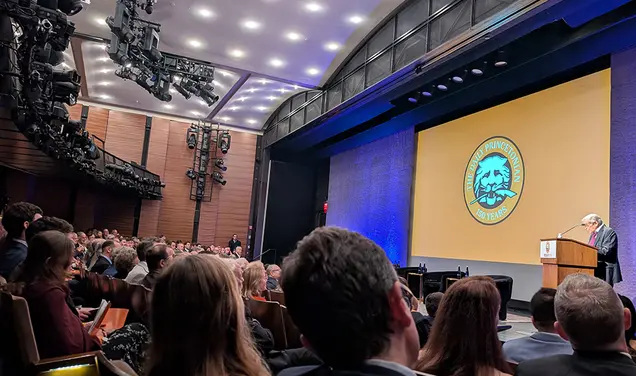
With Prominent Journalists and Hoagies, the ‘Prince’ Celebrates 150 Years
A gala at the New York Historical raised roughly $400,000 for the independent student newspaper


2 Responses
Jim Shankman ’74
2 Weeks AgoDream Cast at Theatre Intime
What an unexpected blast from the past to see Winnie Holzman, Kim Myers, and Susan Wolf in the photo of Edward Albee’s The American Dream, which you ran in the October issue. I directed that show at Theatre Intime in ’74. For the record, Howard Leathers played The Young Man and Jamie Horton played Daddy. If 90% of directing is in the casting, I killed it with that production.
Dale Bell ’60
1 Month AgoSummer Theater with the University Players
I am Class of 1960 and was president of Theatre Intime in the prior year and producer/director of the University Players in summer 1960; business affairs in summer 1959; and stage manager in summer 1958. Linda Urmy, the daughter of actress Mildred Dunnock, urged me to get into the theatre in 1955 when we first met at an Exeter Glee Club Concert. I did! At Princeton, I immersed myself in any and all kinds of productions, including impresario at McCarter Theatre (Ages of Man with Sir John Gielgud, November 1959). I sang, danced, acted, directed, and produced some 44 different projects/productions. In 1970, I produced the movie Woodstock, an Oscar winner in 1971; in 1972, I produced The Groove Tube; in 1973, I was Martin Scorsese's assistant director on Mean Streets; in 1981-84, the executive producer of the 12-program, 3-year PBS series Kennedy Center Tonight. As producer of the University Players, I misjudged the national political activity on TV in summer 1960 and incurred debt that I could not clear by the end of our season, which I deeply regret, and apologize for. I am glad to see others paused and re-started.