

Princeton’s Return to Proctored Exams Reflects Changing Times
Cheating using AI as a reason seems to be only part of the problem
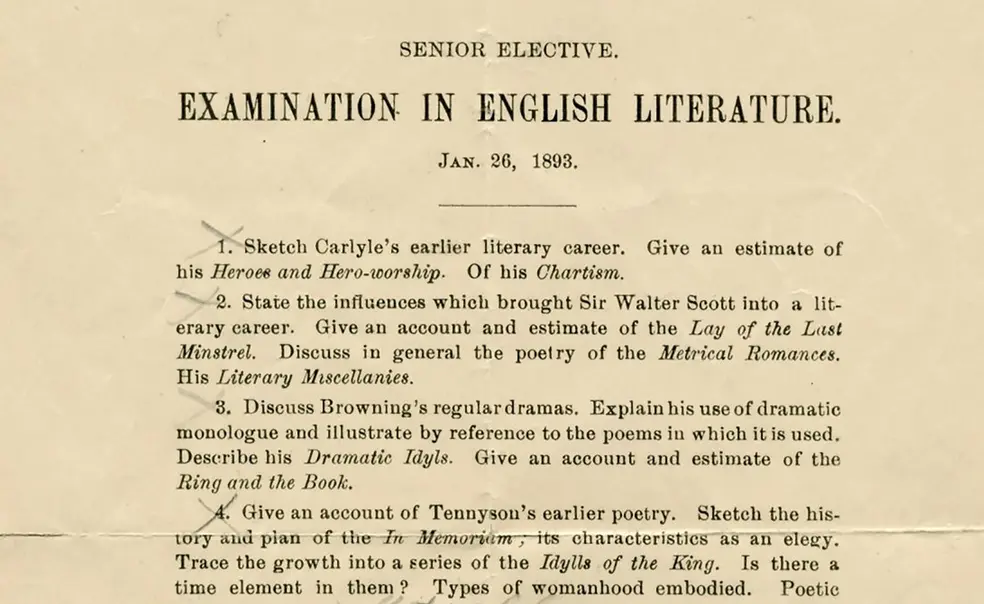

Since faculty voted in may to proctor in-person exams, national news outlets and some alumni have decried the end of Princeton’s 133-year-old tradition of unsupervised testing, but students, faculty, and recent graduates say the conversation within the campus community has been mild.
“I believe there is a consensus that with changing times we need to adapt,” said Minh Truong ’27, chair of the Honor Committee, a body of 18 students responsible for upholding the University’s Honor Code, via email.
The code was established in 1893 and requires students to pledge not to “gain an unfair advantage” or to “attempt to give assistance” to others. Princeton’s Honor Code and the Honor Committee will remain in place with the addition of proctored exams.
Details about proctoring will be published before the fall term, the University said. Claire Whiting, who is seeking her Ph.D. in psychology, doesn’t foresee substantial additional effort for teaching assistants. “In many cases, it may simply mean that TAs who would already have been nearby during the exam are now sitting in the room,” she said via email.
Related coverage
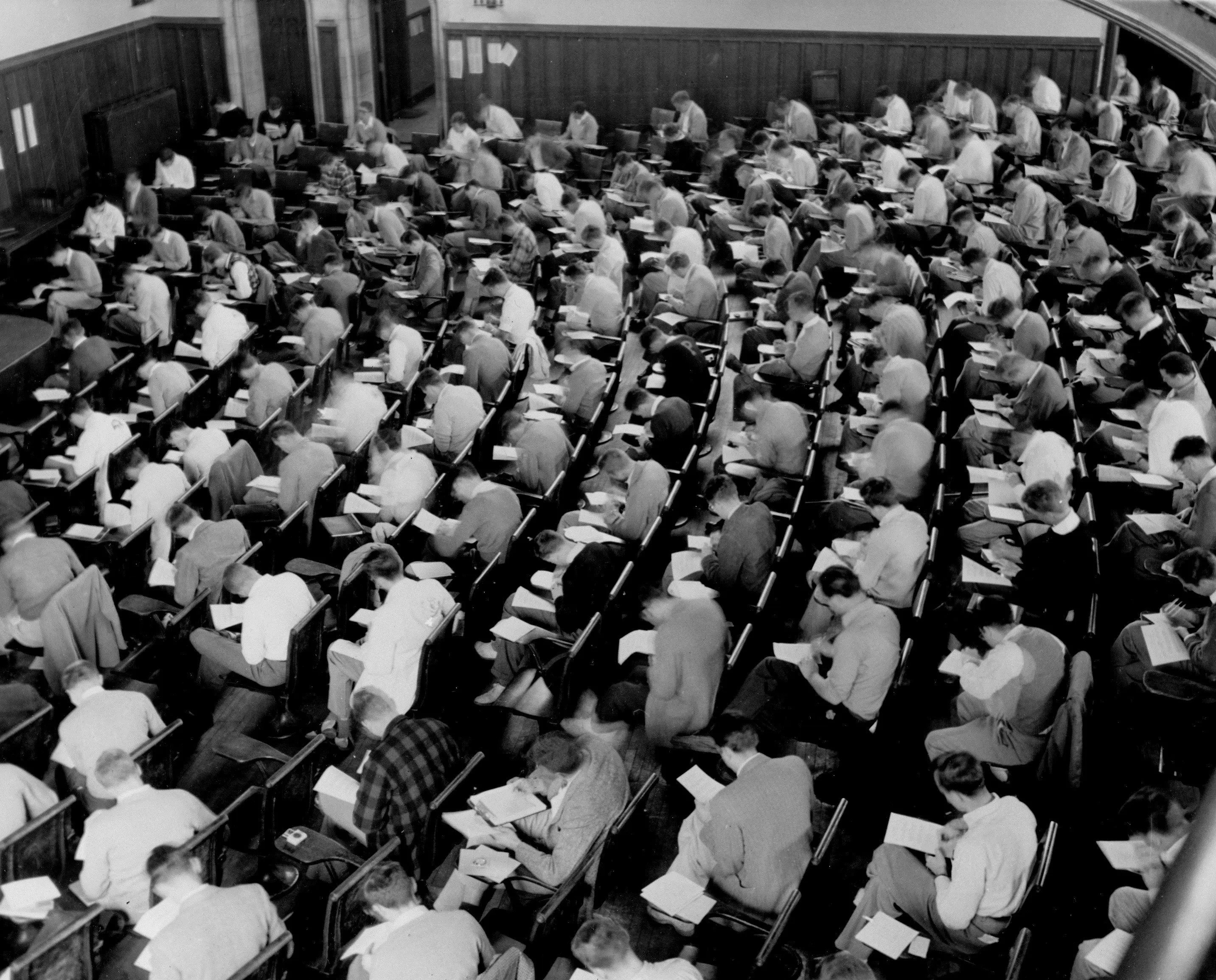
After 133 Years, Princeton Is Going Back to Proctoring Exams
The faculty committee’s report cited concerns about widespread cheating with generative AI
The proposal specifically cited increased instances of cheating using AI as a reason for the new policy, but that seems to be only part of the problem.
Nadia Makuc ’26, former chair of the Honor Committee, said via email that cheating has “been building” in recent years. “I would attribute it more so to the transition away from take-home exams and device use in general,” she said.
William Aepli ’26, chair emeritus of Peer Reps, a student organization that supports those accused of cheating, mourned what he described in an email as “a substantive and negative change to the faculty-student relationship,” but acknowledged “rising levels of academic dishonesty, social stigma of reporting suspicions, and lack of quality evidence” in cases where students are accused of cheating.
Patrick Park, who is seeking his Ph.D. in mechanical engineering, said “students are careful about getting doxed or getting canceled on social media for reporting other students.”
Stanford University also voted this spring to begin proctoring exams, and about half of Princeton’s Ivy League peers require proctors. For the rest, instructors set their own rules.
“I don’t think there is as strong of a commitment to honor and/or integrity … in the academic sense, that there seemed to be in, pick your early 1900s year,” said Ian Rosenzweig ’29, a member of the Honor Committee. Rosenzweig said he believes students today would rather obfuscate the truth than throw a classmate under the bus.
Eduardo Bhatia ’86, a visiting professor in public and international affairs at Princeton, spoke about the importance of the Honor Code in his Baccalaureate address in 2018. He wrote to PAW in June that he supports the new policy “as a temporary measure” while students and faculty “rethink how honor and academic integrity should function” in current times.
Julian Mišút ’28, clerk of the Honor Committee, said “it’s my impression that the student sentiment is that there’s quite a bit of cheating that’s slipping through the cracks.”
A Daily Princetonian survey of more than 500 seniors conducted earlier this year showed that 29.9% of respondents have cheated at Princeton, and 44.6% knew of an Honor Code violation but didn’t report it. According to the most recent statistics from the Honor Committee, from fall 2020 through spring 2025, there were 71 reports of violations, which led to 25 findings of responsibility. Penalties included suspension and expulsion.
Alex Kontorovich ’02, professor at Rutgers and visiting fellow at Princeton in fall 2024, called the move “very sad indeed,” on X, but in an interview with PAW conceded he would have made the same decision. “It’s just too easy and hence too tempting to cheat, and we’re at the point where if you’re one of the few kids who’s not cheating, then you’re putting yourself at a distinct disadvantage,” he said.
Whether proctors will deter Honor Code violations remains to be seen. Martin Day, a former postdoctoral researcher at Princeton and current associate professor at Memorial University of Newfoundland, said via email it could lead “to more accurate reporting, [and] then that could look like an increase in suspected cheating.”
The Latest
See all


Related News

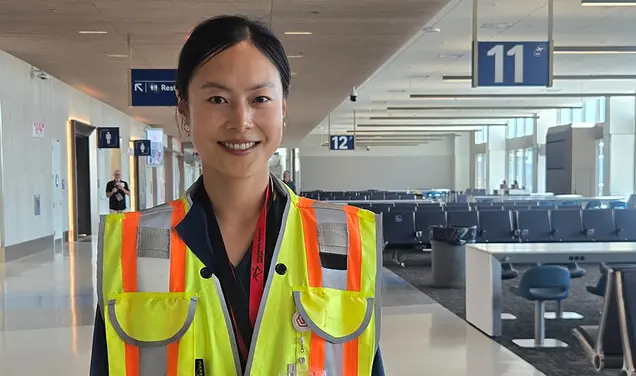
Janice Lee ’09 Worked to Renovate One of Hollywood’s Best-Kept Secrets
An engineer by training, Lee has been deputy project manager on the renovation of Hollywood Burbank Airport

8 Responses
Alan M. Weinstein ’71
6 Days AgoExam Proctoring: We Can Do Better
Recently, use of AI has prompted loss of faith in the integrity of student essays and exams. Apparently, an ethos that “only chumps work honestly” had become pervasive. The University’s response was to institute proctored exams. This approach could easily intensify, with TSA-like screening for forbidden electronic devices, and multiple exam-cams overseeing the tests.
Alternatively, one might encourage AI in grading. It is easy to imagine AI-generated submissions receiving AI-generated evaluations. Viewing a Princeton education as a commodity, bilateral application of AI could be a productivity breakthrough: Completing a semester’s submissions and exams could be reduced to a few weeks. Start-to-finish graduation requirements for the 4-year program could be done in a year, with many fewer faculty. There would be opportunity for huge tuition reductions.
With either approach, however, something important is lost. Neither enhanced policing nor enhanced AI use improves the quality of the academic enterprise. After graduation, many will go on to professional careers (e.g. medicine, law, science, journalism) in which working honorably is expected by patients, clients, and colleagues. If the undergraduate experience disparages integrity as quaint or unrealistic, then when does honesty become the performance standard?
I would welcome an effort to rehabilitate Princeton’s culture of honor. A century ago, adoption of lecture course precepts showed the University valuing student-faculty interaction. Perhaps configuring courses so that students spoke regularly with faculty, who knew their names, might strengthen the expectation of honesty. Certainly, Princeton should be able to devise a more positive remedy than enhanced policing.
Stewart A. Levin ’75
3 Weeks AgoWhat Do Exams Evaluate?
Some years back I wrote:
“... technology changes not only the way we teach, but what we teach. With the internet, information is everywhere; memorizing facts is almost as archaic as teaching long division to people with calculators on their phones and watches. Professor Jon Claerbout at Stanford wrote in 1993: ‘… At the beginning of the computer revolution, I gave young students the advice: “Learn how to type.” With the mass-storage revolution now underway, and with a $10 CD-ROM able to hold all the keystrokes you can type in a lifetime, I now advise everyone: “Learn how to file.”’
“A decade later, his advice would surely have been: ‘Learn how to search.’ Today, I surmise that advice would have come full circle to the heart of higher education: ‘Learn how to validate, analyze and synthesize.’ It is these timeless skills, the very soul of a broad liberal education, which the world most desperately needs in order to find solutions to the pressing problems of our generation and future generations and which universities have always made their ideal. They are equally valuable in the microcosms of art or science, business or law, public discourse or private conversations.”
So ask ourselves: Do the exams actually evaluate whether the student has achieved that goal and does the use of AI improve their understanding?
David L. Book *64
1 Month AgoInvigilation in the Age of AI
The following is a fable in the form of a dialogue. No large language model was used in creating it.
“‘The Economic Influence of the Developments in Shipbuilding Techniques, 1450 to 1485.’ Is this your own work, Mr. Dixon?”
“Yes, Professor.”
“You wrote it yourself? All 5,000 or so words?”
“Yes.”
“I’m sure you know the university’s rules. You’re allowed to use the internet in your research, but if you quote sources you have to credit them. Even if you paraphrase them, as it were, you have to say where you found what you’re paraphrasing and who wrote the original version. You’re aware of that, aren’t you?”
“Yes, of course.”
“And you must never use artificial intelligence to do your writing for you. The writing has to be your own, not Claude’s or Gemini’s or some other chatbot’s. Did I mention that? You aren’t permitted to use AI to make a first draft, then go over it and just change a word here and there.”
“I used a spell checker. That’s acceptable, isn’t it?”
“Yes. So is a grammar checker. But a paragraph generator isn’t. Is that understood, Mr. Dixon?”
“Yes, Professor.”
“Then we can get down to business. I’ve marked 10 sentences in your paper. Each of them is about something you probably didn’t know before writing the paper. I’ll read them to you and ask you questions about them. Like, ‘what does this mean?’ or ‘what country is this person from’ or ‘what trade did this company engage in?’ Is that clear?”
“Yes, Professor.”
“Since you’re thoroughly familiar with the sources you cite, you should have no trouble answering the questions without consulting your paper or your notes. Let’s see. Is there something else? Oh yes. I’m going to have to give you a grade based on your answers. Ten right is an A, nine right is a B, eight is a C, seven is a D, and anything below that is an F. Is that clear?”
“Yes.”
“Splendid! Then let’s begin. First question: You wrote ‘Of Columbus’ three ships, the Niña and Pinta were caravels; the Santa Maria was a carrack.’ What’s the difference between a caravel and a carrack?”
The moral of the fable could be that this is one way to uncover AI cheating. Or it could be saying that personal interaction between docent and disciple is the best way to teach effectively. Some background: The title of Dixon’s paper is taken verbatim from Kingsley Amis’ first and most famous novel, Lucky Jim, published in 1954. Jim Dixon, the central character, is a harassed junior lecturer at a redbrick university, not a student as in this fable. His boss, Professor Welch, is responsible for much of the harassment. As portrayed by Amis, Dixon’s adherence to academic norms is not overly devout. If he had had access to AI, he might have used it in writing the paper and consequently have been unable to answer Welch’s question. But in view of his unscholarliness, he might have been unable to answer the question even if he never used AI. In the novel, in a twist that would be doubly ironic in the Age of AI, Dixon himself falls victim to a plagiarist.
Amis was a visiting fellow in creative writing at Princeton in 1958-59. His 1963 campus novel, One Fat Englishman, is set in “Budweiser College,” modeled on Princeton.
Richard M. Schwartzstein ’75
2 Months AgoIf You Don’t Have Integrity, Nothing Else Matters
I read with great interest and sadness about Princeton’s decision to begin proctoring exams (July/August issue). I and my classmates regarded the Honor Code with great pride; not all schools trusted their students to abide by such a code. I still have vivid memories of the solemn Honor Code session in Alexander Hall, and the signing of the Honor Code on all my papers, including my thesis.
I have been teaching first-year medial students at Harvard Medical School for more than 30 years. Part of their education is focused on “professionalism.” Much of the teaching is about “integrity.” The definition of integrity I use in these discussions is: “Integrity is about what you do when no one is looking.” I tell the students that if I ask them about a lab value for a patient they were supposed to check and they make up a number because they forgot to do it or woke up late that day, they can’t be on my team. They can tell me they don’t know because they overslept and didn’t have time, but they can’t make up a number; the absence of integrity disqualifies them from being a doctor and they can’t be on my team.
There is much discussion today about the pressures on college students and the competition for graduate and professional school admissions and top jobs with financial services firms. Whatever grades you have, if you don’t have integrity, nothing else matters — you can’t be on my team.
Clinton W. Kemp ’71
3 Months AgoThe Honor Code and Admissions
With respect to the shocking article in the July/August edition of PAW announcing the return to proctored exams: Do you suppose that it has ever occurred to anyone in the administration that Princeton has been admitting the wrong people?
Maxim Dynin ’84
3 Months AgoProctors May Be Necessary
I can state with a certainty that I never “gave nor received assistance” or cheated in any other way while at Princeton. However, this does not mean that I have not witnessed others doing it. And, no, I would not report them. In any event, cheating had a limited impact back then, especially since exams were often open book and/or open notes.
However, times have changed. My wife is a teacher at a German school, and while cell phones are banned during tests, people manage to sneak in cell phones, or have someone in the bathroom with those same phones. And quite often a student whose English is atrocious comes up with a composition which is nothing less than perfect. There are sites which detect AI use, but that evidence is not admissible in a German school. The only recourse a teacher has is to ask the student to come for an oral examination.
Thus, there needs to be a way to make sure those things do not happen, or at least make it much more difficult to do so. And, as much as I hate the idea of proctors at a Princeton exam, I see that there now might be a need for it — and also the need for a way to deal with AI use if same has been detected.
V. Lynn Hogben ’77
3 Months AgoPrinceton Exams and Trusting Students
While I agree with the importance of actual adherence to the Honor Code by students, the pearl clutching over having proctors at exams is a bit much. The fact is that Princeton has not trusted its students to be honest since at least the ’70s in the situations where it matters. When I was a freshman in 1974, my biology final conflicted with my sister’s college graduation. I requested to take the exam early and immediately leave for the summer so I could attend the graduation, but was told that Princeton’s exam policy prohibited that, notwithstanding the Honor Code. Whether proctors are present or absent in exams rooms is of no benefit to students; whether students are forced to miss important family events because the University does not believe its students are honest is far more serious.
Dror Futter ’86
3 Months AgoAn Opportunity for the Incoming Class
The Class of 2030 has a unique opportunity — restoring honor to Princeton. By their conduct, they can convince the administration that Princeton students can again be trusted with proctor-less exams.
I have faith in this class. I don’t think they will make excuses. They know that AI is only the latest in cheating enabling technologies that have tempted Princetonians — just like photocopying machines, computers, the internet, and smart phones. They know that Princetonians observed the Honor Code during the tough job market of the Depression.
When almost a third of a class self-report cheating, it becomes clear that honesty has become a lifestyle choice rather than a core value. “Blaming it on AI” deflects from the need to address a far deeper problem.
Class of 2030: I hope you take up this challenge and by your graduation, I can read about the restoration of the original Honor Code.