

Q&A: Sheikh Nawaf al-Sabah ’94 Describes Iran’s Attacks on Kuwait
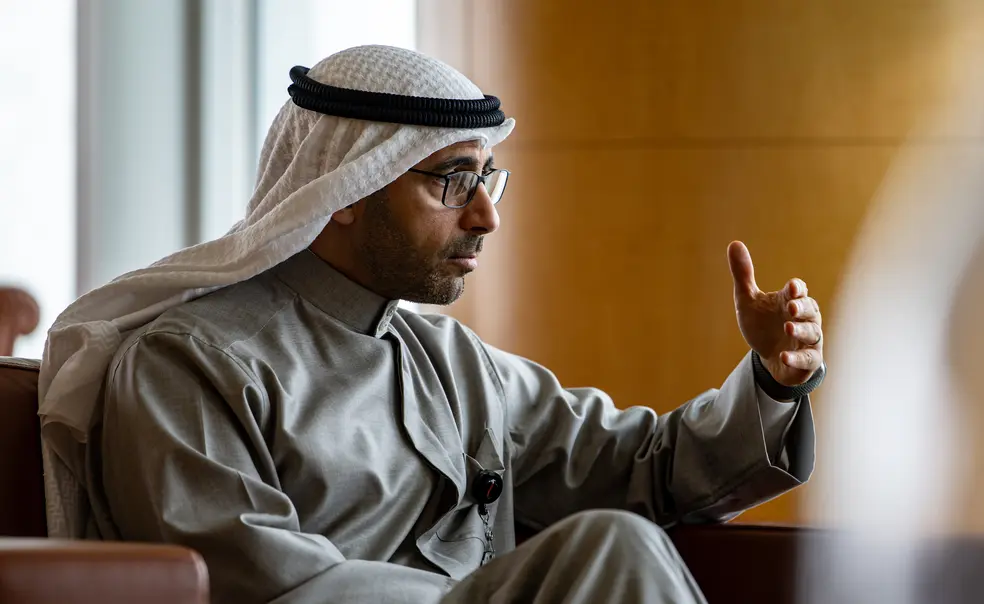

The ongoing American and Israeli attacks on Iran have provoked Iranian counterstrikes against most other countries in the region, causing numerous casualties, closing off oil shipping through the Strait of Hormuz, and roiling financial markets. On Thursday, PAW spoke with Sheikh Nawaf al-Sabah ’94, chief executive officer of the Kuwait Petroleum Corporation (KPC), one of the largest oil companies in the world. In his first interview since the start of the war, al-Sabah provided a firsthand account of life under Iranian attack and his assessment of the current geopolitical situation.
How are you holding up?
I’m at home in Kuwait and I can hear missiles flying. It’s now day six [of the war] coming on, and it is unnerving. I just got a call from the head of our refinery division saying that two more drones just went over one of our refineries.
What does a missile sound like?
It sounds like a low flying plane streaking by. Then you hear booms. Some of them could be sonic booms, and some of them could be intercepts.
Is your family safe?
Our son, Nasir [al-Sabah ’25] works in the U.S. Our other son, Abdulaziz [al-Sabah], who is a sophomore at Princeton, was supposed to be on a flight to Kuwait for spring break, but it looks like he will spend it with family and friends in the U.S. But my wife and daughter are here, as well.
Has Kuwait been able to intercept the Iranian drones or missiles?
You can get most of the missiles, but you can’t really get all the drones. There is a calculus where you only have so many missiles and you’re not going to use a Patriot missile to shoot down a drone. Honestly, a lot of these drones you can probably just shoot with a machine gun.
Did you have advance warning about the attacks last weekend?
We all saw it coming, but no, we didn’t have any advance knowledge.
Related coverage
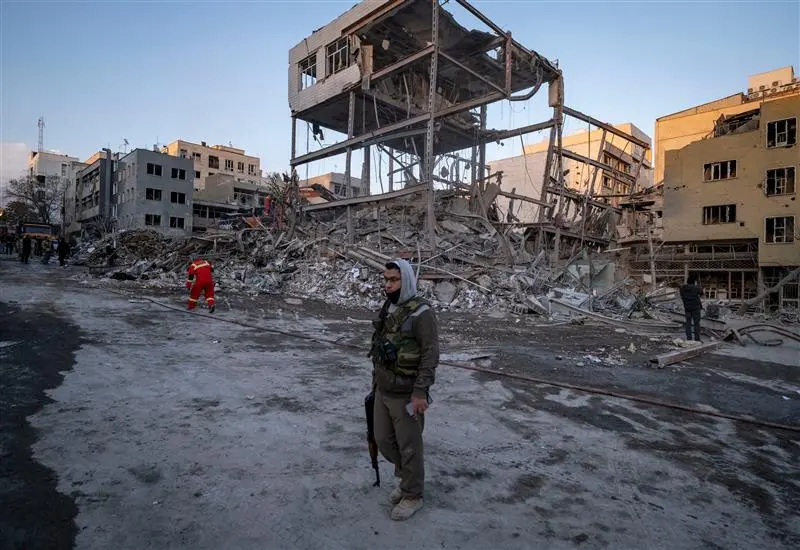
Iran War Is ‘Frightening’ and ‘Unnerving,’ Say Princetonians and Professors
‘I’m at home in Kuwait and I can hear missiles flying,’ said Sheikh Nawaf al-Sabah ’94
What have you been doing this week?
When I first heard about the strikes, especially that Kuwait was being targeted, we put together our crisis management team at KPC and instituted our contingency plan. To be honest with you, what I didn’t expect is, one, that Kuwait would be so consistently targeted, and two, that Iran would be effective in essentially closing down the Strait of Hormuz. Physically it’s not closed, but there’s nothing going through because they’ve threatened every ship that might go through. The insurance cover [for shipping] has evaporated. KPC has a strategic tanker fleet that we’re prepared to move through the Gulf if we can get some level of assurance on safe passage from the U.S. Navy, but that’s not there yet.
How has Iran been able to close the Strait?
We don’t see any Iranian mines right now, but nobody’s actually traversed the Strait in the past few days. Still, the threat of Iranian attacks has caused a tremendous amount of dislocation, which you can see in the in the energy markets. KPC had prepared for that by storing oil outside the Gulf near our customers in Japan, Korea, and the Far East, but we also pulled back our tanker fleet before the strikes happened, loaded them up as much as we could, and started sending them out of the Gulf so that we could have at least some cover for a certain period of time. That was all part of our contingency plan, but it will only go so far. We are six days into the war and there’s a not yet a plan in place for a naval escort through the Strait.
There has been oil traffic through the Strait of Hormuz for over 80 years, and not a single day of those of those 80 years has it ever been closed to traffic. After eight decades, we have now entered a new era of geopolitics in the region, where we now have five or six days of practically zero traffic through the Strait of Hormuz, which is where you get 20% of the world’s oil supply.
So that’s what’s been keeping me going over the past few days.
What is life like in Kuwait City right now?
All schooling is now online, will be that way through next week at least. For businesses and government institutions, essential workers will all be on the job, but for what would be considered nonessential or administrative work, the government has asked that no more than 30% of those people work in the office. Businesses and restaurants are open, but people don’t really want to go walking through a mall at this point.
With the airport closed, is there any way to get out of Kuwait?
Geographies, like facts, are stubborn things. Kuwait is in a geographic position that leaves us with no access to the rest of the world except through the Gulf or through a rough neighborhood with Iran and Iraq, both essentially on our borders. The airport in Kuwait City has been closed since it was hit by a rocket attack. People who were stranded here or who are trying to get back home have been flying into Saudi Arabia and then driving in. But from Riyadh, it’s a seven-hour drive.
Where do Kuwaiti sympathies lie in this war?
Kuwaitis are outraged. Iran is specifically targeting us and trying to drag us into a fight that is not ours. We are longtime friends and allies of the United States and certainly have been targeted by Iran in the past, but we have always maintained that dialog is the best way to resolve differences. It’s a fight that we have been very careful to say that we’re not a part of. The United States is not using the bases that they have in Kuwait to attack Iran. The problem is that the Iranian regime doesn’t care. They’re flouting every norm of international law and good neighborliness to drag us and the rest of the Gulf countries into the fight.
Was this war necessary at this time?
I’ll leave that to those making those decisions.
For you personally, this must bring back memories of the 1990 Gulf War.
More than half of the Kuwaiti population was born after that, so they have no personal recollection of it. But for us old folk who do, it is a reminder of the resilience of the Kuwaiti people, recognizing that we are a tiny state in a rough neighborhood, and that the only way for us to survive is to speak as one voice and stand as one person. And we’ve been doing that. I love seeing that the younger generation has been running over to the civil defense office here to volunteer and distribute aid or be ready to help when missiles actually do land. It has been good, to see that a new generation understands that existential challenges to the survival of Kuwait are swiftly met by a population that is resilient.
Wait, can you hear that? It’s the air raid sirens outside.
If the air raid sirens are going off, should we wrap this up? Do you need to get someplace safe?
No, we have decided that when these things happen, we’ll be cautious but it’s better just to shelter in place.
Can the war be contained before it becomes an uncontrollable regional conflict?
That’s certainly a fear, looking at how Iran has tried to draw in as many other countries in the region as it can. There is a distinct fear that this could spiral into an uncontrollable situation. We’re hoping for cooler heads to prevail, to find an off ramp where you can have a negotiation. Politics, as we all know, is a dirty business, but in the end, it still is less dirty than war.
Do you have confidence in the current American leadership?
Just a few weeks ago we marked the 35th anniversary of the end of the first Gulf War, which was led by the United States. We have tremendously strong ties with the U.S., and a lot of affection.
We will work together as partners to preserve the defense of Kuwait.
Interview conducted and condensed by PAW senior writer Mark F. Bernstein ’83.
The Latest
See all


Related News

McCarter Theatre’s First South Asian Musical Took Me Back to Forbes Basement
A Beat of Our Own is about a college dance team not unlike Princeton South Asian Theatrics


2 Responses
Irfan Khawaja ’91
7 Months AgoGulf War Recollections
Where did Sheikh Sabah physically spend the 1990 Gulf War that he has such vivid recollections of it?
Philip Gaffney ’65
7 Months AgoFamiliar News
Just following the daily drama of another war over oil in the Middle East.