

These Alumni are Moving the Political Needle on Transgender Rights
Families United for Trans Rights (FUTR) raises money for political candidates who support transgender rights
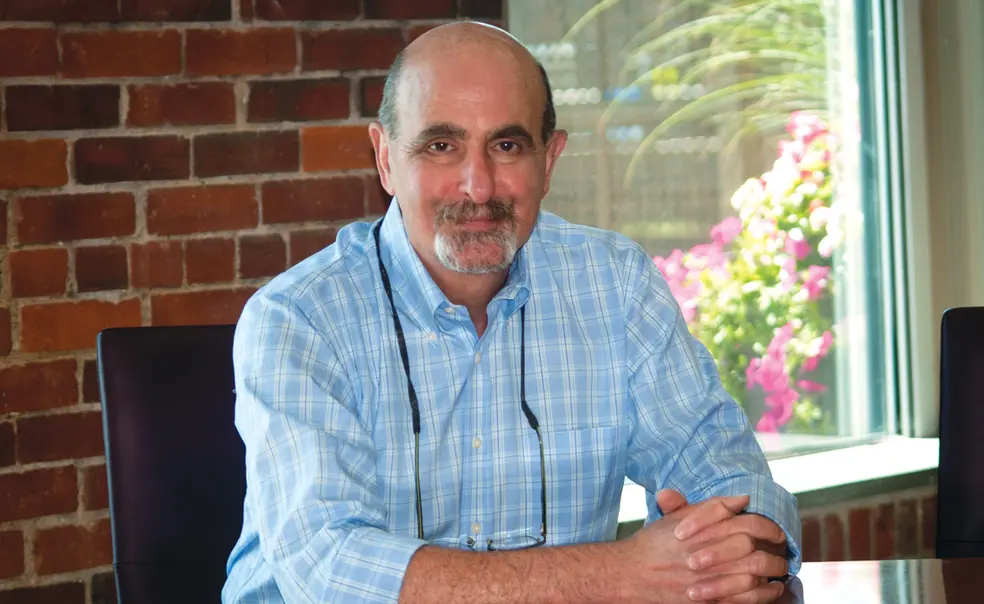

When asked the name of his child at a Princeton alumni cocktail mixer in Boston a few years ago, David Abromowitz ’78 shared that his daughter, Sophie Abromowitz ’13, had transitioned and changed her name since graduating from Princeton. Then came an unexpected response.
“The guy sitting next to me said, ‘Oh, mine transitioned the other way.’”
Abromowitz says he has been heartened by how openly people in the Princeton community have shared similar stories about transgender people in their lives. “It was something that wouldn’t have happened at my 10th reunion,” he says.
After his daughter’s transition four years ago, Abromowitz and his wife got involved in transgender advocacy. In 2024, Abromowitz joined other parents and activists to launch Families United for Trans Rights (FUTR), which raises funds and awareness for transgender political candidates and candidates who support transgender rights.
“We said, ‘Let’s do something that focuses on the ... thousands of parents of trans kids out there who are not political, maybe never have given a dime to an elected official, but instinctively want to protect their kid and other people’s kids,’” says Abromowitz, now a part-time lawyer who has been politically active much of his life.
During the 2024 election cycle, FUTR, an all-volunteer organization, supported 10 candidates, seven of whom won their races at the city, state, and federal levels.
According to Abromowitz, FUTR donors raised about $10,000 for Iowa House candidate Aime Wichtendahl, fulfilling around 20% of her fundraising goal. She went on to be the first openly trans representative elected to the state legislature and is one of 11 candidates supported by FUTR during the 2026 election.
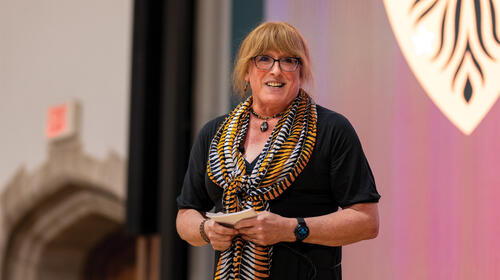
FUTR also contributed to Veronica Pejril *88’s 2024 campaign to represent Indiana’s 24th Senate District. Pejril, president of the affinity group Queer Princeton Alumni, said FUTR’s contribution went to voter-engagement materials and digital advertising. She lost that race but says she plans to run next year for a seat on Greencastle’s City Council, where she served from 2020 to 2024.
In addition to political fundraising, FUTR has organized local chapters around the country to engage parents of transgender children in local politics.
Cliff Rechtschaffen ’78 and Ann Daniels ’78, also parents of adult transgender children, help run the San Francisco Bay Area chapter of FUTR, which formed in 2025. Alongside other local LGBTQ+ groups, including Rainbow Families Action, the chapter organized protests targeting major California healthcare providers that planned to stop offering gender-affirming care. Members also organized letter-writing campaigns and met with local and state officials, including a representative of the California attorney general’s office, to emphasize the importance of gender-affirming healthcare for transgender individuals.

“For our daughter, there’s no going back. It’s impossible to imagine that she could live happily, or even at all on some level, except as her authentic self,” says Rechtschaffen, who believes parents’ testimony can help humanize the issue for politicians who may have had limited interaction with transgender individuals.
“Getting that gender-affirming care is as essential for [my daughter] as giving insulin to a diabetic,” he says.
California law protects equal access health services regardless of gender identity, but some major health systems in the state have moved to restrict gender-affirming services due to pressure from the Trump administration. Similar changes have occurred elsewhere in the country. The administration has also sought to restrict transgender rights at the federal level, including access to gender-affirming care.
But amid broader concerns about the economy and cost of living during the upcoming midterms, Abromowitz and Rechtschaffen argue that attacks on transgender people, who make up about 1% of U.S. adults, according to the think tank Williams Institute at UCLA Law, are nothing more than a “distraction.”
Transgender and nonbinary people also remain underrepresented in elected office. According to the nonprofit LGBTQ+ Victory Institute, 0.02% of elected officials identified openly as transgender or nonbinary in 2025. But one lawmaker can make a difference.
In 2024, Leigh Finke, Minnesota’s first openly transgender legislator and a FUTR-backed official, introduced the Gender-Affirming Care Act, which became law and required insurance coverage for gender-affirming care.
Pejril credits organizations such as FUTR with helping increase transgender political representation.
“We need vocal allies everywhere,” she says.
Abromowitz and Rechtschaffen say they are channeling Princeton’s informal motto, “In the nation’s service and the service of humanity,” by protecting all transgender individuals.
“Princeton alumni have a lot of resources, they have a lot of social capital, they have the ability to contribute to campaigns and the wherewithal to be active politically,” says Rechtschaffen. “They’re a big force.”
The Latest
See all


Related News

Dung Beetles Do ‘the Job That Is Necessary’
Princeton researcher Finote Gijsman *25 studies crucial links between the insects and elephants in a new paper


No responses yet