

Tom Chestnut ’70 Preserves Princeton Basketball’s History


The Book: Tracing Princeton basketball’s evolution from a humble campus club to men’s and women’s programs respected on the national level, Princeton Basketball: A Tradition of Excellence (self-published)offers a richly illustrated history of one of the University’s most storied sports. Rather than recounting the game by each season, this book explores the moments, players, and coaches that shaped Princeton basketball, from Bill Bradley '65 and Butch van Breda Kolff’s remarkable 1965 run to the NCAA Final Four to the recent upset-filled journey to the NCAA Sweet 16 in 2023 and the women’s program’s rise to national prominence. Drawing on more than 350 photographs and firsthand accounts from former players, alongside contributions from celebrated Princeton writers including John McPhee ’53 and Alexander Wolff '79, this book brings Princeton’s basketball’s most memorable moments and people to life.
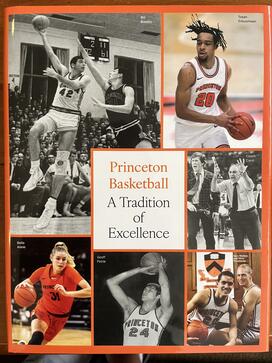
The Author: Tom Chestnut ’70 is a former Princeton basketball player, business executive, and editor of Princeton Basketball: A Tradition of Excellence. After Princeton, he went on to a career in business and served as president of the Cleveland Cavaliers before turning his attention to documenting the history of Princeton basketball.
Excerpt:
New Game For a New Century
The game of basketball was invented in December 1891 by Dr. James Naismith, a physical education instructor at the YMCA Training School in Springfield, Massachusetts. Naismith came up with the idea for the game in response to a request from the school’s director to develop a safe and engaging indoor activity that would keep a rowdy group of 14-year-old students occupied during the cold winter months.
Drawing on elements from rugby, soccer, lacrosse, and a childhood game called “duck on a rock,” Naismith wrote out a list of 13 rules for a game of both skill and strength that he called “Basket Ball.”
Beginning with a soccer ball, Naismith improvised a court by nailing a peach basket to the balconies at the opposite ends of the gym floor, and the game he created became an immediate hit at the school. When the students went back to their families during the Christmas break, they introduced the game to their hometown YMCAs, which helped basketball spread quickly around the country.
Within a few years, basketball was being played informally at colleges throughout America, with the first recorded game between two college teams taking place in November 1894 between Drexel and Temple.
That same year, Naismith asked A. G. Spalding & Bros. to create the first ball designed specifically for the sport. It was larger and lighter than a soccer ball, making it better suited for the passing and shooting involved in basketball, but it still had laces, which made it bounce inconsistently and difficult to control. It wasn’t until around 1930 that the first basketball without external laces was introduced.
Dribbling was not included in Naismith’s 13 original rules, which allowed players to advance the ball only by passing. Yale is widely credited as being the first team to dribble a basketball, when, in 1897, their players exploited a loophole by bouncing the ball and considering it a form of “passing to themselves.” Initially, only a single bounce was allowed, with continuous dribbling not becoming accepted until 1909.
Basketball Comes to Princeton
*Based extensively on “A History of Princeton Basketball (1901-1976),” compiled by Bob Ruxin, Steven Berger, and Bill Achtmeyer
As early as January 1897, The Daily Princetonian published an editorial advocating for the University to field a basketball team:
“The rapid spread throughout the country of the game of basket ball and the interest taken in it, especially in many of the colleges, brings up the question of its establishment here. The game has many advantages as it is played indoors, (and) affords an interesting means of exercise throughout the winter months. It is especially adapted to keeping in good condition the football, baseball, and track men…. It certainly seems the introduction of the game would be a wise move.”
It took four more years, but a Princeton team consisting mainly of rugby players competed in its first basketball game on Jan. 20, 1901, in Trenton, beating a team called the New Jersey State Schools by a score of 21 to 5.
The team was organized by Mowbray Forney, who became the first team captain. Playing its home games in the old Goldie Gym on a wooden floor, Princeton finished its first season with a record of 8 wins and 6 losses, including games against Columbia and Harvard.
In 1901-02, Princeton’s second season of basketball, the team became a charter member of the Eastern Intercollegiate Basketball League, along with Columbia, Cornell, Harvard, and Yale. The EIBL operated as a basketball conference for over 50 years, adding the University of Pennsylvania in 1903, Dartmouth in 1911, and Brown in 1953.
On Jan. 22, 1903, Princeton played its first game in the new University Gymnasium, beating Jefferson Medical College of Philadelphia 46-13. The construction cost of the new facility was nearly $300,000, which was entirely funded by alumni contributions.
For the first decade of the 20th century, basketball at Princeton languished as a sport, eliciting only sporadic interest from the student body. It wasn’t until 1912 that Princeton hired Fred Luehring, a former Northwestern player, as its first real basketball coach.
Although Princeton never won an outright EIBL championship during Luehring’s eight seasons as coach, his teams were competitive every year and compiled an impressive .699 winning percentage.
The style of play Luehring instilled — which emphasized defense and employed a conservative offense that required numerous passes in the attempt to obtain the best possible shot — would characterize Princeton teams for decades to come.
During Luehring’s tenure, the team “generated tremendous interest on campus and established basketball as a fixture in the Princeton sports program.” His teams also produced two All-Americans, Hamilton Salmon in 1913 and Cyril Haas in 1916 and 1917.
Luehring’s best season was 1915-16, when the team ended the regular season in a tie with Penn for the EIBL title, with identical 8-2 records. The team was led by Haas, who Luehring called “very probably the greatest basketball player Princeton has ever had.”
After what was termed “prolonged negotiations” and a coin flip won by Penn, a playoff game to decide the EIBL championship took place at Weightman Hall on Penn’s campus. The match attracted what was described as a “huge crowd,” including a special train of Princeton fans. In a tight defensive battle, Penn came out on top, 16-14, leaving Princeton with an overall 16-4 record and still searching for their first undisputed EIBL title.
In Luehring’s final season, 1919-20, Princeton had two more memorable games with Penn, coming out on the losing end both times. In the first game, Princeton had a 14-5 lead at halftime, before Penn stormed back to win, 27-21.
Their second game was even more dramatic, and according to an article in the Princeton Alumni Weekly, “some long-time college basketball observers considered it the greatest game ever played.” The game went into four overtimes before Penn prevailed, 26-23. Penn went on to defeat Chicago 23-21, which allowed them to lay claim to the mythical national championship.
Excerpted from Princeton Basketball: A Tradition of Excellence by Tom Chestnut. Copyright © 2026 and Published by Tom Chestnut.
The Latest
See all


Related News
McCarter Theatre’s First South Asian Play Took Me Back to Forbes Basement
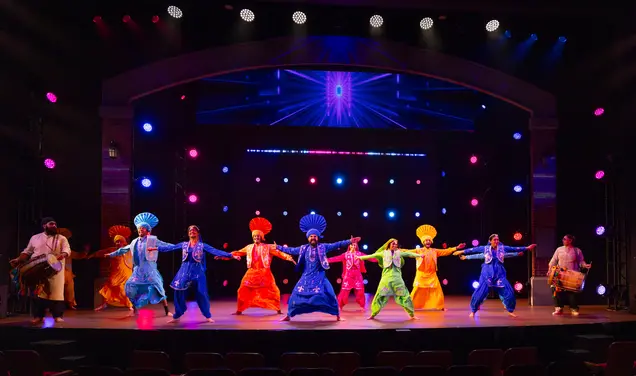
A Beat of Our Own is about a college dance team not unlike Princeton South Asian Theatrics



No responses yet