

Toni Morrison’s Lectures on Race and Literature Revived

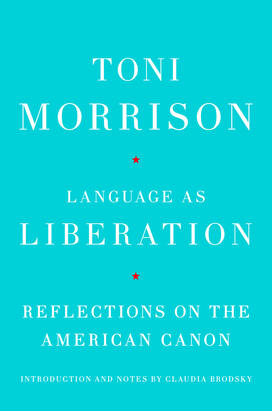
The book: Language as Liberation (Alfred A. Knopf) features a collection of Toni Morrison’s lectures from her years at Princeton. Each revolves around the influence of Black culture on influential pieces of literature. These lectures dissect the works of Herman Melville, William Faulkner, Gertrude Stein, and others to provide insight on the value of Black people and the Black characters that appear, which Morrison argued shaped America’s literary canon in ways that have yet to be acknowledged and widely accepted. Language as Liberation allows readers the chance to hear again from Morrison, who died in 2019, and absorb her teachings and reflections on American literature.
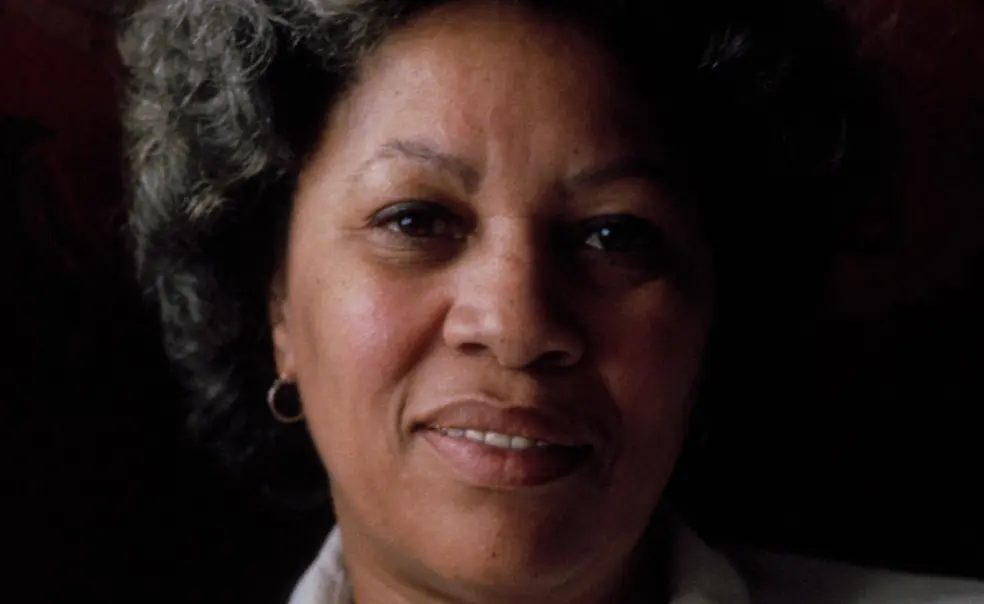
The author: Toni Morrison was the Robert F. Goheen Professor in the Humanities, emeritus at Princeton. She joined the faculty as a member of humanities and the creative writing program in 1989 and transferred to emeritus status in 2006. The renowned writer and editor was the first African American person awarded the Nobel Prize in Literature, in 1993. Among her many honors she also won a Pulitzer Prize for Beloved in 1988 and a National Book Critics Circle Award for Song of Solomon in 1978. Some of her other notable works include The Bluest Eye, Tar Baby, and Sula.
Excerpt:
No early American writer is more suggestive of the matters under review in this course than Edgar Allan Poe. Darling of the French symbolist poets, favorite of anthologizers, taught to young readers, perused by literary scholars, acknowledged as a genius by writers as powerful and dissimilar as Henry James and Dostoyevsky, and a familiar, popular writer to every generation of Americans since the 19th century. Journalist, literary critic, poet, short story writer, and novelist, Poe touches almost every form available to writers of his time, and exceeds most in the variety of genres worked in and the stretch of his imagination. His life, not less than his work, encourages literary immortality. He was orphaned, alienated, romantic, morbid, alcoholic, intellectual, tragic, and he died young. Also, he romanticized girls, love, and death, was white, male, and classically racist.
Let’s examine the latter three. Poe contributed to and promulgated a specific and detested, imagined and wholly fabricated Africanistic presence: a kind of black thing — not quite human, not quite not, but available for all sorts of labor, all sorts of sport, all sorts of fantasy and many sorts of transfer. This Africanist presence hovers at the margins of Poe’s texts when it does not inform them directly, and although (if not because) the presence is black, it throws considerable light on the work. Principal among the signs of this hovering presence are Poe’s own horror of black as a color and his love of it; his sometimes amused, sometimes impatient, sometimes raging contempt for Blacks as people and his fear of them; his attempts to distance them in language and gesture from the human race; his dependence on them as surrogates for his ambivalence about his own social status and inheritance; one easily senses his identification with and terror of the solitude and dishonor of Africanism; his sensitivity to the struggle of the artist in a crude, uncivilized Philistine world; his fascination with soil, earth, caves, the grave, the underground, and all of the other connotative and associative meanings of Blackness as well as the fearfulness of darkness and the impenetrableness [impenetrability] of whiteness.
Some of our attention will be directed to this configuration and figuration of what is hidden behind and within the assumptions of a culturally formed whiteness, how dependent and inextricably bound that formation is with Africanism. How Poe’s milky-white shroud comes into existence, as it does in Pym’s journey, after and only after an encounter with a black or Africanistic world; how the dread of the consequences of that encounter is not only inscribed on the very rocks and cliffs of the earth for Pym, but also is inscribed through much of American literature; how pathologically provocative, or brilliantly stimulating, how deeply passionate the encounter with Africanism is, and how the excesses of that response lead to the absence of knowledge, to self-sabotaging work, and the non sequitur that is the final utterance of The Narrative of A. Gordon Pym.
Just as certain imaginatively mature and open responses to Africanism lead to clarity, artistic liberation in some cases, when the writer is “freed up” to contest these assumptions, he or she problematizes/complicates the encounter and lets us see the mechanics of that problematization. The works of Herman Melville add a great deal to that level of discourse: choosing to complicate rather than simplify.
But before discussing Melville briefly, I want to turn your attention to some of the details of the enterprise in which writers in Young America were engaged. I mentioned last week that at the heart of the American enterprise was the construction of a new, white male. The literature, fiction, poetry, essays, journalism — all attest to the urgency of this moment and the creature capable of seizing it. There is a paradigm for this construction in an extraordinary book by Bernard Bailyn, called Voyagers to the West: A Passage in the Peopling of America on the Eve of the Revolution. I want to quote a rather long passage from that book because it helps to clarify and underscore the salient aspects of this American character that I have been describing:
William Dunbar, seen through his letters and diary, appears to be more fictional than real — a creature of William Faulkner’s imagination, a more cultivated Colonel Sutpen but no less mysterious. He, too, like that strange character in Absalom, Absalom!, was a man in his early twenties who appeared suddenly in the Mississippi wilderness to stake out a claim to a large parcel of land, then disappeared to the Caribbean to return leading a battalion of “wild” slaves with whose labor alone he built an estate where before there had been nothing but trees and uncultivated soil. But he was more complex than Sutpen, if no less driving in his early ambitions, no less a progenitor of a notable Southern family, and no less a part of a violent biracial world whose tensions could lead in strange directions. For this wilderness planter was a scientist, who would later correspond with Jefferson on science and exploration. A Mississippi planter whose contributions to the American Philosophical Society (to which Jefferson proposed him for membership) included linguistics, archeology, hydrostatics, astronomy, and climatology, and whose geographical explorations were reported in widely known publications. Like Sutpen an exotic figure in the plantation world of early Mississippi — Dunbar was known as “Sir” William just as Sutpen was known as “Colonel”— he too imported into that raw, half-savage world the niceties of European culture: not chandeliers and costly rugs, but books, surveyor’s equipment of the finest kind, and the latest instruments of science. Dunbar was a Scot by birth, the youngest son of Sir Archibald Dunbar of Morayshire. He was educated first by tutors at home, then at the university in Aberdeen, where his interest in mathematics, astronomy, and belles letters took mature shape. What happened to him after his return home and later in London, where he circulated with young intellectuals, what propelled, or led, him out of the metropolis on the first leg of his long voyage west is not known. But whatever his motivation may have been, in April 1771, aged only twenty-two, Dunbar appeared in Philadelphia. . . . Ever eager for gentility, this well-educated product of the Scottish enlightenment and of London’s sophistication—this bookish young litterateur and scientist, who, only five years earlier, had been corresponding about scientific problems—about “Dean Swift’s beatitudes,” about the “virtuous and happy life,” and about the Lord’s commandment that mankind should “love one another”— was strangely insensitive to the suffering of those who served him. In July 1776, he recorded not the independence of the American colonies from Britain, but the suppression of an alleged conspiracy for freedom by slaves on his own plantation. . . . Dunbar, the young erudite, the Scottish scientist and man of letters, was no sadist. His plantation regime was, by the standards of the time, mild; he clothed and fed his slaves decently, and frequently relented in his more severe punishments. But, 4,000 miles from the sources of culture, alone on the far periphery of British civilization where physical survival was a daily struggle, where ruthless exploitation was a way of life, and where disorder, violence, and human degradation were commonplace, he had triumphed by successful adaptation. Endlessly enterprising and resourceful, his finer sensibilities dulled by the abrasions of frontier life, and feeling within himself a sense of authority and autonomy he had not known before, a force that flowed from his absolute control over the lives of others, he emerged a distinctive new man, a borderland gentleman, a man of property in a raw, half-savage world.
May I call your attention to some elements of this portrait; some pairings and interdependencies that are marked in this narrative of William Dunbar? First, the historical connection between the Enlightenment and the institution of slavery — the rights of man and his enslavement. Second, the relationship of Dunbar’s education and his new world enterprise. The education he had was exceptional and exceptionally cultivated: it included the latest thought on theology and science — an effort perhaps to make them mutually accountable, to make each support the other. He is not only the “product of the Scottish enlightenment,” he is the consequence of “London sophistication.” He read Swift, discussed the Christian commandment to “love one another,” and is described as “strangely” insensitive to the suffering of his slaves. On July 12, 1776, he is recording with astonishment and hurt surprise the slave rebellion on his plantation. “Judge my surprise …,” he wrote. “Of what avail is kindness and good usage when rewarded by such ingratitude.” “Constantly bewildered,” Bailyn goes on, “by his slaves behavior, [Dunbar] recovered two runaways and condemned them to receive 500 lashes each at five different times, and to carry a chain and log fixt to the ancle [sic].” I take this to be a succinct portrait of the process by which the American as new, white, and male was constituted. It is a formation which has at least four desirable consequences, all of which are referred to in Bailyn’s summation of Dunbar’s character and located in how Dunbar feels “within himself.” Let me repeat: “a sense of authority and autonomy he had not known before, a force that flowed from his absolute control over the lives of others, he emerged a distinctive new man, a borderland gentleman, a man of property in a raw, half-savage world.” A power, a sense of freedom he had not known before. But what had he “known before”? Fine education, London sophistication, theological and scientific thought. None of these, one gathers, could provide him with the authority and autonomy Mississippi planter life did. Also, this “sense” is understood to be a “force” that “flows,” already present and ready to spill as a result of his “absolute control over the lives of others.” This “force” is not a willed domination here, a thought-out, calculated choice, but rather a kind of natural resource, a Niagara Falls waiting to drench Dunbar as soon as he is in a position to possess absolute control over others. And once he has moved into that position, he is resurrected as a new man, a distinctive man — a different man. Also, whatever his social status in London, in the New World he is a gentle man. More gentle. More man. Because the site of his transformation is within rawness. He is backgrounded by savagery.
I want to suggest that these concerns — autonomy, authority, newness and difference, and absolute power — not only become the major themes and presumptions of American literature, but that each one is made possible by, shaped by, activated by a complex awareness and employment of a constituted Africanism. I want to suggest that it was this Africanism, deployed as rawness and savagery, that provided the staging ground and arena for the elaboration of that quintessential American identity.
Autonomy is freedom and translates into the much championed and revered “individualism”; newness translates into “innocence”; distinctiveness becomes difference and the erection of strategies for maintaining it; authority and absolute power become a romantic, conquering “heroism,” “virility,” and the problematics of wielding absolute power over the lives of others. All the rest are made possible by this last, it would seem — absolute power called forth and acted out, against, upon, and within a natural and mental landscape conceived of as a “raw, half-savage world.”
Why is it seen as “raw and savage”? Because it is peopled by a non-white indigenous population? Perhaps. But certainly because there is readily to hand a bound and unfree, rebellious but serviceable Black population by which Dunbar and all white men are enabled to measure these privileging and privileged differences.
Eventually individualism will fuse with the prototype of Americans as solitary, alienated, malcontent. What are Americans always so insistently innocent of? Different from? And as for absolute power, over whom is this power held, from whom withheld, to whom distributed? Answers to these questions lie in the potent and ego-reinforcing presence of an Africanistic population. This population is convenient in every way, not the least of which is self-definition. This new white male can now persuade himself that savagery is “out there.” That the lashes ordered (500 applied five times is 2,500) are not one’s own savagery; that repeated and dangerous breaks for freedom are “puzzling” confirmations of Black irrationality; that the combination of Dean Swift’s beatitudes and a life of regularized violence is civilized; that, if the sensibilities are dulled enough, the rawness remains external. These contradictions cut and slash their way through the pages of American literature.
From Language as Liberation © 2026 by Toni Morrison. Excerpted by permission of Alfred A. Knopf, a division of Penguin Random House LLC. All rights reserved. No part of this excerpt may be reproduced or reprinted without permission in writing from the publisher.
Reviews:
“Provides unprecedented insight into Morrison’s roles as cultural critic and thought leader. … Morrison inverts our understanding of classic American literature. … An insightful invitation to revisit the familiar with new eyes.” — Booklist
“Deeply insightful investigations of major works.” — Kirkus
The Latest
See all


Related News


Janice Lee ’09 Worked to Renovate One of Hollywood’s Best-Kept Secrets
An engineer by training, Lee has been deputy project manager on the renovation of Hollywood Burbank Airport


No responses yet