

A Tiger’s Guide for a Two-Day Layover in Singapore
Instead of waiting near the airport, Urvija Banerji ’15 recommends ways to make the most of a short visit


The word “Singapore” may call to mind images of infinity pools on skyscrapers or futuristic parks straight out of the space age. But beyond this steel and glass fantasy, the city has a rich history of intercultural exchange, a relaxed pace of life, and some of the best food in the world.
While Singapore is a popular layover destination, thanks to its well-connected and luxurious Changi Airport, it’s worth passing immigration to see what this equatorial city-state is all about. If you do have a couple of days to kill in the island city, be sure to bring a sturdy pair of walking shoes — and a big appetite.
Day 1

To kick the jet lag, begin your morning at Calligraph Coffee for a strong iced coffee or ceremonial grade matcha.
Next, head to Chinatown. The Chinatown Heritage Centre is one of the city’s finest (and most underrated) museums, featuring a breathtaking reproduction of a 1950s shophouse interior.
Then, check out the Sri Mariamman Temple, a centuries-old Hindu temple that allows visitors of all faiths, and boasts a colorful facade. A few doors down, the Buddha Tooth Relic Temple is a much newer addition to the Chinatown landscape. The temple’s striking red pagodas and namesake tooth relic make it a worthwhile stop on your tour.
For a truly Singaporean lunch experience, catch a bus to the Tiong Bahru Market. The ground floor is a wet market, where locals shop for fresh meat and fish. Above it is an open-air hawker center, lined with stalls selling delicacies that families have been perfecting for generations.
After the Michelin Guide arrived in Singapore in the 2010s, a number of hawker stalls began receiving either stars or Bib Gourmands, and the latter was awarded to a vendor at Tiong Bahru: the Hong Heng Sotong Prawn Mee stall. But don’t be afraid to follow your nose and order whatever looks good — roti prata (flaky, buttery flatbread), Hainanese curry rice, creamy pandan-flavored chendol (shaved ice) — it’s hard to go wrong. And don’t stress about food safety issues: The government enforces strict standards at these outdoor food havens.
You may need a siesta at this point in the day. If you’re still awake, indulge in the national pastime: shopping. Start at the multitudinous department store Takashimaya, which sells everything from practical houseware to high-end designer garb. Don’t miss the basement food hall, where you’ll find edible souvenirs in the form of artisanal chocolates, pandan cakes, and barbecue-style pork jerky. Then take the escalators up to Kinokuniya, one of the city’s best-stocked bookstores.
As the sunset approaches, hop on a Singapore River cruise at the aptly named Boat Quay. Though it might seem like a tourist trap, plenty of locals enjoy this boat ride on a regular basis. The views of Marina Bay, the city skyline, and the Merlion statue simply can’t be beat.

Once you disembark, head to Long Bar at the historic Raffles Hotel, where the Singapore Sling, a fruity gin-based cocktail, was invented in 1915. This famed watering hole has seen the likes of Ernest Hemingway, Somerset Maugham, and Rudyard Kipling, to name a few. Littering may cost you a hefty fine in the rest of Singapore, but here, they encourage you to toss your empty peanut shells on the floor.
For dinner, go to town on a gargantuan Sri Lankan crab at Jumbo or Long Beach. Singapore is famous for the tangy-sweet chili crab preparation; I personally find the fiery black pepper crab to be even more irresistible. If you’re in a group of three or more, spring for one of each.
Day 2
Beat the heat with a sunrise walk at the Singapore Botanic Gardens, a sprawling tropical park. Entry is free, and you’ll find some of the city’s most superb natural vistas here. You might even spot some local wildlife — roosters, otters, and monkeys.
Now that you’ve worked up an appetite, take the Mass Rapid Transit (MRT) to Little India for top-notch idlis (pillowy rice cakes) at Murugan, served with a mouthwatering assortment of chutneys. Across the road, Mustafa Centre is a must-see: It’s a massive department store that sells everything you could possibly think of, and then some, at bargain prices.
You can’t leave Singapore without trying the national dish, Hainanese chicken rice, which is a deceptively simple combination of poached chicken, fragrant, buttery rice, and various dipping sauces. While every other hawker stall has its own version, the one I’ve found to be most reliably jaw-dropping is at Chatterbox, an upscale restaurant inside the Hilton hotel.
If you’d like to take in the cityscape, enjoy a leisurely ride on the Singapore Flyer, one of the world’s largest Ferris wheels. Or if you’re a history buff, visit the Asian Civilizations Museum to examine the remains of the ninth-century Tang shipwreck.
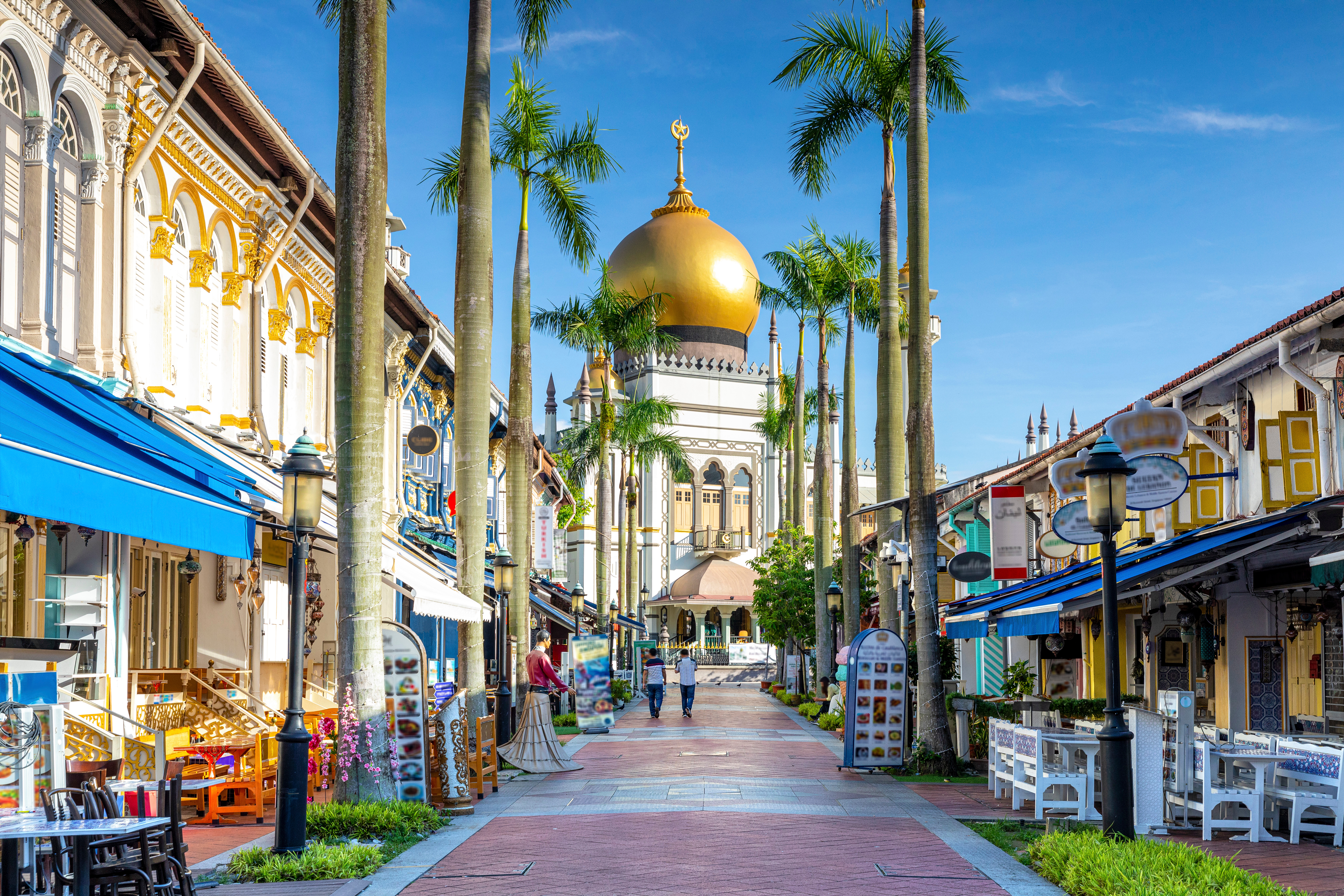
Then, make your way to Arab Street, where the Sultan Mosque cuts a striking figure against quaint pedestrian alleyways. In the evening, officegoers descend on the outdoor bars in this neighborhood for after-work gossip and drinks. The local favorite is a light, crisp Tiger Beer — could there be anything more appropriate for a Tiger in the Lion City?
Cap off your stay with a final feast at Newton Food Centre. It makes a brief appearance in the film Crazy Rich Asians and attracts throngs of tourists and locals each night. For good reason: This hawker serves up the best barbecued stingray in the city. Stingray has the same texture as a tender, mellow white fish, and here, they slather it in pungent belachan (shrimp paste). Order a char kway teow (fried flat noodles) to round out the meal, and try a cooling Red Ruby shaved ice for dessert.






1 Response
Margaret Ruttenberg ’76
7 Months AgoRecent Travels
I wish I had seen this article two weeks ago when I returned to the U.S. via Singapore from a Princeton Journeys trip to Vietnam and Cambodia. On the other hand, I was far luckier than my many companions who were forced to change all their flights in order to avoid the Middle East.