

This Is What Happens When Physicists Get Away From It All
At the Aspen Center for Physics, Princeton researchers find zen and breakthroughs
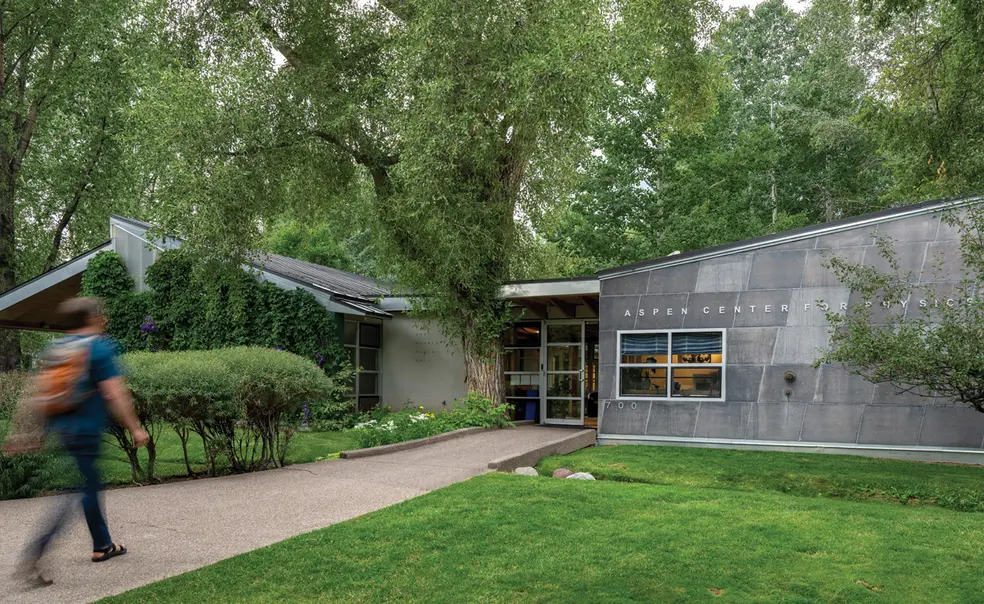

Picture a retreat center in Aspen, Colorado. It offers many elements one might encounter at a wellness spa — hiking trails that carve through a lush forest, ample time for relaxation and connection, hypnotic harmonies of a symphony punctuating the peace. But this retreat is different: It is made up entirely of physicists. For more than 60 years, the Aspen Center for Physics has offered physicists a respite from their duties as professors and researchers. The workshops, known for their long duration and lack of scheduling, have forged some of the most significant physics discoveries and collaborations, a number of them with Princeton ties.
Opportunities for physicists to meet abound, ranging from huge annual meetings with thousands of attendees to one physicist traveling to another institution to give a talk. Yet, workshops at the Aspen Center for Physics seize the special moments in science when “after all these incremental steps, boom! There’s a big step,” says Tyrel McQueen *09,
chair of physics and astronomy at Johns Hopkins University. “Aspen brings a set of people together at the right moment in time to catalyze the ideas that push the community forward.” Ravin Bhatt, professor of electrical and computer engineering at Princeton, adds, “Aspen can respond to things faster than individual universities can — you get the smartest researchers in a room, and they reflect where the field is going.”
How does the Aspen Center for Physics accomplish this? Nature and free time.
“It’s a magical place,” says Mariangela Lisanti, a professor of physics at Princeton. “I get there and suddenly I feel myself thinking clearly again.” A physicist’s daily life is less toiling away at a problem in solitude, and more fragmented and hectic. “You teach undergraduates, mentor graduate students, and go to meetings ... you might have some ideas during the academic year, but then you need time to consolidate them,” says Bhatt. McQueen adds, “Aspen gets you away from everything in daily life that interrupts your ability to think hard.”
Physicists stay at Aspen for two to four weeks. “There might be talks just a few times a week,” says Daniel Arovas ’82, a professor of physics at the University of California at San Diego. “The real emphasis,” he says, “is getting people to interact organically.” With about 100 physicists on campus at any time, and about 25 in a workshop, chances for casual conversation on heavy topics are as plentiful as electrons in matter.
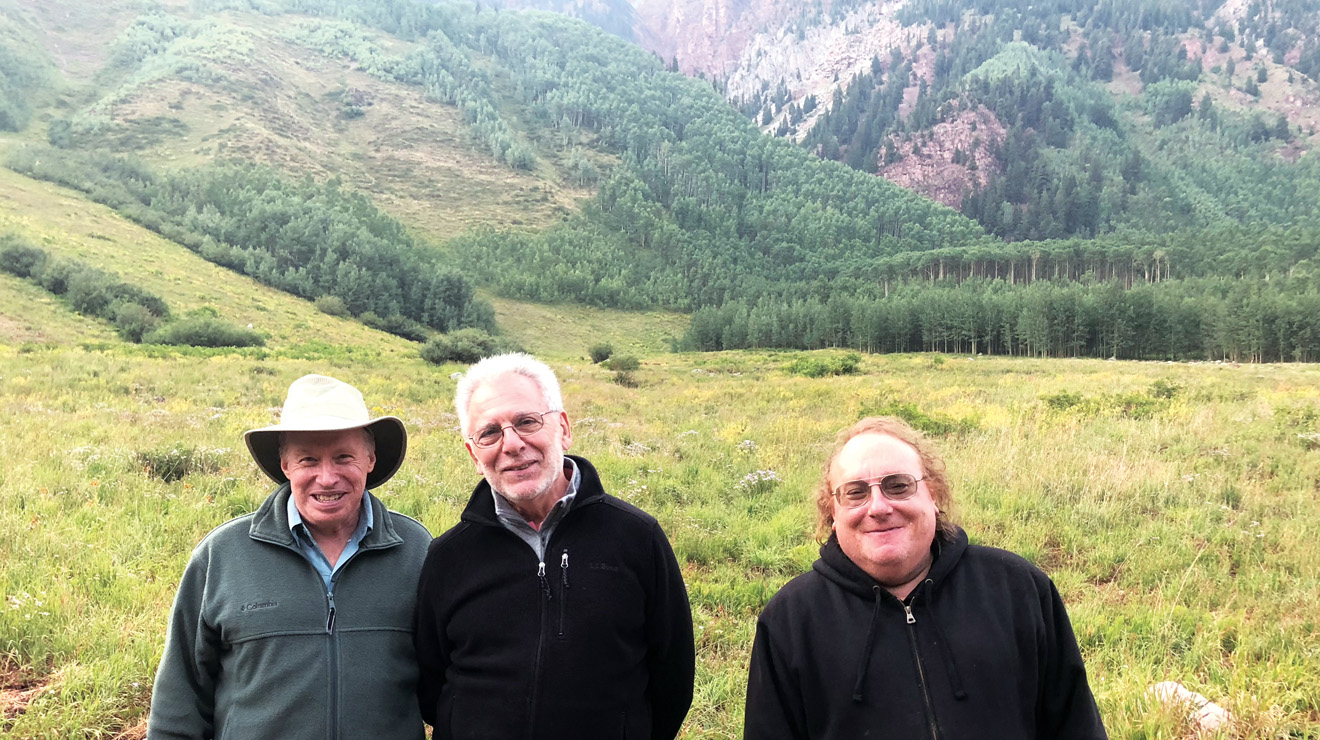
In the late 1980s, Bhatt, then working at Bell Labs, was facing a thorny problem in condensed matter physics. “Dan [Arovas] and I were stuck, and at Aspen I saw Duncan Haldane,” now a Princeton physics professor and Nobel laureate, who at the time was beginning a position at UC San Diego, “and we talked — he saw the problem differently.” Shortly after, Arovas, Bhatt, Haldane, and others published their work in the journal Physical Review Letters. “Talking to people at Aspen made the paper possible,” says Bhatt. Shortly after that paper, he and Haldane were offered jobs at Princeton.
“If you look at the acknowledgments in a lot of physics papers, they thank Aspen,” Arovas says. His first time in Aspen, Colorado, after graduation in 1982, was not actually for physics, but for the prestigious Aspen Music Festival and School — he plays the trumpet — which is close enough to the physics center that visitors can hear the music. “One day I wandered over to check out the physics center and was chased away by one of the staff, rightly making sure a nonphysicist wasn’t intruding,” he says with a laugh. Arovas returned for physics in 1988 and has been going every couple of years since then.
Arovas’ first time at the physics workshops coincided with one of those breakthrough moments in science — nearly two years earlier, in late 1986, high-temperature superconductors, now important in many areas including fusion reactors, were discovered and became a major focus area at Aspen in the late 1980s. “There was a six-week-long workshop on it,” says Bhatt, “probably the longest workshop ever because this discovery was so important.” Arovas remembers seeing one of his heroes there, late Princeton physics professor Philip Anderson, who was one of the winners of the Nobel Prize in Physics in 1977. “I thought it was so wonderful that they tried to get young people involved,” he says. “And even the older people were light and happy, the opposite of stodgy.”
Though Aspen has winter workshops, the summer ones are longer and feature hiking, which McQueen likens to golf for physicists. “Business people play golf and have important discussions that lead to decisions; that happens in Aspen on hikes,” he says. “During the summer of 1988, I learned by experience that Phil Anderson at age 64 was a much better hiker than I was at age 27,” says Arovas.
Fiona Burnell *09, a physics and astronomy professor at the University of Minnesota, describes the formative friendships she made during Saturday morning hikes during her first trip to Aspen when she was a postdoctoral researcher and stayed in a house with three other women physicists. “The social part of Aspen is so important because then you have a friend, someone you can call and say, ‘I’m thinking about this problem, can we talk about it?’ It’s not necessarily intuitive, but this relaxed comfort level leads you to do some of your best work.” Last summer at Aspen, Burnell and two others were stuck on a problem in quantum computing. “So, we all went out to dinner and started writing on the napkins,” Burnell says. When the napkin writing got them to the answer, Burnell’s 9-year-old daughter, who had been at the table watching, asked if the physicists would stand up and shout, “Eureka!” Moments later, in the dining room of Jimoto Ramen in downtown Aspen, they did.
In recent years, prices in Aspen for everything from a burger to a rental have skyrocketed, says Arovas, increasing costs for the Aspen Center for Physics, which is already run by physicists who volunteer their time, and for the scientists who rely on grant money to attend. In addition, adds Burnell, the uncertainty in scientific funding has added a new dimension of concern, since the program relies on federal grants. “What if Aspen and other centers like it lose federal funding and close? Aspen has led to so much cross-pollination of ideas and productive science.”
Matteo Ippoliti *19, a professor at the University of Texas at Austin, attended his first Aspen workshop as a postdoc, after graduate studies in Bhatt’s lab. “I would read these papers by scientists, and now I’m at the chalkboard with them, at dinner with them,” he says. “The whole idea of Aspen is actually a very Princeton thing: You gather smart and creative people together and let them hang out, and see what happens.”
The Latest
See all


Related News
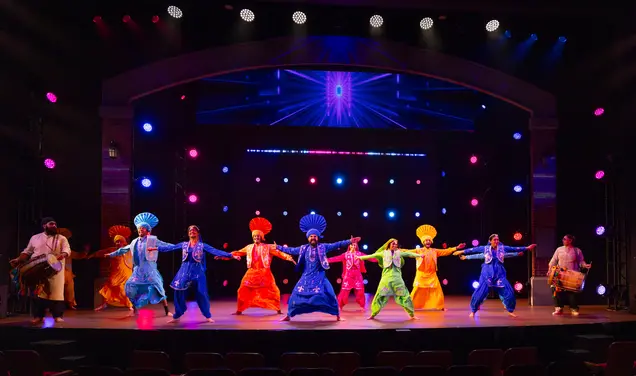
McCarter Theatre’s First South Asian Musical Took Me Back to Forbes Basement
A Beat of Our Own is about a college dance team not unlike Princeton South Asian Theatrics

1 Response
Rick Mott ’73
5 Months AgoA Day Off for Hiking
I very much enjoyed the article on the Aspen Center for Physics and would like to share a somewhat similar story on a less star-studded level. I attended the 2009 Semiconductor Detector Symposium in Wildbad Kreuth, in the foothills of the mountains south of Munich. Mostly physicists, but a few lowly engineers lacking Ph.D.s were tolerated. I even got to give a poster session.
For the traditional Wednesday day off from the academic program, Bavarians’ main idea of what to do for outdoor fun can be summarized as “see a mountain, climb it,” so a large group assembled to hike up to some beautiful sub-alpine meadows. One of the attendees was Emilio Gatti of Polytechnico Milano, who was legendary in my esoteric corner of detector electronics. At age 89, he went skipping up the trail like a mountain goat, leaving two overweight, under-exercised American engineers panting in his dust.