

Lydia Cornett ’16 Explores Unusual Relationships in Her Documentaries
Cornett’s latest film, Tesztpálya (Test Track), premiered last week at the 83rd Venice Film Festival

Every morning in Kenya, while participating in a Global Seminar the summer following her freshman year at Princeton, Lydia Cornett ’16 awoke with the same mission: find the zebras.
Working in small groups alongside animal behavior scientists, Cornett and her fellow students were tasked with creating a film about the Grévy’s zebra, an endangered species native to the Laikipia region of Kenya.
Throughout the six-week program, she obtained her first real exposure to the process of filmmaking. She learned how to operate cameras, how to edit videos using Adobe Premiere and, most importantly, the value of patience and observation.
“We would be waking up every day trying to find the zebras and just hoping we could get one shot of them at the watering hole,” says Cornett. “And I think that was such an interesting way to start thinking about filmmaking and the patience [it requires], especially for more observational filmmaking and documentary filmmaking.”
Cornett grew up in Baltimore as an avid violinist in a family full of musicians, but at Princeton she majored in history and got a certificate in film and video — two disciplines she says set her up for success.
“What’s cool about working with archives as a historian is you’re kind of constructing a narrative through those records, and obviously you’re using a degree of fact, but then your interpretation is sort of a creative one,” Cornett says. “That, to me, reminds me a lot of the way that editing happens in filmmaking.”
Landing her first role after college was tough. But after plenty of rejections, she accepted a video journalism internship with Slate Magazine, where she was involved in coverage of the 2016 election. She later completed fellowships at UnionDocs and the Jacob Burns Film Center, where she quickly discovered the powerful stories that often lie behind collaborative relationships — something that’s inspired much of her work since.
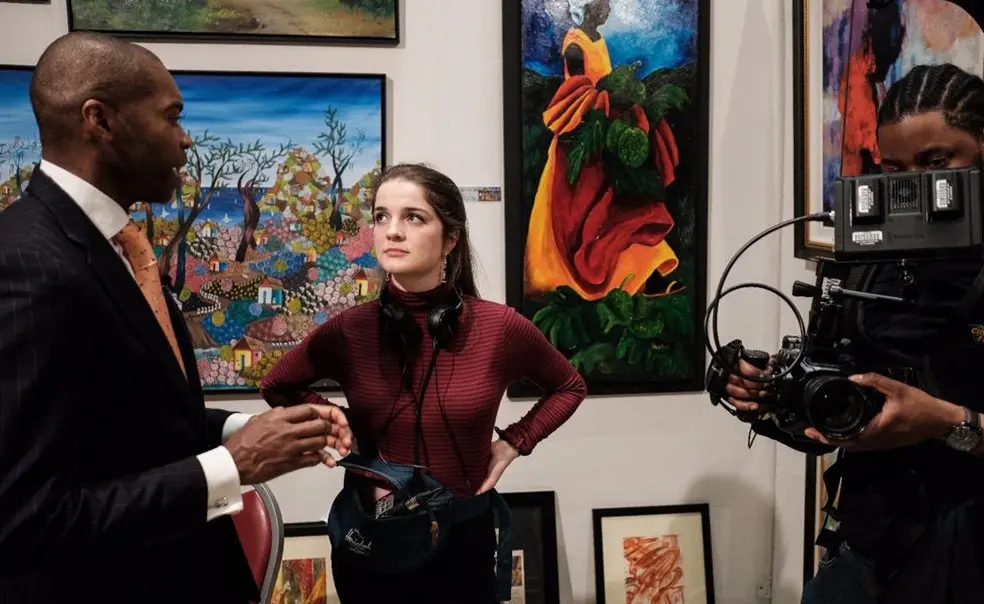
One of her first films, Yves & Variation, explores the story of a Haitian violinist doorman she met on the New York City subway in 2018. The film follows his travels back and forth to his home country, as he collects local artwork to sell in the United States. He then donates the money to help build schools in Haiti.
Cornett was particularly fascinated by the juxtaposition of Yves’ two worlds: bustling downtown Manhattan and the quaint artist communities of Haiti. In a way, her upcoming film, Tesztpálya (Test Track), explores a similar dichotomy.
While living in Budapest as a Fulbright Scholar in 2024, Cornett encountered the AVL ZalaZONE Proving Ground, a massive track facility built to test newly developed self-driving vehicles. It stood out profoundly in rural Zala County.
The film, which premiered last week at the 83rd Venice Film Festival, tells the story of a local family with six hunting dogs that are contracted to prevent wildlife from interfering with the track’s testing operations.
“I was really fascinated by that intersection of how the old, ancient knowledge almost paves the way for the new, and the way that the high-tech aspect of the cars is also almost reliant on something very, very ancient, which is animal hunting,” Cornett says.
Her curiosity and passion for exploring the relationships that drive our society forward has also led her to the Human Rights Foundation, where she serves as head of video. She’s aiming to bring a more documentary-focused approach to the organization’s film content, highlighting the work of activists around the world in their battles against authoritarianism.
The Latest
See all


Related News
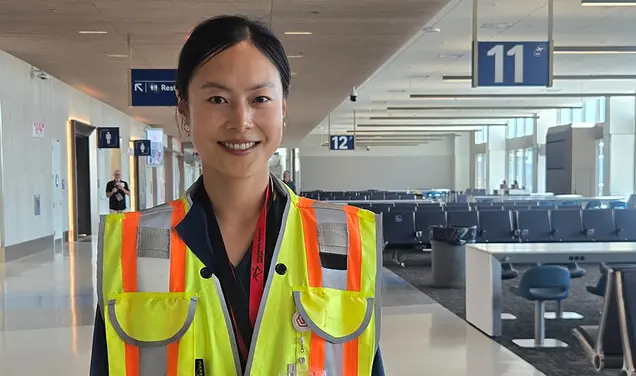
Janice Lee ’09 Worked to Renovate One of Hollywood’s Best-Kept Secrets
An engineer by training, Lee has been deputy project manager on the renovation of Hollywood Burbank Airport
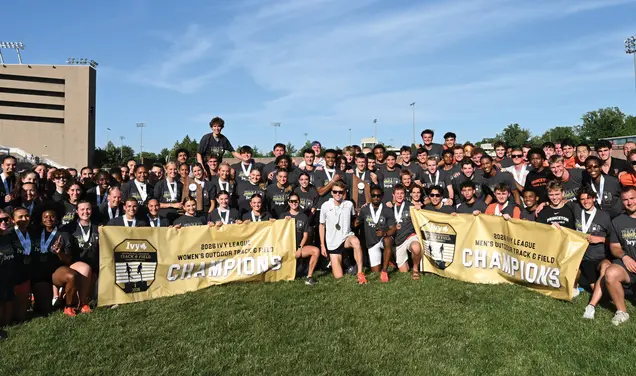
Princeton Teams Just Keep Winning. What’s Going On?
Tiger teams won 17 Ivy League championships in 2025-26, tying their own record set the year before

No responses yet