

Anthropologist Hanna Garth Calls for Restructuring the Food Justice Movement

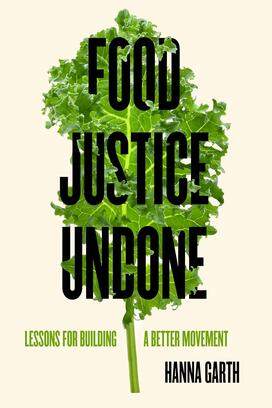
The book: At face value, the food justice system revolves around the desire to help others, but a closer look reveals many problems within the ways activists try to achieve this. In Food Justice Undone (University of California Press), Garth draws on 12 years of ethnographic research to call out food justice activists for the stereotypes and racially coded language that plagues the movement. She argues that these misconceptions — like the belief that healthy eating is determined by individual choice — lead to more harm to communities of color. Her goal in illuminating these issues is to encourage building a better movement.
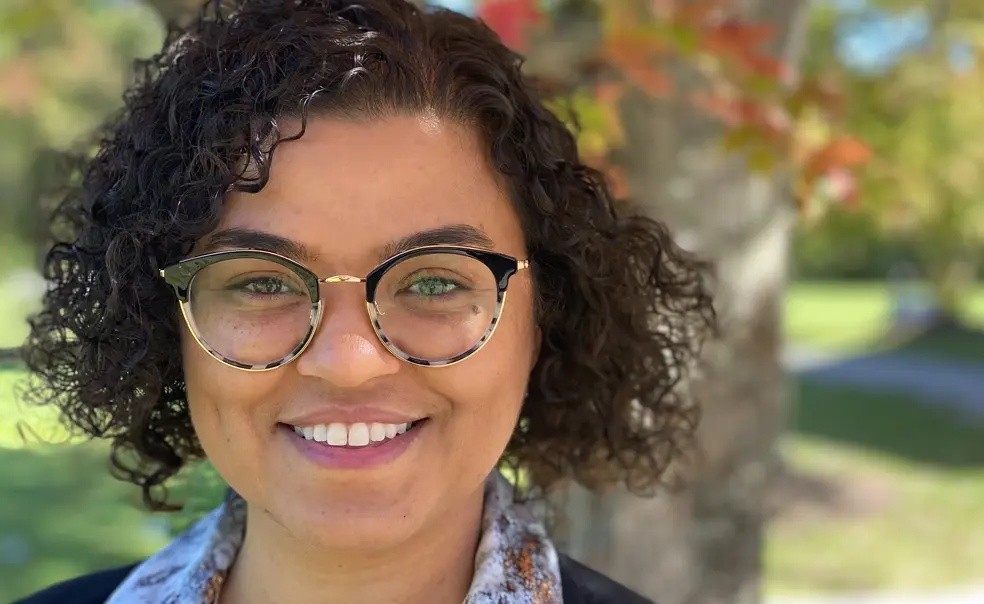
The author: Hanna Garth is an assistant professor of anthropology at Princeton. Her research focuses on the anthropology of food, race and racism, social justice, and Latin America and the Caribbean. She is the author of several books including Food Justice Undone and Food in Cuba. At Princeton she’s also affiliated with the Princeton Food Project, Program in Latin American Studies, Department of African American Studies, Brazil LAB, the High Meadows Environmental Institute, and the Center for Health and Wellbeing.
Excerpt:
Prologue
On a mild fall day in 2008, I spent an afternoon unloading a manure truck as a volunteer at a South Central Los Angeles community garden that was part of the food justice nonprofit Food for All. I was the only volunteer willing to work with the manure that day, so I spent a lot of time talking to Miguel, the staff member unloading the truck. Born and raised in South Central, Miguel started at Food for All as an intern in high school and was working his way up in the organization. He did not say much but had a gentle, calming presence that made me feel at ease in the garden. As we shoveled manure into the wheelbarrow, which we rolled into the garden and dumped into various vegetable beds, I asked him basic questions about Food for All: Why does the organization do the work that it does? What kinds of people volunteered there? Who did they hope to serve? And why? I felt excited to be volunteering, to literally put my hands in the dirt and use my body in a way that was very different from my everyday life as a doctoral student.
That day was one of my first volunteer experiences with a food justice organization, and I was immediately struck by the demographics of the other volunteers. Three college students came from West Los Angeles; it was also their first time volunteering with Food for All. A graduate student from a local state college had been a semiregular volunteer. All had traveled from more affluent parts of Los Angeles, like the beach community of Santa Monica or Brentwood, Westwood, and Century City, nestled between the ocean and Beverly Hills. They had traveled by car along the 10 eastbound or via Santa Monica Boulevard or Wilshire to a southbound street like Western, Normandie, or Vermont, taking them from the center of the city through Koreatown, Mid-City, the University of Southern California area, and into South Central Los Angeles.
I left the garden that day with complicated thoughts and emotions. Physically I felt good — my body was sore, and my skin was caked with dirt and sweat. I enjoyed the work and found it fulfilling. Gardening has been a part of my life for as long as I can remember. Growing up in the Midwest, my family always had a summer garden at home. My grandmother’s garden was extensive, allowing her to put together meals with fresh ingredients all summer and canned vegetables in winter. I moved to Los Angeles in 2008. Living in an apartment in West Los Angeles, I had a strong desire to grow my own food. Without access to outdoor space, my small collection of potted herbs and hanging tomato plants on the enclosed balcony did not satisfy my habituated desire to grow food. When my landlord found a volunteer tomato plant I had been nourishing behind the building’s landscaped bushes, he threatened eviction, claiming the tomatoes would attract rats, and removed the plant. So I signed up to volunteer at Food for All’s garden in South Central Los Angeles, which led to volunteering with other food-related organizations. I stumbled into the food justice movement when I met other like-minded volunteers.
That day in 2008 awoke a nagging curiosity that coincided with my academic training in anthropology, which gave me tools to analyze it. I was struck not only by the volunteer demographics but also by the racial dynamics of the work. The two nonwhite people, me and Miguel, ended up shoveling shit. The other volunteers pulled weeds and chatted while sitting on the edges of garden beds. While Miguel became a fixture in the food justice movement, I never saw the other volunteers again. Later, I would reflect on the fleeting nature of some peoples’ relationship with food justice work, which might involve swooping in and posting on social media but never engaging beyond the superficial. These racialized dynamics and varying connections to South Central Los Angeles and the food justice movement are part of what has pulled me to study the movement.
At the outset I did not intend for this food justice work to become a research project. I began this journey as a genuine volunteer interested in working toward food justice. At one point I was offered a job at a food justice organization that I seriously considered taking. I spent a lot of time looking for people and communities I ideologically aligned with. Along the way I encountered many food justice activists who saw things differently from me, and I wanted to understand why. I was captivated and intimidated by the complexity of the food justice movement, the vast number of people who were interested in it, and the many diverging ideologies and logics that compelled them. The spaces where food activists converged in Los Angeles did not reflect a movement in the sense of a single shared idea about what food is, how it should be grown, and who should benefit and why. Nor were these spaces an organized social and nutritional system where the relationship between “food” and “justice” was commonly understood. Instead, the movement grew haphazardly and rapidly, with a diverse group of people involved in food justice for many reasons, and there was rarely the time or place to come together and build a unifying vision across the multiple threads.
I studied the work of seven core food justice-related organizations over 12 years. This involved ethnographic research, including participant observation and interviews, where I spent long stretches of time hanging out and volunteering alongside people, trying to understand how they built meaning around the work they were doing. I tracked the organizations’ work via newsletters, events, emails, and social media. Beyond the seven organizations, I studied dozens of smaller and larger organizations with which they partnered for specific projects. These organizations tended to focus on creating sustainable interventions and long-term solutions that would empower residents of South Central to tackle the problem of food access. The organizations centered collective practices like community gardens and corner store conversions as well as cooking demos and K-12 educational interventions focused on individual behavioral shifts such as eating more vegetables and cooking homemade meals.
My research focused on the people doing food justice work and their organizations, which sought to intervene in South Central or East Los Angeles. Most of the people doing food justice work who participated in this research identified as white. Most did not live where they intervened. Part of what drove me to pursue the research was to understand why so many different organizations and activists coming from outside South Central or East LA were keen to intervene in Black and Latinx areas. Given South Central LA’s many problems, from high poverty rates and a lack of well-paying jobs to under-resourced schools and the lack of affordable housing, why was increasing access to healthy food and teaching people to consume healthier meals seen as crucial? To understand this, I conducted interviews with executive directors, staff members, volunteers, and key players in their collaborations and projects, including temporary consultants, clients, students, and interns. I attended board meetings, small group meetings, planning meetings, workshops, and public events. I offered my own sweat equity in the form of shoveling manure, filling community supported agriculture (CSA) boxes, creating budget spreadsheets, translating documents into Spanish, and assisting organizations when asked.
Many of the people I met early in my research, working together as volunteers or as students in class together, would go on to become the leaders and drivers of the food justice movement in Los Angeles. After graduation from their various programs, they landed food justice-related jobs. As I was working on this project, running into them at events, I asked for interviews or to observe their work. When I decided to turn this into a formal study of the food justice movement, I assumed that it would reveal fruitful possibilities for building justice and freedom, enable hopeful kinds of “horizoning” work, and fall within what anthropologists have called “anthropologies of the good.” I was interested in how radical worlds emerge and offer hopeful possibilities for alternative futures. However, the ethnography did not unfold as I expected. Instead, over years of ethnographic engagement and reflection as an anthropologist, the people, projects, and programs I observed aligned more with what Sherry Ortner has called “dark anthropology” or the “questions of power, inequality, domination, and exploitation.” The anthropological lens offers an opportunity to attend to the often taken-for-granted ideologies and logics behind social justice interventions. Ethnographic attunement provides a way to better understand why interventions are ineffective, despite the best intentions of those working to “help” others, and to make sense of why inequality persists.
Although I observed harmful effects of food justice work, I know that those working and volunteering in the movement did not intend to create harm and, for the most part, genuinely sought to make the world a better place. Revealing the dark underside of good intentions is an outcome of the research; critiquing the people in the movement is beside the point. Committed to studying the problem from the actors’ point of view, I dug deeper and tried to understand what kinds of systems, structures, and processes embedded in nonprofit and development work facilitate some projects and create barriers to others. I saw how well-intentioned people were caught within a system that prevented them from doing the work that was most helpful to communities they served. Many people involved in the movement knew they were stuck but did
not know what to do about it, struggling to make sense of the relationship between food and justice. I watched them come to terms with the culpability of their own positions or the tensions, contradictions, and even violence of their work. Many of these well-intentioned people struggled with dawning reflexivity that shadowed their sunny commitment to “the good” through food into the realm of the dark. They often came to question what they were doing and to what end in ways that resonate with the stories I tell throughout this book.
Excerpted from Food Justice Undone by Hanna Garth Copyright © 2026 by Hanna Garth. Published by University of California Press.
Reviews:
“In Food Justice Undone, Garth listens at the fault lines of broken systems and distills from their ruptures a blueprint for movements rooted in care, precision, and collective power. A landmark achievement.” — Laurence Ralph, author of Sito: An American Teenager and the City that Failed Him
“Garth meticulously details the contradictions and possibilities in the food justice movement. Food Justice Undone is a cautionary tale about what happens when food justice’s radical origins are co-opted or overshadowed by pragmatism.” — Ashanté M. Reese, author of Black Food Geographies: Race, Self-Reliance, and Food Access in Washington, D.C.
The Latest
See all


Related News
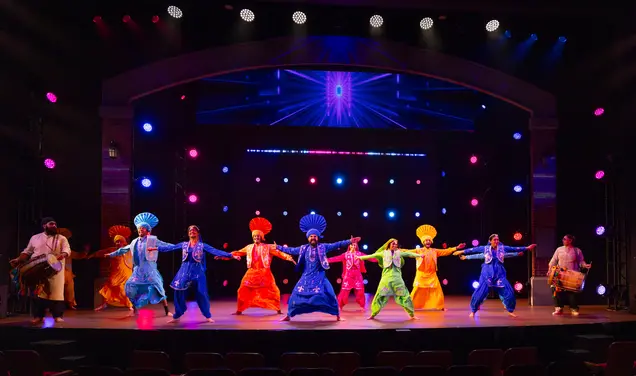
McCarter Theatre’s First South Asian Musical Took Me Back to Forbes Basement
A Beat of Our Own is about a college dance team not unlike Princeton South Asian Theatrics


No responses yet