

A Philly Tour Guide’s Top Spots for History Buffs
As the U.S. celebrates its 250th, Philadelphia tour guide Martin Lotito ’81 points out the places where history was made
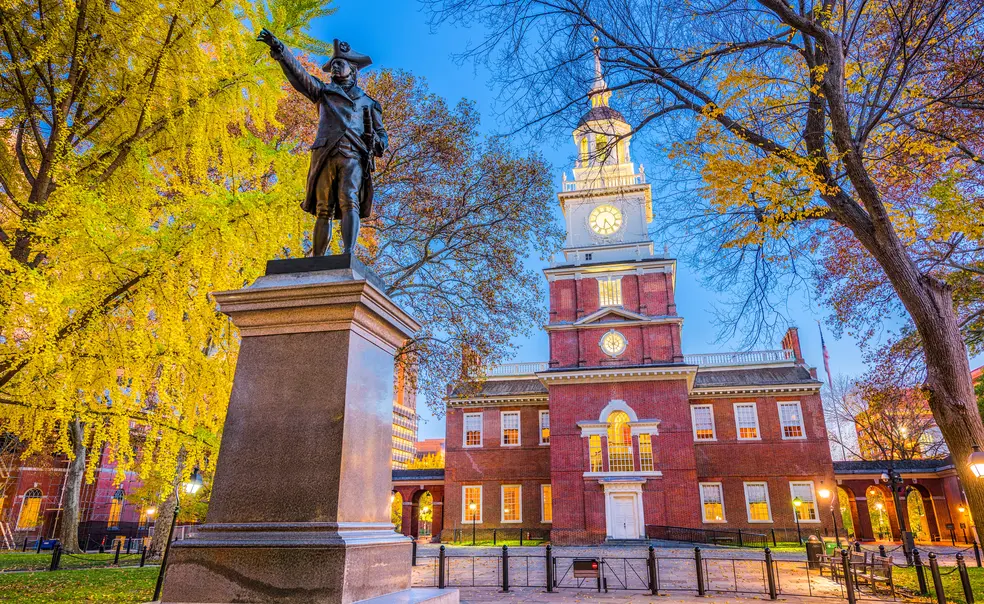

After retiring from a 43-year career as a chemical engineer, Martin Lotito ’81 decided to pursue his passion for history as his next chapter. He’s always been fascinated by the creation of the U.S. government and wanted to learn more. “We all came over on different ships, but we’re all in the same boat now,” Lotito says. “How did this happen?”
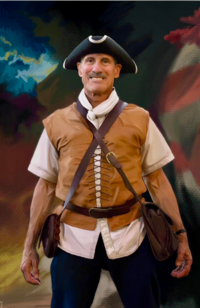
In 2024, he earned a certification as a Philadelphia historical tour guide and began his business Tricorner Tours to guide visitors through the city’s historical landmarks on foot. His daughter, Lisa Lotito, designed his website, tricornertours.com and the rest has literally been history. Lotito’s available tours cover five themes: famous founders in Philadelphia, religion, a military tour, one focused on women and Black founders, and Benjamin Franklin.
So how should one mark the country’s semiquincentennial in Philadelphia? Lotito of course recommends taking one of his tours to get more in-depth details on landmarks, including the Liberty Bell. But for those looking to explore on their own, Lotito shares with PAW his top recommendations in the city’s Independence National Historical Park:
Independence Hall
520 Chestnut St.
One of the most iconic buildings in the city, Independence Hall is where the Declaration of Independence and the U.S Constitution were signed. “Absolutely go inside!” Lotito insists, adding that he regards the East Room as the epicenter of political history. He encourages visitors to take the ranger-led tour for a deep dive into the history. Tickets are required most days at $1 each, but free tours will be available on July 1, 2, 3, 4. Once you’re done, “Come out and get my tour,” Lotito says, “because I’m going to tell you things that are not in the scope of what the ranger address, because I’m going to put them in the bigger context.”
Tomb of the Unknown Soldier of the American Revolution
217-231 W. Washington Square
A short distance from Independence Hall is Washington Square, home of the Tomb of the Unknown Soldier of the American Revolution. “As you walk across the square, you’re walking above the graves of thousands of Revolutionary soldiers,” Lotito says. He encourages visitors to observe the flags and read the words written on the monument. “It’s a very special place,” Lotio says, which is why he highly recommends factoring it into a visit.
Christ Church
20 N. American St.
The intersection of U.S. history and religion is something that Lotito says has fascinated him as he’s learned about the historical sites over the years. Founded in 1695, Christ Church was the first parish of the Church of England and where the American Episcopal Church was born. Seven of the signers of the Declaration of Independence are also buried on the church’s property. Stop inside when church is not in session, Lotito says. “You can go in and see a lot of wonderful things. For example, many of the pews are marked with brass name plates for many founders who worshipped there.” Famous figures like George Washington, Betsy Ross, and Ben Franklin were members of this church.
Carpenters’ Hall
320 Chestnut St.
The site of the first Continental Congress in 1774, Carpenters’ Hall is a “beautiful building” that visitors can tour through quite easily. Free to the public, this space was the home of the first and second banks of the U.S., Franklin’s Library Company, and the American Philosophical Society. “It’s one big room and there’s an awful lot of history there,” Lotito says.
Franklin Court
322 Market St.
There are two main ways to explore the site which serves as a representational design of Benjamin Franklin’s home: by browsing the top level or going to the museum downstairs. “This is a property that he owned later in his life, and there are great stories that go with it,” Lotito says. Visitors can step back in time in the courtyard of “ghost structures” which outline the locations of Franklin’s home and the print shop he built for his grandson. The museum below celebrates the founder’s life and legacy.
Welcome Park
129 Sansom Walk
Built in 1982, Welcome Park was designed to celebrate the 300th anniversary of the founding of Pennsylvania by William Penn. Named after his ship, this outdoor museum serves as an ode to Penn and his vision for the city. Visitors can find a sculpture of Penn and panels along the plaza wall that tell his story through a series of quotes. “The last panel shows that the Liberty Bell was cast to celebrate Penn’s Charter of Liberties,” Lotito says. “As you read it, you stand on the site of his home, where he issued it."
Bonus: Betsy Ross House
239 Arch St.
Visitors can “get a great feel for colonial life,” by exploring the house and artifacts at the Betsy Ross House museum, Lotito says. Ross, who is believed to have sewn the first United States flag, is an integral part of American history. There’s lots to explore and learn, making this a great stop, he adds.
The Latest
See all


Related News
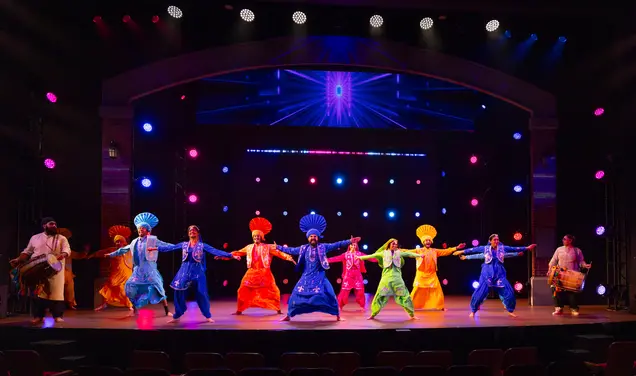
McCarter Theatre’s First South Asian Musical Took Me Back to Forbes Basement
A Beat of Our Own is about a college dance team not unlike Princeton South Asian Theatrics



4 Responses
John Sefter ’78
3 Months AgoSounds Exciting!
Sounds exciting! Wonderful event.
Ted Witmer ’76
3 Months AgoNew Appreciation for Philly
Dana and I — ’76 ’76 — took the tour with four of our grandchildren aged 4-14 (and their parents). We had an awesome time learning lots of things we didn’t know, and Marty made it kid friendly, too. We stopped for a cheesesteak lunch in the middle of the tour, a time to cool off and refuel. I have a whole new appreciation for the old city, even though I grew up in the Philadelphia area. Thank you Marty!
Lee K. Anthony
3 Months AgoTour Guide Kudos
Just took Marty’s tour — lots of history details, highly entertaining, and worth twice what you pay. Create a group and go visit America’s birthplace with Marty! Five stars and special memories for the 250th!
Michael Harder
3 Months AgoTouring Historic Philadelphia
I am looking forward to taking a tour with Marty Lotito.