

C. Diff Bacteria Can Weaken the Sick, But a Princeton Chemist Found a Fix
Biological chemist Mohammad Seyedsayamdost found the antibiotic KCB is safe and effective against C. diff and preserves the microbiome


Spend time in a hospital or nursing home and you’re likely to hear about the dangers of Clostridioides difficile, or C. diff. This bacterium causes gut infections that transmit easily and recur often. Especially in older people and those with weakened immunity, it can be deadly. Part of what makes it so tricky is that the cure — antibiotics — is also the culprit. It’s as if using a fire extinguisher started a new fire while putting a different one out.
Most C. diff infections occur after taking antibiotics for another illness. Many of these drugs kill protective “good” bacteria in the gut, and this disruption of the gut microbiome makes it easier for C. diff spores that enter the body to grow and produce toxins. While antibiotics can clear C. diff, in the process, they further disrupt an already weakened microbiome. It’s one reason why recurrence and reinfection are common.
In November, preclinical trials in mice showed a potential fix. The tests found that a novel antibiotic called KCB, discovered in the lab of Princeton biological chemist Mohammad Seyedsayamdost, is safe and effective against C. diff and preserves the microbiome.
“It’s much more potent than what’s currently used clinically, and it’s also much more specific,” says Seyedsayamdost, meaning that it attacks its target and nothing else.
C. diff is the leading cause of death from gastroenteritis in the U.S., with about 500,000 illnesses and more than 29,000 deaths each year, according to the CDC. That’s one reason the preclinical trial results matter.
Even more important is how KCB, which is produced by a soil bacteria, was discovered. Seyedsayamdost invented an entirely new way to find antibiotics and other molecules — a breakthrough that has implications far beyond C. diff.
In 2020, his method won him a genius grant from the MacArthur Foundation, which praised his research for “opening up access to a new trove of previously unknown and potentially therapeutic biochemical compounds.”
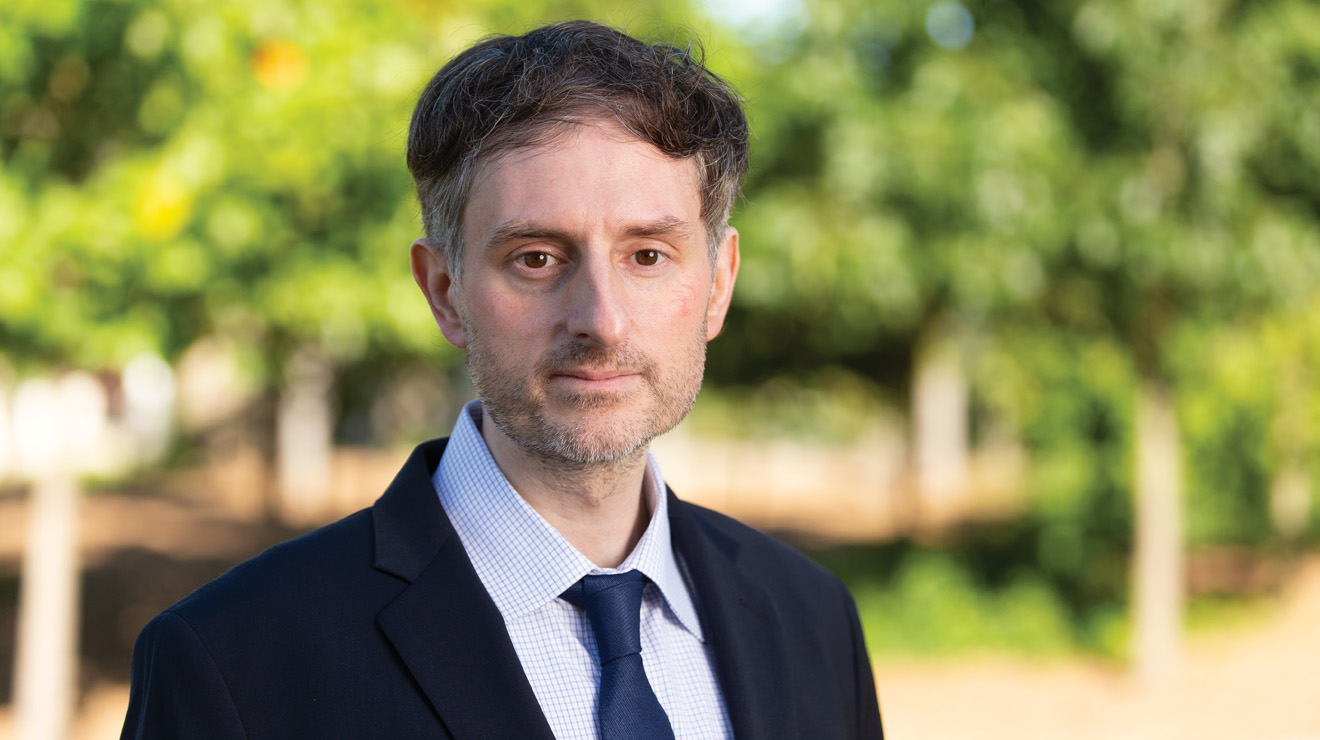
Of the 100 or so medical antibiotics in use today, most originated in the natural world — from bacteria that make these molecules as part of their normal metabolism. Called secondary metabolites, “they’re essentially a chemical language” that bacteria use to communicate and compete with each other, Seyedsayamdost says. For people, they can cure infection. But decades ago, traditional methods for finding them ran dry.
Seyedsayamdost’s approach is to activate hidden secondary metabolites by turning on otherwise dormant pathways in the bacteria. He calls the method HiTES (High-Throughput Elicitor Screening).
“Somewhat ironically, what we figured out is that the best way to turn on these dormant pathways is through the addition of antibiotics,” he says. “If you supply a high dose, obviously the bacteria will die, but with a low dose, they feel threatened, like there’s a competitor. And so they turn on all this biosynthetic potential in an effort to protect themselves. That was the major discovery — that low-dose antibiotics are inducers for dormant pathways.”
Seyedsayamdost’s lab has now found more than 200 novel secondary metabolites, including antibiotics. “These are metabolites that you wouldn’t see with conventional discovery methods,” he says. “Some are completely new structural classes of molecules.”
In addition to his lab work, Seyedsayamdost is co-founder and CEO of Cryptyx Bioscience, a startup focused on developing new medicines. C. diff infection is one of many illnesses in its sightline. Another is melioidosis, which can cause pneumonia and is resistant to many commonly used antibiotics. In a November preclinical trial, the novel antibiotic TMMC proved effective against melioidosis, Seyedsayamdost says. In both cases, the molecules discovered in Seyedsayamdost’s lab were licensed from Princeton to Cryptyx, and all subsequent work has been conducted at Cryptyx, he says.
“Developing a drug is really expensive,” Seyedsayamdost says. “The average cost is well over $1 billion.” A small startup can’t take that on. With the preclinical C. diff results in hand, Seyedsayamdost hopes to find a pharmaceutical company to either partner with Cryptyx or license its work. If either happens, human clinical trials may be on the way.
The Latest
See all


Related News

With Prominent Journalists and Hoagies, the ‘Prince’ Celebrates 150 Years
A gala at the New York Historical raised roughly $400,000 for the independent student newspaper

1 Response
Barb Parker
7 Months AgoExperience with C. Diff
I am a very healthy 69-year-old woman who came down with c. diff after taking amoxicillin and then prednisone for having an ear infection and bronchitis. I took fidaxomicin for 10 days and have recovered, although I am still sticking to a blander diet and taking probiotics.