

The Humanities at Princeton: Our Future Is Bright
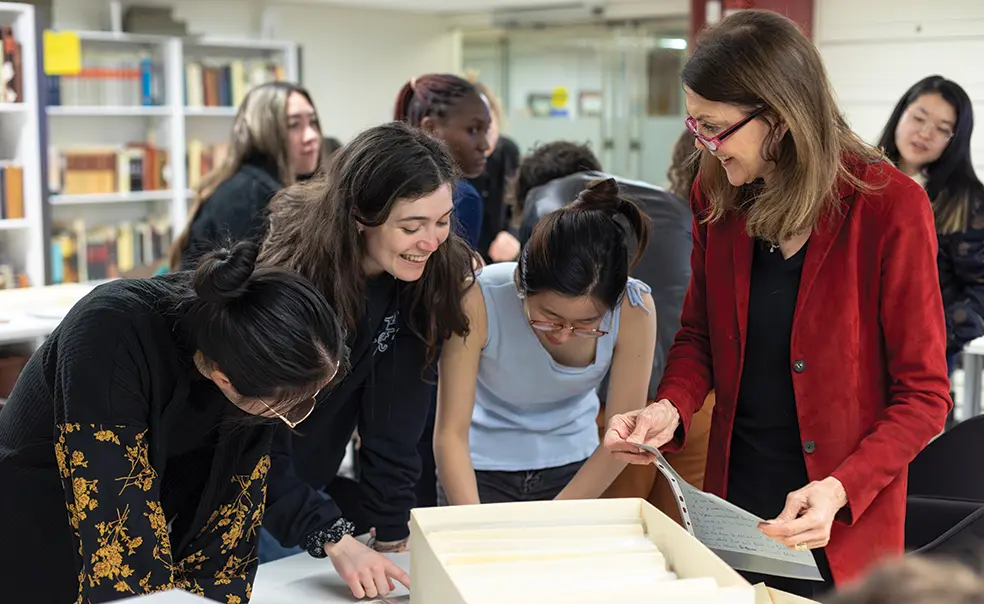

For this month’s column, I asked Rachael DeLue, the Christopher Binyon Sarofim ’86 Professor in American Art, to share some reflections on the state of the humanities at Princeton and on the ambitious Humanities Initiative she has been leading since late 2024. — C.L.E.
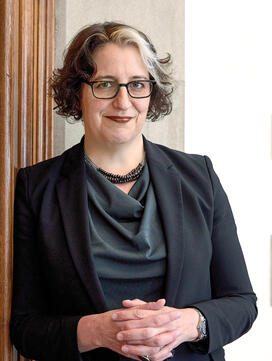
Growing up in Portland, Oregon, I did not have my sights set on a career in higher education, let alone imagine myself as a scholar of the history of art. Only one person in my extended family had earned a Ph.D., in agricultural science, and my parents were civil servants. But art was always a part of my life. My dad had originally trained as a painter and ceramicist, and he and my mom enrolled my twin brother and me in art classes from an early age and took us to museums whenever they could. And I was lucky enough to be able to enroll in an art history class at my public high school, unusual for the time.
None of this made me decide to become a professor of art history, but I know that having the arts in my life as a young person helped me see their value for humanity: as a mode of expression, a medium that gives people voice, a form of knowledge, a source of joy, a healing practice, and a way to bring people together and build community.
Art history, like many of the humanities fields, is a gathering and connecting discipline. By this I mean that the study of art opens onto the study of everything else. Any given work of art, crucible-like, contains, condenses, and configures anew the forces and formations of its historical moment: literature, music, theater, dance, philosophy, politics, economics, law, religion, science. Any understanding of that work of art, then, pulls the art historian into the thick of the social and historical fabric of which that work was a part. In turn, the work reveals modes of understanding the world—forms of seeing, thinking, knowing, and being—particular to a specific historical moment and from which we might learn a great deal about peoples of the past, ourselves in the present, and our possible futures.
During my time at Princeton, which began in 2005 and included four years as chair of the Art and Archaeology Department, I have had the privilege of working with some of the finest students and scholars from a range of disciplines. All of them have been willing to tackle with me the kinds of questions to which humanists are drawn—big questions that require big answers and thus call for a deep and wide disciplinary net and a cohort of open and curious minds.
Today, I am leading a different kind of “gathering and connecting” project: the establishment of a major research and teaching initiative for the humanities on campus, one that supercharges and forges new directions for the humanistic disciplines while also engaging them in closer and more impactful conversation with the social sciences, sciences, and engineering. For this reason, I have spent a great deal of time thinking about and planning for the future at Princeton of the humanities, those disciplines that study human culture and expression, including literatures and languages, philosophy, religion, classics, history, art history, film and media studies, and the fine and performing arts.
I am happy to report that despite rumbles and hand-wringing in the media about crisis in the humanities, the future is bright at Princeton because the humanities are as essential as ever to our mission. Indeed, they are necessary for envisioning and addressing some of the most urgent and bracing questions and concerns of our current historical moment—from social justice to artificial intelligence—and for figuring out how to create and sustain the conditions for all people to thrive.
The study of human culture and history cultivates in our students the capacities essential for navigating the world today: evidence-based reasoning; historical perspective; cross-cultural understanding; the analysis of ideas in context; making connections among different fields of study; communicating across difference; creativity and imagination; media literacy; ethical thought; and empathy.
Today technology presents dazzling new possibilities, and cultures collide in ways both promising and perilous. The humanities respond by inviting essential insight about what matters in life, how to sustain civic culture and safeguard democracy, and what it will take to build a secure, free, and prosperous future for the planet.
As we build on Princeton’s storied accomplishments in the humanities, I am grateful for the enthusiasm and generosity of alumni and friends of our University. Your support recognizes the vitality of the humanities in ensuring Princeton is a place that fosters scholarship, research, and teaching of unsurpassed excellence—and is also a training ground for how to live a meaningful life. Thank you for taking this journey with us.
The Latest
See all


Related News
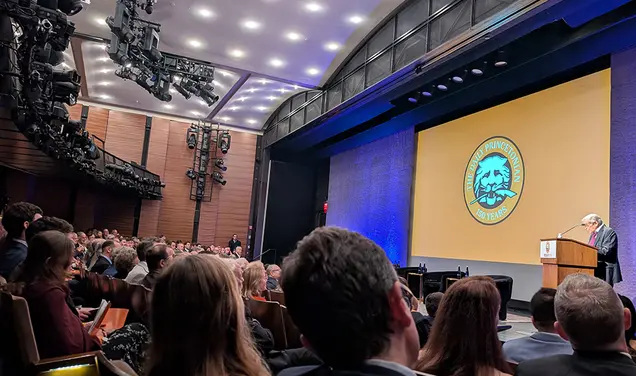
With Prominent Journalists and Hoagies, the ‘Prince’ Celebrates 150 Years
A gala at the New York Historical raised roughly $400,000 for the independent student newspaper

2 Responses
Richard M. Waugaman ’70
8 Months AgoHumanities Restore a Healthy Balance
Rachel DeLue’s role in helping lead the future of the humanities at Princeton could not be more crucial. I hope she is aware of the pioneering work of Iain McGilchrist in explicating some of the problems we are now facing that, in many ways, involve the “collision” between the humanities and technology that Professor DeLue cites.
McGilchrist’s assessment and recommendations as to this collision are based on his unusually broad intellectual background. After several years as an English professor at Oxford, he attended medical school and became a psychiatrist. He then did neurophysiological work and became as knowledgeable as anyone I know in the specialized roles of our left and right cerebral hemispheres, while also being deeply learned in philosophy.
In a long historical movement that deserves to be called “sinister,” the ideal balance between our hemispheres has been disrupted by the excesses of the enlightenment and the scientific revolution.
As a result, we are losing the sense of what Professor DeLue calls “a meaningful life,” which is enriched by the humanities, as they activate and strengthen the right hemisphere’s role in empathy, intuition, and imagination. Eschewing the widespread binary bias, McGilchrist calls for a more balanced view that honors four main pathways to the truth: science, reason, intuition, and imagination.
Princeton is uniquely positioned to help lead the way to restoring a healthier balance for all of us.
Christopher Ulloa Chaves
8 Months AgoIntegrating Humanities, Applied Sciences
Yes, broad study and integration of the humanities and applied sciences can inform many in our world on how to face our current civilizational challenges for ethical renewal. It’s not over yet!