

International Graduate Students Connect Over Shared Challenges

For the first time this fall, international graduate students and postdocs under pressure due to changing policies from the Trump administration gathered weekly to discuss challenges, form a community, and support one another.
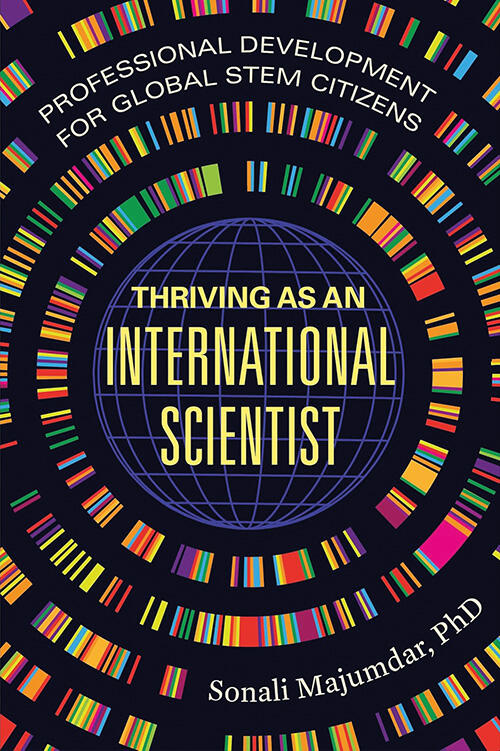
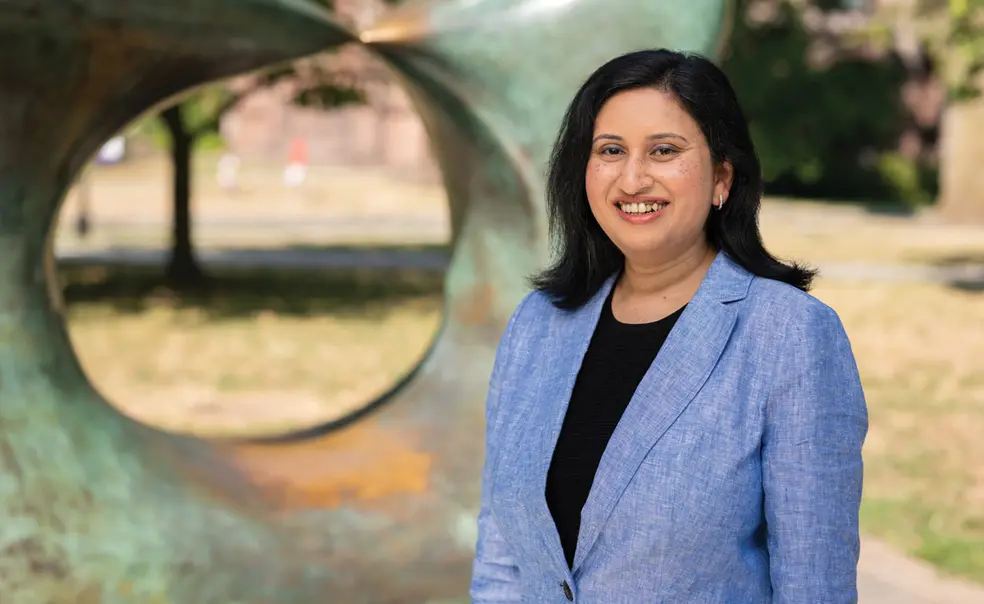
The International Scholars and Scientists Cohort was organized by GradFUTURES, the Graduate School’s professional development hub, and was led by Sonali Majumdar, an immigrant from India who joined Princeton in 2022 as assistant dean for professional development. Majumdar published a book this October, Thriving as an International Scientist: Professional Development for Global STEM Citizens.
Current news headlines affecting the academic and international communities — such as immigration challenges and fewer grants — were brought up but were not a focus, according to Majumdar. But some participants told PAW that federal turmoil in the U.S. was a factor behind their decision to attend.
“The reason that I was interested,” said Yun Choi, a fourth-year civil and environmental engineering graduate student from South Korea, “is because of the current situation [in the U.S.]. … As a person who has a student visa, I also need to figure out my plan B and C.”
Majumdar discussed real-life examples from her book of international scholars who have found success globally — beyond their home countries and the U.S. — which Lynn Hirose, a fourth-year atmospheric and oceanic sciences graduate student from Japan, said served to “broaden my options and provide an overview of what is actually possible.”
“During this difficult time … just staying in the U.S. might not be the only option,” said Hirose.
“If you feel like your purpose, your scholarship, your interests, are not being met in this country, there might be other spaces in the world to explore,” Majumdar said during one session.
Dean of the Graduate School Rodney Priestley said international students have valued Majumdar’s guidance since she got to Princeton, and “her new book is an exciting next step, allowing her to share that expertise with a wider audience. What’s even better is that the GradFUTURES learning cohort … brings those insights into the classroom with practical, actionable recommendations for Princeton graduate students. We are lucky and thrilled to have her on our team.”
The gatherings were inspired by one of Majumdar’s book reviewers, who suggested her book would pair well with workshops. So, Majumdar developed a curriculum. The group, which had more than 20 participants, met on Tuesday evenings in the Louis A. Simpson International Building.
“The central thesis is applying the curiosity and creativity that they bring into their scholarship and their research into other parts of their life … and problem solving through disruptions and challenges that they face so that eventually they can still find the career path that they are interested in,” said Majumdar.
Topics included building communities of mentors, the ins and outs of visas, storytelling, and mental health. The sessions incorporated practical tips and strategies for finding a fulfilling career and overall happiness both inside and outside of the U.S. Though the book and the gatherings were primarily geared toward STEM, the humanities were also included.
Cécile Raas, a first-year graduate student in French and Italian from France, said some participants discussed how the cohort became “like therapy to some extent … and I think it really opens up this safe space for us, especially right now in a moment at which it gets a little bit more difficult to be an international student.”
Students expressed a desire for meetings to continue beyond the semester, though nothing has been planned. “One of the biggest benefits of this cohort has been the community and getting to hear from other peers on how there are shared challenges,” said Majumdar of feedback she’s received.
About 44% of Princeton’s graduate students are international, according to the Graduate School. Almost a quarter of graduate students enrolled in the U.S. in 2023-24 were international, according to the National Center for Education Statistics.
The Latest
See all


Related News
With Prominent Journalists and Hoagies, the ‘Prince’ Celebrates 150 Years
A gala at the New York Historical raised roughly $400,000 for the independent student newspaper

No responses yet