

Madeleine Haddon *21 Helped Create a David Bowie Museum
Haddon, a senior curator, says the newly opened David Bowie Centre in East London is unlike any museum visitors have ever seen
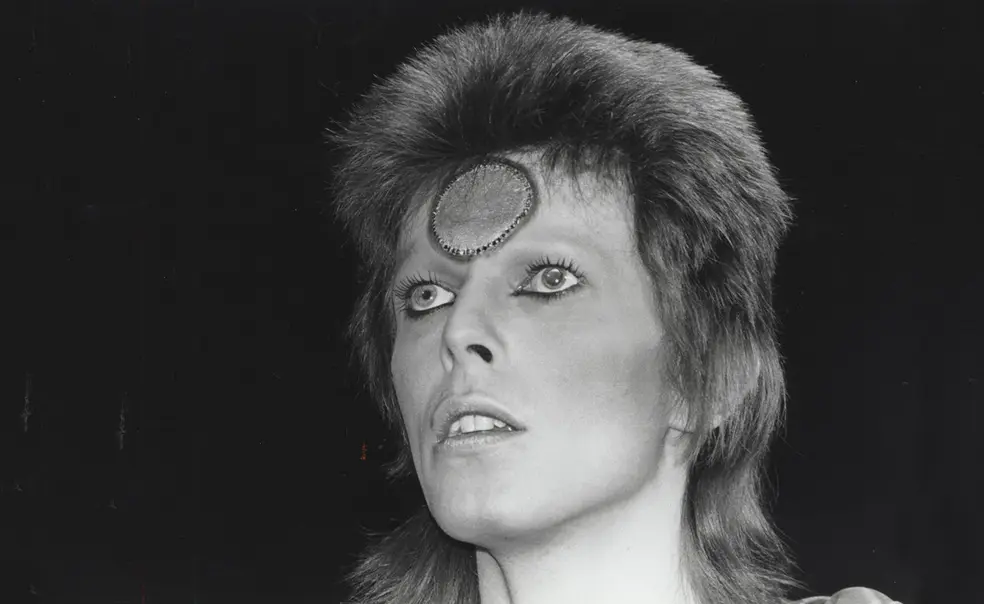
David Bowie might have been one of the most innovative musical performers of the last 60 years, but to younger audiences, he can seem as unfamiliar — and as relevant — as Perry Como. Madeleine Haddon *21 hopes to change that.
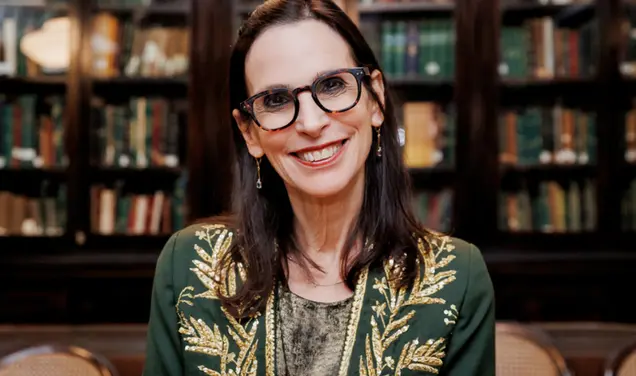
Haddon is a senior curator of the David Bowie Centre at the newly opened Victoria & Albert (V&A) East Storehouse in London. “There’s so much for people to get excited about when it comes to Bowie,” she says. “When we think about young people today wanting to be creatives, he is the original creative in all senses of the word.”

A singer and songwriter known for such hits as “Space Oddity” and “Fame,” Bowie was also a painter, actor, set designer, and costume designer whose androgynous stage persona, Ziggy Stardust, challenged conventions around gender identity in the early ’70s. An early adopter of technological innovations, he was also one of the first major artists to release an album online, create his own website, and use chat rooms to engage with fans.
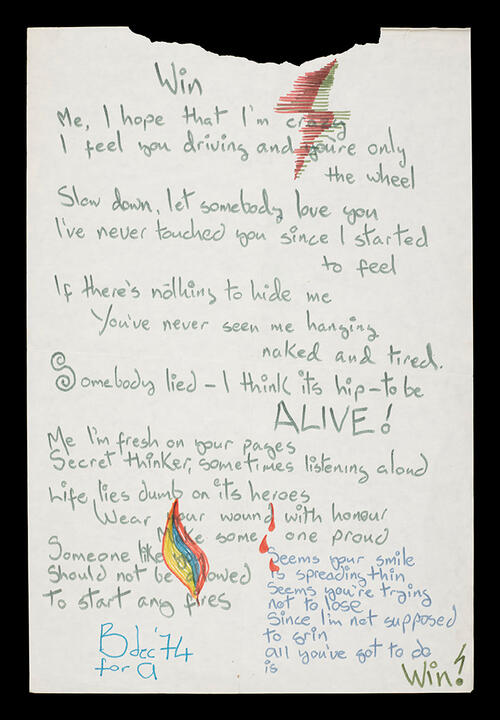
Bowie donated several hundred pieces of memorabilia to the V&A before his death in 2016 at the age of 69; a collection of his artifacts toured the world for several years. In 2023, the museum acquired the rest of Bowie’s archives, more than 90,000 items including instruments, gold records, costumes, original lyric sheets, photographs, and correspondence. Even Bowie’s work desk. It needed to build a space to hold it all.
Cue the Bowie Centre, which opened on Sept. 13 as part of the new V&A location in East London. Haddon says it is unlike any museum visitors have ever seen.
In addition to viewing thousands of items on display, visitors can look up any item in the museum’s online catalog and have it brought to them personally to view and, in many cases, touch. That includes anything from a 1975 Bowie guitar to a pair of eighth-century Egyptian shoes or a 19th-century throne belonging to the maharaja of the Sikh empire. No reason is needed to request an object, and no expertise is required, although if something is too old or fragile, visitors may be asked to wear gloves or look rather than touch. The service, known as Order an Object, is also free, although visitors should make an appointment.
“If it’s a small enough object, we’ll bring it to you in a study room,” Haddon explains. “If it’s a very large object, we’ll take you to it. The whole idea is to give the collection back to the people, where it belongs.”
After attending Yale, where she majored in art history and worked as a curatorial assistant, Haddon earned her Ph.D. at Princeton, writing her dissertation on race and gender in 19th-and 20th-century Spanish, French, and American painting. She later worked as an independent curator in London. Haddon has since curated exhibitions at the Hispanic Society Museum and Library of New York and a Matisse exhibition at the Museum of Modern Art in New York before joining the V&A in October 2022.
The V&A Storehouse East is the latest branch of the Victoria & Albert Museum, which boasts one of the largest collections of applied and decorative arts in the world. It contains 250,000 exhibits over 172,000 square feet of exhibition space, the equivalent of 38 full-size basketball courts. A profile on CNN.com described it as “akin to a big, artisanal IKEA.” Among many highlights, the V&A Storehouse East includes the Kaufman Office, designed in the 1930s by Frank Lloyd Wright and the only complete Wright interior on display outside the United States. Also on permanent exhibition are a 15th-century gilded wood ceiling from Spain and Picasso’s huge 34-by-38-foot backdrop for the ballet Le Train Bleu, painted in 1924.
Haddon is one of five curators at the V&A East Storehouse and the V&A East Museum, which will open next door in April and focus on contemporary art. She is leading the artist commissions program and helping to develop the new museum’s permanent galleries, as well as leading a research project on the global history of Carnival.
Objects at the V&A East Museum will be displayed thematically rather than by location or period. For example, Nigerian American artist Kehinde Wiley’s 2019 Portrait of Melissa Thompson, depicting a young woman from East London, will be hung alongside a 16th-century self-portrait by Sofonisba Anguissola, one of the best-known female artists of the Italian Renaissance. The goal, Haddon says, is “taking objects from disparate geographies and moments in time and placing them in dialogue with each other.”
When she was a girl, Haddon says her parents often took her to museums around New York City, which inspired her to become a curator. However, she saw few other patrons who were persons of color, like her. Now that she has the opportunity, she is determined to address that.
Museums tell of our shared human history, Haddon says, “and as a scholar and as a curator, I’ve dedicated my work to bringing those to life.”
The Latest
See all


Related News
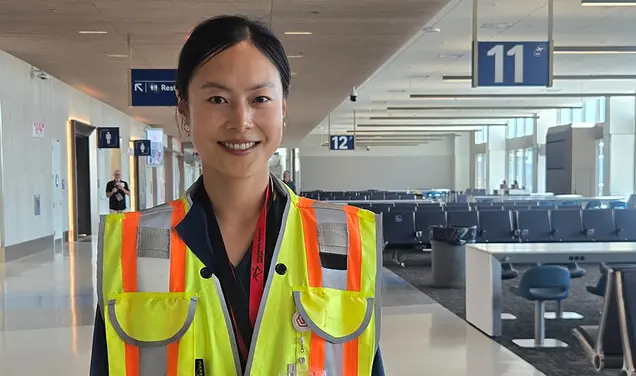
Janice Lee ’09 Worked to Renovate One of Hollywood’s Best-Kept Secrets
An engineer by training, Lee has been deputy project manager on the renovation of Hollywood Burbank Airport

2 Responses
A.C. Starkey ’73
7 Months AgoIn Appreciation of Bowie
Lucky you, Dr. John, on seeing Elephant Man — I have only seen clips. Ann and I were lucky enough to visit the V&A Warehouse in December to see the new Bowie Center. Captivating! I wonder if Madeline was influenced by Victoria Broackes, V&A co-curator of the “David Bowie Is” traveling exhibit, and Victoria’s stint at Yale as guest lecturer about Bowie? Just co-hosted in Vero Beach Saturday the Bowie tribute band Space Oddity, quite good. The real thing was amazing, even in his later years.
John Vine ’86
7 Months AgoBowie’s Talent and Authenticity
Mr. Bowie was such a talented and intelligent human. The album Young Americans got heavy play on my turntable as a teenager and young man. Additionally, I was fortunate to see him play the role of John Merrick in the Broadway production of The Elephant Man.
Above all, perhaps, he was authentic on and off whatever stage he appeared.