

Roasting Marshmallows and Coffee, Students Learn Tasty STEM Lessons
The Science of Roasting is among the Center on Science and Technology’s STEM literacy programs
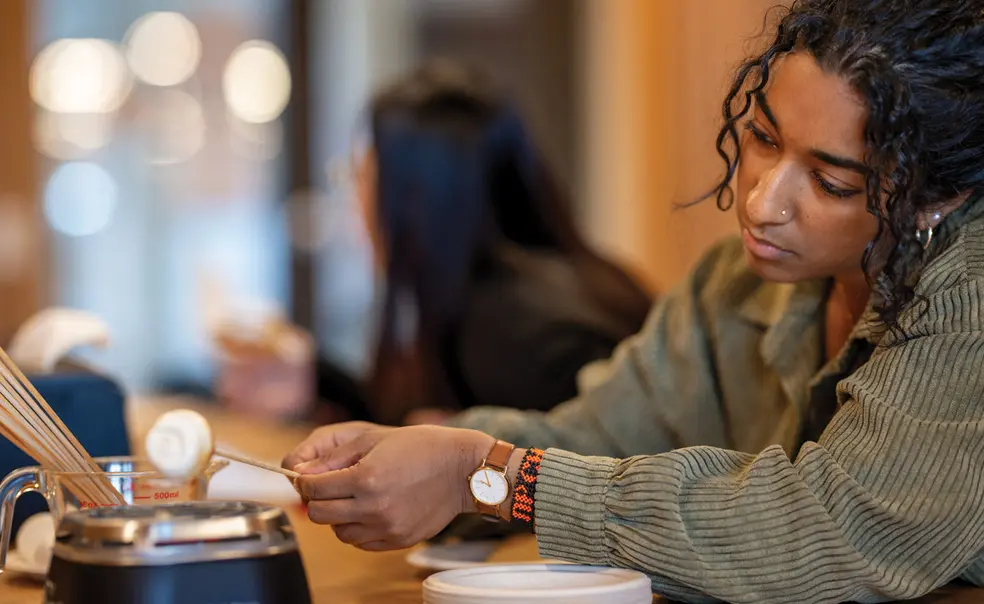

A sugary sweet yet subtly smoky smell evoking Christmas markets and happy campfires filled the Yeh demo kitchen on Dec. 11 as students roasted marshmallows to make s’mores. Chestnuts baked in an oven nearby, and an abundance of green coffee beans were prepared to be heated next.
“The goal today is I just want you to just think about what is happening during this process and why is it so delicious,” said Janine Nunes, director of education outreach at the Princeton Materials Institute.
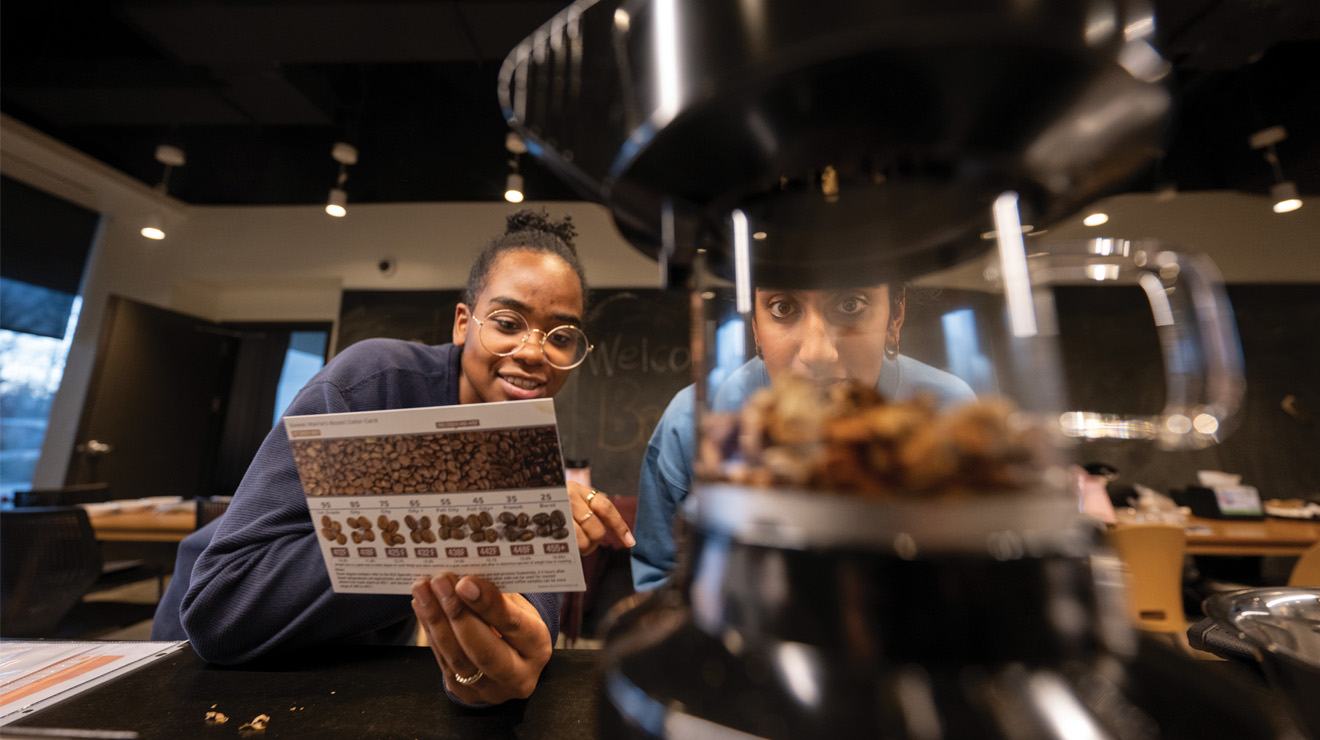
The Science of Roasting event was part of the Center on Science and Technology (CST) Brainy Bites series, where students make and taste food while learning related science. As students snacked, Nunes dove into the chemical compositions of marshmallows and coffee beans. Then, she led students to identify the primary scientific reactions that occur when both foods are heated with air: the Maillard reaction, which leads to browning, and caramelization.
“These are things that we see in everyday life, and I think that … makes the science more accessible and palatable, because we can easily relate to it,” said Ananya Chakravarti, a fourth-year chemical and biological engineering graduate student who attended.
“I want to keep learning and want to keep being curious about other fields,” said fellow attendee Margaux Emmanuel, a first-year graduate student in the department of French and Italian. “I thought this was an excellent way to kind of have bite-sized science.”
Brainy Bites is one of a handful of series the CST has launched in the past few years, all aligned with the center’s goal to “advance STEM literacy across the University and beyond,” according to Sami Kahn, CST executive director. The center was established on campus in 1989 as the Council on Science and Technology, but last year, was renamed to recognize its growth far beyond its faculty committee origins.
“We believe that STEM is relevant to everyone and is just a miraculous way of understanding the world around us,” said Kahn.
During the 2024-25 academic year, CST hosted more than 70 events — primarily designed with undergraduates in mind — and averaged more than 40 attendees per event. According to CST administrators, a number of the series, such as Brainy Bites, started as singular events that were very popular.
A Faculty Salon series began after an informal group of faculty who enjoyed interdisciplinary conversation decided to organize gatherings that “focus on one material and see how people from different disciplines interpret this material,” according to Z. Vivian Feng, assistant director of STEM education at the center. The group sent an email soliciting faculty volunteers interested in giving low-stakes, 10-minute flash talks, and Feng was surprised by the strong response. During the first year of the salons, faculty met three times to discuss glass. This year, the salons are focused on gold, with one gathering held in the fall and two more planned this spring.
The RadLab workshop series for students, which started virtually during COVID and is still going strong, is similar to the faculty salons in that students volunteer to give short talks of about 15 minutes, but the topic is entirely of their choosing. Sessions have ranged from language to 3D art to “trashion” (upcycling discarded materials to make fashionable pieces).
Lilia Burtonpatel ’27, an ecology and evolutionary biology major, presented on video games with ecological themes after researching the subject to write a paper for a course. She realized that RadLab “would be a great way to share it and talk about this with people who are interested, and also a great way to practice science communication, which is a very good skill to have.”
As a freshman, Burtonpatel served on CST’s roughly 20-person Student Advisory Board (SAB), a group of undergraduates who bring student perspectives to CST’s event planning. Then, Burtonpatel spent a year as one of two leadership liaisons — student employees of CST who lead the student board.
“My role essentially with the SAB is [to] sit back,” said Craig Marshall, assistant director of STEM education at the center. “I watch them dream … and I also provide them snacks, ’cause we all need snacks, right?”
Last spring, the student board conceived of and hosted a BioBeauty event, which brought together experts on beauty and skincare from and in and outside the University — such as molecular biology professor Jeffry Stock, who has founded or co-founded several startups, including a skincare company — and featured hands-on workshops on perfume, henna, and foundation makeup.
“The CST gives us resources in order to host these events like BioBeauty, but of course to use them, we have to be organized, and that’s the main challenge … executing the group vision,” said Burtonpatel.
In addition to brainstorming and hosting events, the students “can help get the word out” about all CST events, according to Manna Sam ’27, a molecular biology major who is serving as leadership liaison alongside Aanya Kasera ’28, a fellow molecular biology major.
Sam told PAW that, this academic year, they are focused on supporting CST’s social media.
“I do think that not enough people know about the CST,” said Sam.
The Latest
See all


Related News
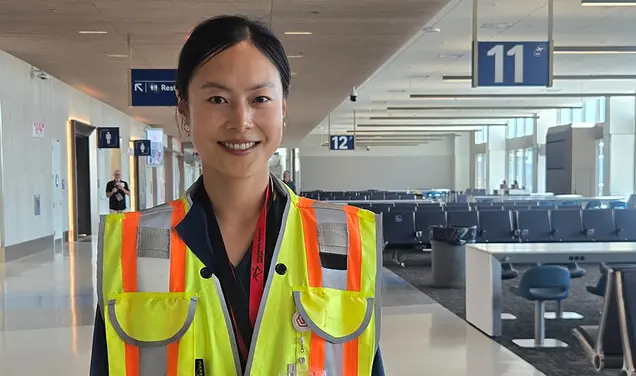
Janice Lee ’09 Worked to Renovate One of Hollywood’s Best-Kept Secrets
An engineer by training, Lee has been deputy project manager on the renovation of Hollywood Burbank Airport

No responses yet