

Marcus Lee Explores Identity, Politics, and Legacy in Black History
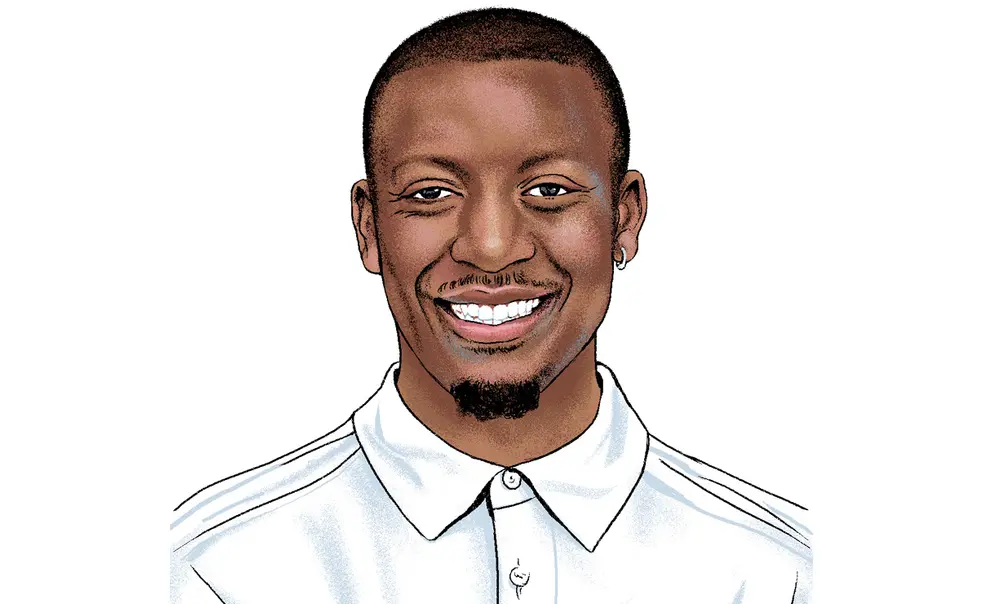

Marcus Lee can trace his interest in black politics, history, gender, and sexuality to his days at Morehouse College. While there he really absorbed the culture. “Morehouse is, of course, the alma mater of Martin Luther King Jr., and so we were really taught as soon as we started college that we had big shoes to fill,” Lee says.
Reading the biography Malcolm X: A Life of Reinvention by Manning Marable was another early formative moment because it was surrounded by controversy for presenting a more flawed view of the figure. It led Lee to want to understand how differing views of history are developed and how people are remembered.
Lee ultimately studied sociology at Morehouse and earned his Ph.D. in political science at the University of Chicago. He joined Princeton as a fellow and lecturer in 2022 and became an assistant professor in the Department of African American Studies in July.
Quick Facts
Title
Assistant professor of African American Studies
Time at Princeton
4 years
Upcoming Class
Black Politics Since 1965
Lee’s Research: A Sampling
Remembering Rustin
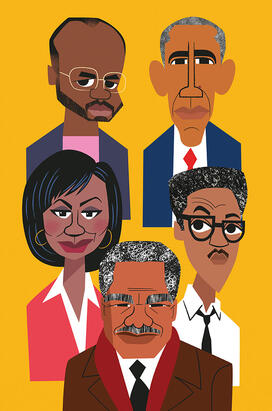
While researching the political and civil rights activist Bayard Rustin, who worked closely with the Rev. Martin Luther King Jr., Lee was intrigued by the ways Rustin was written about. Historians, biographers, and the media “said radically different things about who he was and why he was important,” Lee says. This inspired him to explore further in three essays. The first dissects the parallels and disagreements found in all major bios of Rustin, the second examines the 2023 Netflix film Rustin and how it promoted a new wave of interest in the activist, and the final essay analyzes all that’s documented against the truth to understand how someone’s legacy is formed. At the heart of each, Lee says, is the question: “To what end do we remember him?”
Mixed Messages
Lee is currently working on a book about gay and lesbian visibility. He’s researching the Black filmmaker Marlon Riggs, who was openly gay and produced films that explored race and sexuality. Lee is particularly interested in the ways media depicts Black communities and how these representations are received. He points to Riggs’ film Tongues Untied, a documentary about the experiences of Black gay men that aired on PBS in 1991, as an example. Riggs collected the viewer comments — where people called in to give their feedback — from each PBS station. The opinions were all over the place, Lee says, highlighting how little control Riggs had over its reception despite his intentions. The “act of giving oneself and one’s community over to uncertainty and unpredictability is really fascinating to me,” he says.
Historical Context
In his class Black Politics Since 1965, which he’s teaching for the third time this spring, Lee explores case studies of major historical moments bookended by the passage of the 1965 Voting Rights Act and the election of President Barack Obama in 2008. He covers the 1972 National Black Political Convention in Gary, Indiana, Anita Hill’s testimony against Justice Clarence Thomas, the election of Chicago’s first Black mayor, Harold Washington, and Hurricane Katrina, among other key events. Lee says his goal is to help students walk through these pieces of history to understand how the events are connected and have unfolded over time. He wants students to know “the world they live in today was not and is not inevitable,” he says. “Many things led up to this.”
The Latest
See all


Related News
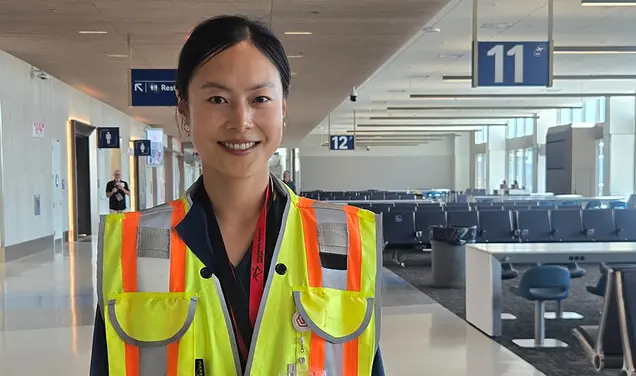
Janice Lee ’09 Worked to Renovate One of Hollywood’s Best-Kept Secrets
An engineer by training, Lee has been deputy project manager on the renovation of Hollywood Burbank Airport

No responses yet