
Politics Course Branches Into Executive Power
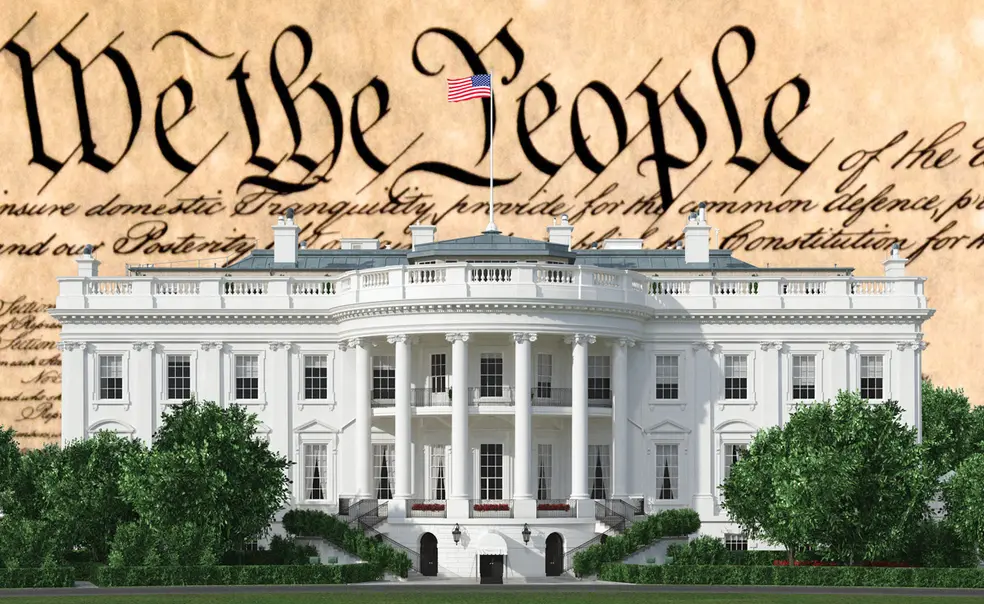

In a course offered for the first time this spring, The Constitution and the Presidency, students reference hundreds-of-years-old documents to support their judgments on pertinent issues, including some cases currently before the courts. Matthew Franck, a lecturer in politics at Princeton and professor emeritus of political science at Radford University, hopes that by the end of the semester, students will have a foundation from which to answer complicated questions about the executive branch that are up for debate.
“We’re living in a very interesting time for issues regarding the constitutional law … surrounding various presidential decisions that are being made on immigration and so forth,” said Franck. “And I want students to be able to relate the constitutional history we learn about in this course to those events so that they have an intelligent understanding of the boundaries of executive power, the limitations on executive power, [and] the relationship that branch has with the other branches of government.”
In one class on the removal power of the president, students reviewed a 1935 Supreme Court case — Humphrey’s Executor v. United States — in which the court decided that the Constitution allows Congress to enact laws to limit the president’s power to remove people from roles at independent quasi-judicial agencies, like the Federal Trade Commission. The precedent “is directly under challenge right now,” Franck said, in Trump v. Slaughter, in which former FTC commissioner Rebecca Slaughter is contesting her firing by the president.
The seminar, which has 10 students across a range of majors and years, meets twice a week in Morrison Hall to discuss readings and topical questions that arise. The reading list leans heavily on primary sources, such as the Constitution and Supreme Court cases, but also includes authors spanning from Founding Fathers Alexander Hamilton and James Madison 1771 to Keith Whittington, a professor emeritus at Princeton who is now at Yale.
“We’re having fun already with very good discussions,” Franck said two weeks into the semester, “so it’s a lively bunch — good students.”
For the midterm and final, students are handwriting closed-book, closed-note essays. They’re also responsible for a book review presentation and paper.
Sophie O’Connor, a sophomore politics major, enrolled because executive power is “a very prevalent topic right now. So, I was excited to dive into all sorts of aspects of the executive to really understand what’s going on in our country.”
Economics major Andrew Park ’26 appreciates that Franck attempts to present material without a point of view. “I think you have people from different perspectives here,” he said. “So, I think it’s very helpful to just genuinely be able to enter a political theory class that is relatively unfettered by political biases.”
The Latest
See all


Related News
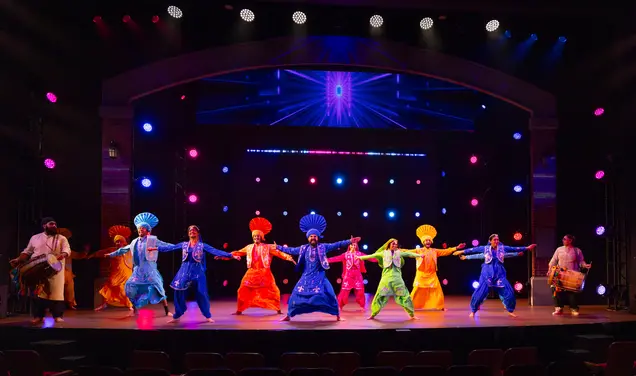
McCarter Theatre’s First South Asian Musical Took Me Back to Forbes Basement
A Beat of Our Own is about a college dance team not unlike Princeton South Asian Theatrics

1 Response
Richard M. Schwartzstein ’75
6 Months AgoTeaching Students How to Think
In the April issue of the PAW there is a description of a new course on “The Constitution and the Presidency.” In the description, the course is noted to require students to read multitudes of documents, some hundreds of years old, “to support their judgments on pertinent issues, including some cases currently before the courts.” The article goes on to indicate that the professor teaching the course intentionally shields the students from his own personal views. Finally, the article ends with a quote from a student in the course: “I think it’s very helpful to just genuinely be able to enter a political theory class that is relatively unfettered by political biases.”
In the same issue of PAW, President Eisgruber expounds again on his support for academic freedom. While I agree fully with him that faculty should be able to pursue their research and their writings unfettered by political considerations, I continue to wait for a statement that Princeton is committed to developing the thinking and analytical skills of its students free of the pressure of classes, unlike what is described for this new course, in which the faculty push their own views on contentious issues as “the truth.” Let Princeton be the model: We are here to teach you how to think, not what to think.