

Q&A: Former EEOC Chair Charlotte Burrows ’92 on Fears for Agency Independence

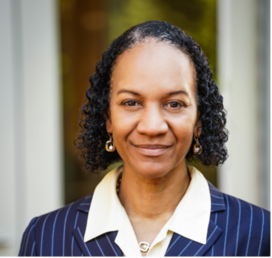
Charlotte Burrows ’92 served as chair of the Equal Employment Opportunity Commission (EEOC) for four years before President Trump ousted her in January 2025 despite her term running through July 1, 2028. Burrows spent a decade at the EEOC, and the Senate had confirmed her on three separate occasions, including during Trump’s first administration.
The Supreme Court is currently weighing a case involving the president’s ability to fire independent agency heads without cause. While Burrows is not a party to that case, the outcome will likely have ramifications for her status.
Did you anticipate that President Trump might take this action against you and others?
The conversations around Project 2025, and that were coming out of the transition period, certainly no one could be completely blindsided. But I will say this: I was hopeful the rule of law would be observed in this case.
I had the experience of serving during the first Trump administration as the sole Democrat for most of that period.
The legal basis certainly was not there for that action, and it was not something that was a foregone conclusion in my mind anyway.
Given officials at the EEOC, NLRB, FTC, and elsewhere have been removed, do you have concerns about agency independence?
A lot depends on what the Supreme Court decides [in Trump v. Slaughter. The justices heard arguments in December]. Agency independence is important because the rule of law is important, that you cannot have politicized law enforcement and expect this nation to thrive or even have success at all.
Yes, I’m concerned, but it’s much bigger than the EEOC. It’s about whether, if you’re discriminated against, for instance, is it the facts of what happened, or is it whether you voted for the right person?
That cannot be the way that we go forward. And so I do have concerns. It was not an easy decision to stay [at the EEOC] knowing that one might end up being dismissed prematurely. But it was important to stand for those things that really matter. And equal justice under law really matters.
What stands out among your work at the EEOC?
In 2021, before ChatGPT came out and everybody was all abuzz about what is this AI stuff, I launched an initiative to look at artificial intelligence and the ways in which it is changing the workplace to really get the agency to understand what was happening with disability rights, with older workers, with race and gender as well, when discrimination is automated.
Obviously not all AI is discriminating, but our job was to be able to identify ways to help people who were unfairly discriminated against in violation of the civil rights laws, regardless of whether it was done in a new technological way or in a more traditional way.
The initiative first took the time to listen to industry, to civil rights groups, to workers, to really understand what was happening. And then also what we did was to educate.
We were able to create trainings for the attorneys, but also the non-attorney investigators, to help them understand what you look for when you’re doing an investigation that may involve discrimination that involved AI.
We came up with a document that governs to this day how the agency must go about using AI in its own work so that people’s rights are protected, so we don’t start doing things that may inadvertently bake in unfairness as we deal with the public.
Also, I was able to hire technologists at the EEOC for the first time who had that kind of expertise, who understood from a technical perspective what was going on with artificial intelligence and other automated decision systems so that we could start to really build that enforcement muscle.
The EEOC issued anti-harassment guidance in 2024 that it voted to rescind, led by efforts from its current chair, on Jan. 22. What makes the policy important? (This interview was conducted, and Burrows gave the following response, prior to the Jan. 22 vote.)
About five or six years ago, the nation was very focused on how to move forward and address the problems of sexual harassment. That work is not finished. And the guidance was an effort both to collect everything that was learned during the period when #MeToo went viral about harassment, about the ways to prevent it, as well as some of the things that we saw around harassment during the pandemic — including online harassment, a lot of targeting of Asian-Americans unfortunately — and put that into one place so it will be accessible.
We also talked about some of the problems of antisemitism after Oct. 7, 2023, as well as anti-Arab and anti-Muslim bias. All of those things that we were seeing in the workplace, we tried to give some context and law around it in that guidance.
Unfortunately, it seems that the EEOC chair has asked the White House for approval to rescind that guidance without any opportunity for public comments. And the idea of getting rid of it and doing so without any transparency or opportunity for the public to weigh in is pretty outrageous.
For that guidance in particular there was a full notice and comment period, several drafts, a process of going to the American people with that document and then assessing and improving it based on the input that was received. It was over 38,000 comments, just to give context.
But the EEOC chair is asking the White House for permission to just get rid of it. I’m not aware of there being an instance where the chair would ask the White House, “Can I do X?” without the commission having even considered it. But that’s where we are.
And so for the EEOC to be stepping back in this very dramatic way that’s wholly unnecessary, I think is really shameful.
Was there anything from your time at Princeton that still sticks with you?
One of the things that I’ve always loved about Princeton is the motto — “In the nation’s service” — because beyond what we each do for ourselves individually, it also matters a great deal what we seek to accomplish together. It’s especially relevant as we prepare to mark America’s 250th anniversary this year.
Fairness and equal opportunity have always been among our most cherished principles, but we haven’t yet answered the fundamental questions necessary to make that a reality for everyone: How can we treat everybody fairly? How do we work and thrive together? Who do we want to be as a nation?
For me, the motto was a reminder that one goal of education is to help answer these fundamental questions. It’s something that’s informed how I approached my work on civil rights, but it matters for everyone.
This interview has been edited for length and clarity.
The Latest
See all


Related News
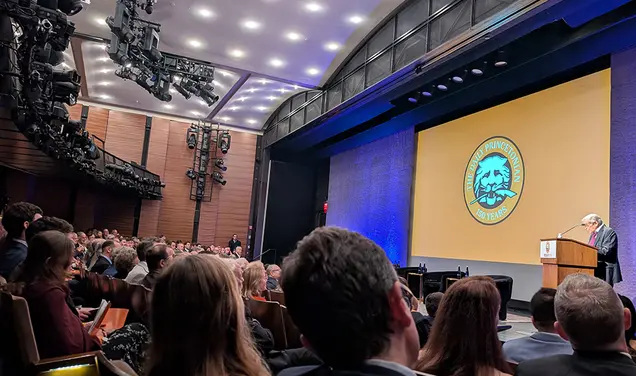
With Prominent Journalists and Hoagies, the ‘Prince’ Celebrates 150 Years
A gala at the New York Historical raised roughly $400,000 for the independent student newspaper



No responses yet