
Alumni, Students Work to Foster Princeton’s Muslim Community
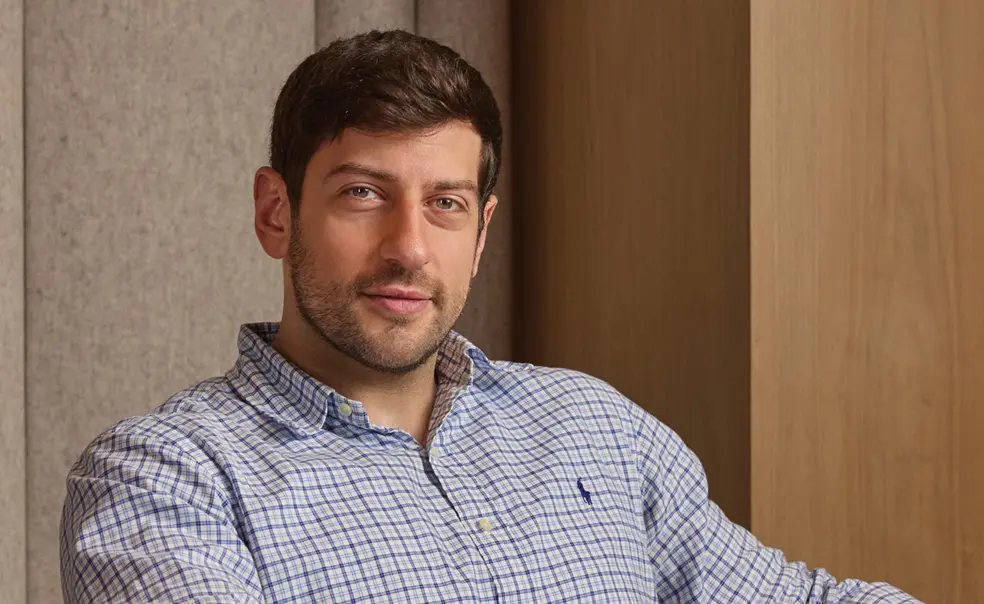
Mohamed El-Dirany ’18 *19 is among those focused on “consolidating Muslim alumni together and focusing on getting that community really strong”

One of Abdullah Rizvi ’27’s favorite traditions at Princeton is the Solidarity Iftar, co-hosted by the student groups Muslim Advocates for Social Justice and Individual Dignity and the Alliance of Jewish Progressives (AJP), which combines a Shabbat dinner and a Ramadan iftar. “Especially post Oct. 7 … I’ve made it a goal for my work to try to bridge gaps,” he says.
Rizvi, who is co-president of Muslim Advocates for Social Justice and Individual Dignity and an enthusiastic participant in interfaith circles, is also a former Muslim Students Association (MSA) board member, which he says includes “people from all over the place.”
Some students in the MSA were interested in protesting during 2023 and 2024, according to Rizvi, but they did not represent the majority. More recently, “there isn’t a whole lot of conversation around it anymore,” he says.
Related coverage
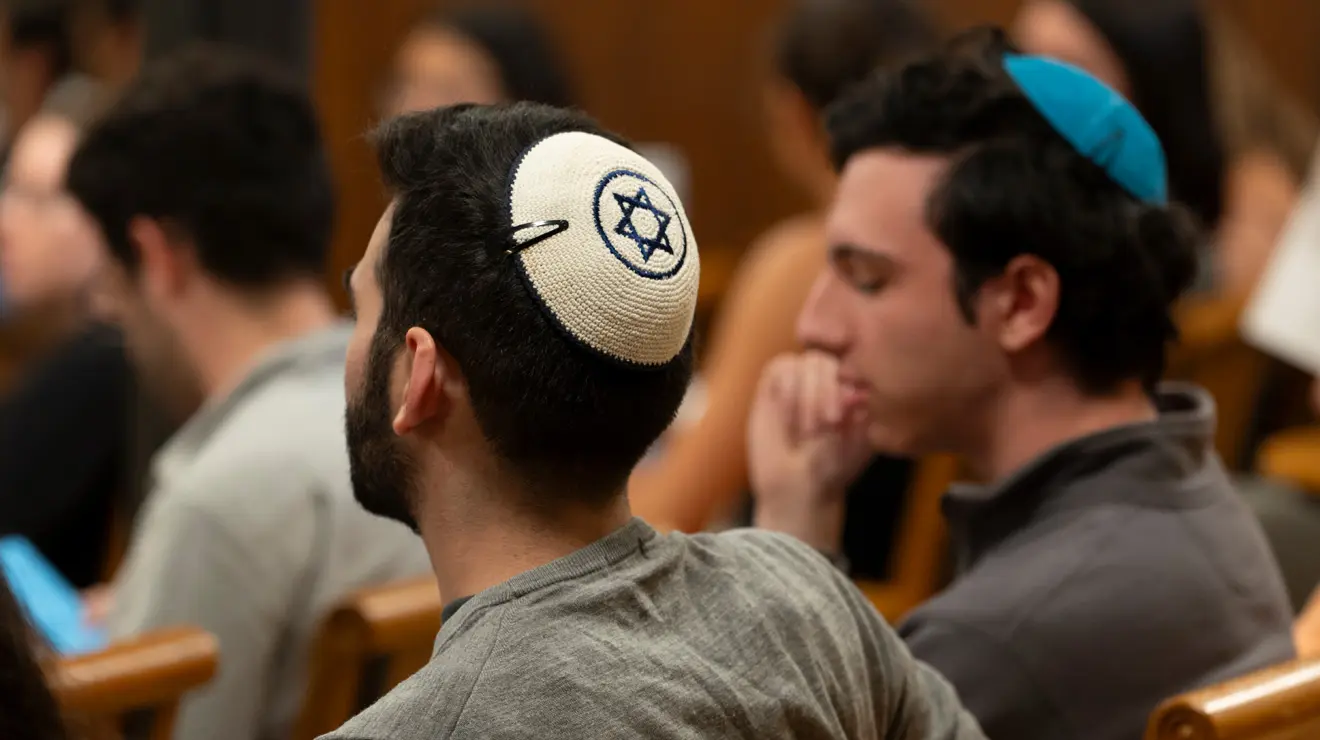
Behind the Story: Reporting on Princeton After Oct. 7
To learn about how Oct. 7 has impacted Princeton’s Muslim community, PAW reached out to the University’s assistant dean for Muslim life; faculty members who specialize in the Middle East and/or Islam and/or identify as Muslim, including Amaney Jamal, the dean of the School of Public and International Affairs; Muslim alumni; and student groups. Most did not respond or declined to comment.
The Class of 2026 included 2.6% Muslim students, compared with 9.2% Jewish students, according to the Daily Princetonian’s Senior Survey. Perhaps as a result, Muslim students have fewer dedicated spaces to gather on campus than their Jewish peers. Mohamed El-Dirany ’18 *19 adds that he believes the Muslim community also has fewer resources.
El-Dirany, who led the student group Princeton Committee on Palestine and served as vice president for the Arab Society, made clear when speaking with PAW that while “many Muslims might be sympathetic to Palestinians,” the two are not one and the same.
“Many Palestinians are Muslim. Palestine is in the Middle East as a mostly Muslim whatever you want to call it — nation, territory, whatever — but that does not mean that Palestine itself or Palestinians are a monolith or in some way representative of Muslims or vice versa,” he says.
Related coverage
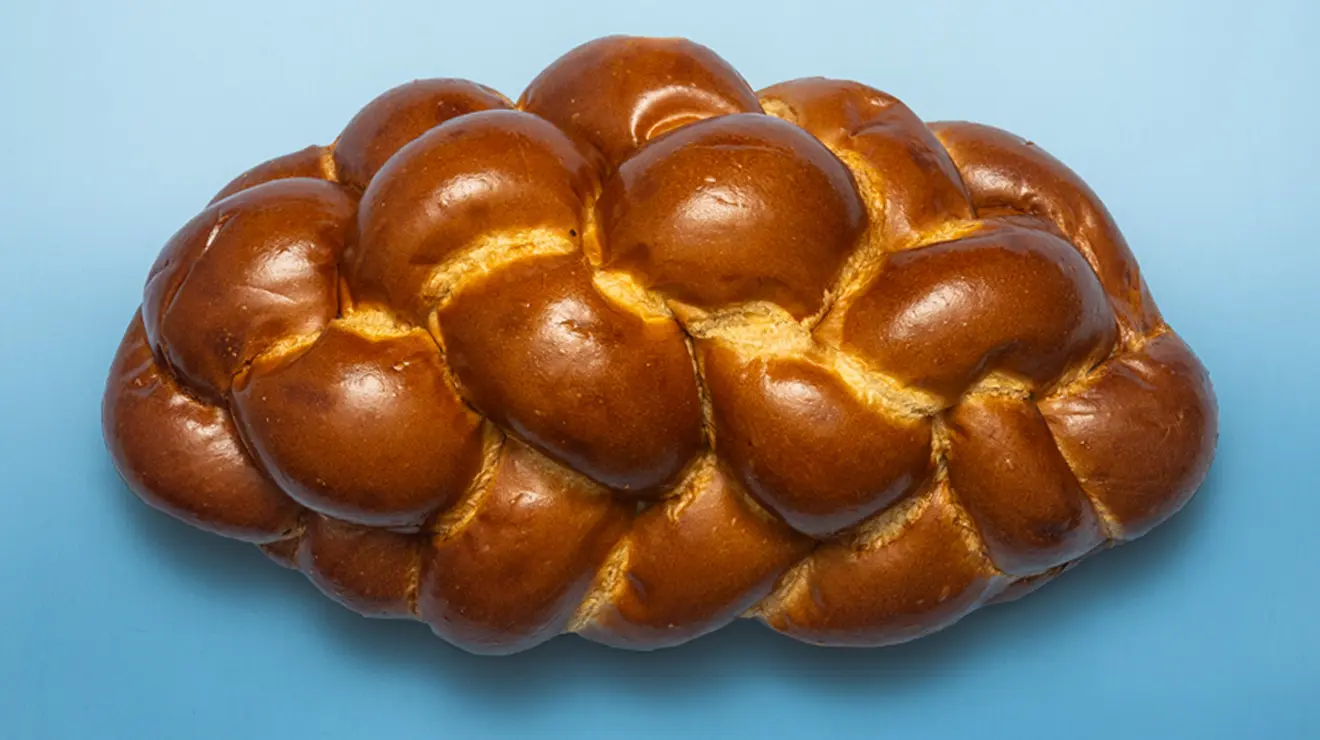
The Braids That Bind
Inside the difficult conversations Princeton’s Jewish community has had in the three years since Oct. 7
While some Muslim alumni and students are working to strengthen Princeton’s Muslim community after Oct. 7, they are also facing what El-Dirany says is “the worst kind of racism that I’ve ever seen in my personal lifetime” since 9/11. Increased government scrutiny over the past few years has “brought about a level of fear and repression among not just Muslims, but primarily over Arabs, over Palestinians, over anyone who espouses pro-Palestinian views.”
Against that backdrop, Princeton’s newest alumni affinity group, the Princeton University Muslim Alumni Association (PUMAA), launched in September 2025.
El-Dirany, a board member, says it is focused on “consolidating Muslim alumni together and focusing on getting that community really strong,” and may eventually include students. PUMAA’s president, Nabil Shaikh ’17 *21, declined to speak with PAW.
In its first year, the organization hosted regional Ramadan iftars and co-sponsored a Muslim life reception at Reunions, “bringing together more than 200 Muslim alumni through our inaugural events,” according to PUMAA’s first Class Notes column in PAW’s July/August 2026 issue.
Muskan Effendi ’24 says that at a PUMAA iftar she attended, politics didn’t really come up, as they “were just so hungry. It was just a place for us to celebrate community and get together and share our struggles with being hungry.”
Princeton’s Department of Near Eastern Studies and Institute for International and Regional Studies launched a Palestinian Studies Colloquium in the fall of 2024, featuring speakers on the history, culture, politics, and society in historic Palestine as well as in the Palestinian diaspora, which the site says “has become more urgent than ever given the recent developments.”
The Latest
See all


Related News
With Prominent Journalists and Hoagies, the ‘Prince’ Celebrates 150 Years
A gala at the New York Historical raised roughly $400,000 for the independent student newspaper

No responses yet