
Elana Sigall ’88’s Documentary Tackles Education in Orthodox Jewish Schools
Sigall previously served as New York state’s education adviser

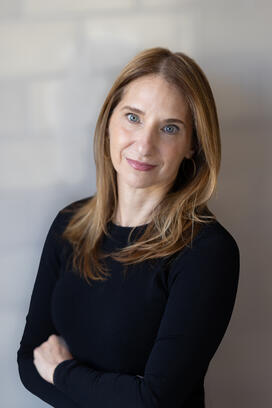
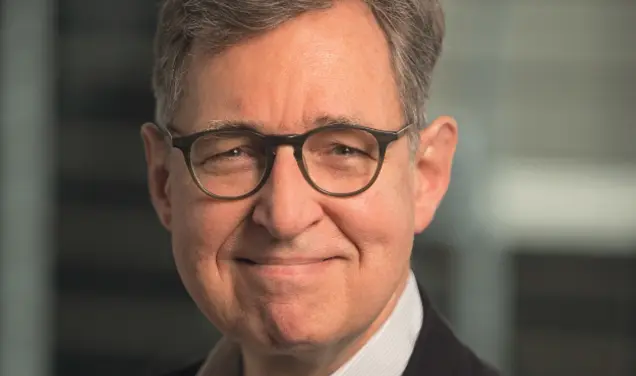
Elana Sigall ’88 recently produced a documentary criticizing private schools for ultra-Orthodox Jews in New York, arguing they leave students without a decent education. Over her experiences in both law and education — including as education adviser to New York’s governor — Sigall says she witnessed the problem firsthand, and now she hopes the documentary will lead to solutions.
“The film exposes the tragedy of forced ignorance hiding in plain sight in the biggest city in the United States,” Sigall says, quoting the description of Unorthodox Education. “And I would add that we feel a lot of urgency about this issue, because the latest statistic is that by the year 2030 — so fewer than five years from now — one in three children in Brooklyn will be ultra-Orthodox.”
Sigall taught school in New York City for two years before heading to law school. After a clerkship and some law jobs, she found her way back into education, as both a consultant and an adjunct professor in Columbia University’s Teachers’ College, and later, Columbia’s law school. She then worked for years as the head of special education policy for New York City before becoming education adviser to the governor of New York in 2014.
In both of these roles, Sigall, who is Jewish, learned about the ultra-Orthodox community in New York City and visited its private schools. Some Jewish communities in the city are insular, with children attending schools taught primarily in Yiddish and focused on religious education. Boys focus on studying Jewish texts, girls on running a Jewish home. Advocates of the system say that it upholds Jewish values and traditions. But the film argues students are denied a basic secular education, left without knowledge of math or English.
Sigall recalls a visit to one such school that featured a shiny new lab that outsiders would have assumed was a computer lab. But she knew that members of the community didn’t use computers.
“It turns out it was a sewing machine lab. And that was the highlight of the tour of the girls’ school,” Sigall says.
After Sigall left the governor’s office, she began working with Footsteps, a nonprofit that supports people leaving the ultra-Orthodox community. She also started working with Yaffed, an advocacy group that is trying to change the laws in New York around education for ultra-Orthodox children, creating stronger regulations that require more secular education.
Sigall has worked with ultra-Orthodox, or formerly ultra-Orthodox clients, who want their children to attend schools with a more robust secular education. But some, Sigall says, had no idea what an education outside the ultra-Orthodox world looked like.
“And that’s where I think we see a big problem,” Sigall said, “is the children not having any choice about being educated enough to be able to make their own decisions.”
Sigall says that her Princeton network was very helpful in the early days of working on the film, including friends who are Jewish scholars or filmmakers, or who work in the entertainment business.
Princeton, she says, formed “the foundation for my entire intellectual and professional life along every dimension.” As an undergraduate, she majored in English and co-founded Sexual Harassment/Assault Advising, Resources and Education, a program with a strong presence on campus almost 40 years later. Now she stays involved as a member of the board of Princeton’s Center for Jewish Life.
Sigall says she wants to push back against claims that the film is “feeding antisemitism.”
“Every single person involved with the making of this film is Jewish and very committed to the Jewish community and to various Jewish communities and to the vibrancy of Jewish life,” Sigall says. “We feel very much like we made this film for Jewish children.”
“I think that it’s important that we’re able to look at ourselves, and talk about issues that are important, that are affecting our communities.”
Sigall notes anyone interested can request a screening of Unorthodox Education online here. Watch a trailer for the documentary:
The Latest
See all


Related News
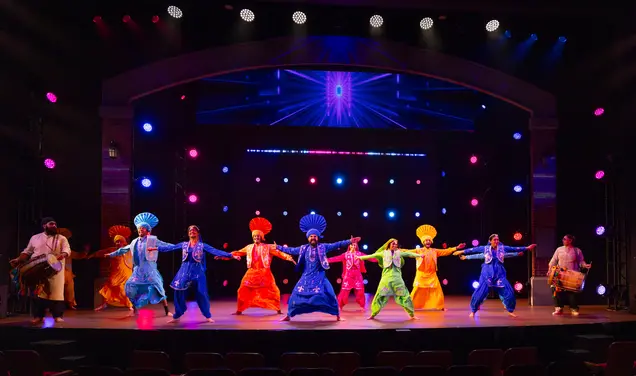
McCarter Theatre’s First South Asian Musical Took Me Back to Forbes Basement
A Beat of Our Own is about a college dance team not unlike Princeton South Asian Theatrics

1 Response
Richard M. Waugaman ’70
10 Months AgoPluralism, Diversity, and the Danger of Intolerance
Excellent. Sad that Sigall’s important work is described as “antisemitic.” That’s like crying wolf. It dilutes the meaning of true antisemitism, which is a dangerous plague.
I’ve heard that one goal of ultra-Orthodox education is to immunize children against ever mixing with outsiders. The narrowness of their education means they are likely to restrict themselves to their own community.
We live in a pluralistic society. Diversity along with tolerance creates strength. But with intolerance, it produces the weakness of divisiveness. We desperately need to move in the direction of greater tolerance, and celebration of differences.
Religious diversity is healthy. But intolerance of other religions — and of others within our own religious tradition — is the Achilles heel of monotheism. Claiming the universe has only one true G-d and that he prefers us over all others is a self-centered recipe for unending conflict.