

Jamila Michener ’03 Examines Housing Issues

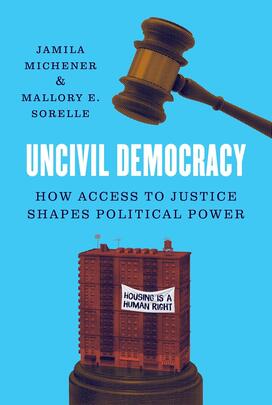
The book: Using qualitative evidence and historical survey data, SoRelle and Michener examine the civil legal system and its impacts on housing. Eviction, debt collection, and substandard housing are among the issues disproportionately impacting marginalized groups, and while organizations exist to help with legal assistance, most of that support is ultimately inadequate. Uncivil Democracy (Princeton University Press) illuminates these issues by sharing the stories and cases of people who are facing unfair evictions and substandard housing.
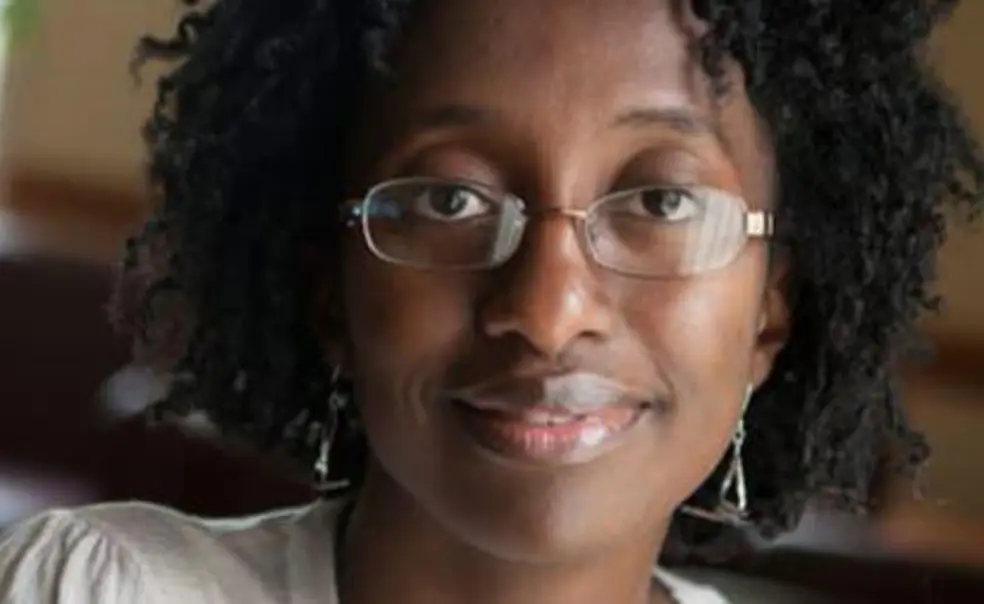
The authors:
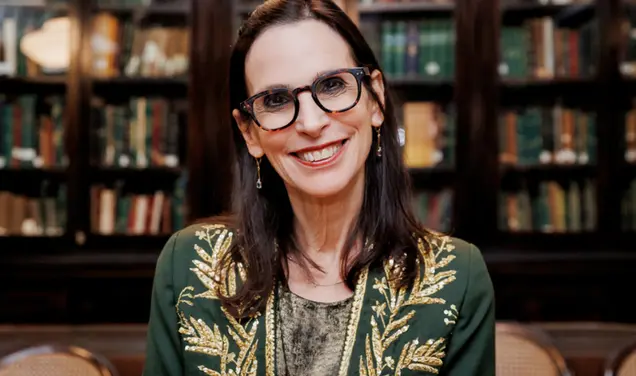
Jamila Michener ’03, is an associate professor in the department of government at Cornell University. Her research focuses on poverty, racial inequality, and public policy in the U.S. She is also the author of Fragmented Democracy: Medicaid, Federalism, and Unequal Politics.
Mallory E. SoRelle is an associate professor at the Sanford School of Public Policy at Duke University. Her research explores how public policies are produced and reproduce socioeconomic and political inequality in the United States. She is also the author of Democracy Declined: The Failed Politics of Consumer Financial Protection.
Excerpt:
Power, Politics, and Access to Justice
Josephine, a Black woman and grandmother in her late fifties, has lived in the same New York City building for more than thirty years. She “absolutely loves” the Manhattan neighborhood where her family has “the benefit of Morningside Park and Central Park, and every bus and train that you can imagine.” Josephine and her (now deceased) husband raised their children in a modest, but meticulously well-kept apartment. When their kids grew up and moved into their own homes, Josephine embraced her role as a grandmother, frequently caring for her disabled granddaughter.
A few years before her husband died, the building Josephine lived in started changing for the worse, deteriorating in ways that she and her neighbors could scarcely bear. To meet the challenge posed by the corrosion of her living conditions, Josephine changed too — but for the better.
She mobilized legal resources, organized her neighbors, and fought back against the degradation of her housing and her humanity. Over the course of an hour-long interview, Josephine described all of these changes in harrowing detail. We elaborate the specifics at length in the pages to follow because the arc of Josephine’s experiences parallels the trajectory of this book, concretizing the meaning of Uncivil Democracy. We learn from Josephine how a fundamentally unequal political economy puts marginalized people in positions of precarity and exposes them to predation. We see how traditional levers of political power often fail to address the most pressing problems that plague the lives of such people. We observe the ways that civil legal interventions — a lawyer representing one’s interests in housing court, for example — can offer some recompense and bolster individual feelings of efficacy. Yet we discern the limits of individualistic legal approaches for solving collective problems of precarity. Finally, through the lens of Josephine’s experiences, we grasp the transformative possibilities that emerge when individuals organize — acting collectively to oppose and alter the daunting realities of an unjust political economy. All of these lessons — reflected in Josephine’s experiences and reinforced throughout this book — have implications for the prospects of a just and equitable democracy in the United States.
In 2018, Josephine’s building was sold “to a hedge fund.” Per her accounting, the new owners’ goal was “to make a profit . . . not to think about humanity and think about the tenants. To make a profit.” Without prompting, Josephine explained exactly why she was convinced that her building’s current owner did not care about tenants:
I have experienced my elevator broken from December all the way until February. . . . One of my grandkids is in a wheelchair. I brought her up one day and couldn’t bring her back down. So we had to carry her [and] an eighty-five-pound wheelchair downstairs. . . . I’ve experienced no fire alarms functioning in the hallway. Just a beep, beep, beep, which clearly tells you it needs to be changed, which is a fire hazard. We had somebody get shot directly in front of our building, and the cops told the landlord, “If you had a real camera instead of this little fake stuff sitting up here, we could see who the perpetrator was.” We’ve had people sleeping on the roof, whole families. We’ve experienced a scaffolding that’s been on top of my building for eleven years . . . and it’s a haven for drug dealers, drug sellers, people on drugs. . . . We have to dodge rats. . . . I [used to] come in this building any time I wanted to and maybe encountered one or two rats. Now you get 50.
This only scratched the surface of the problems Josephine and her fellow tenants experienced. In conversation, Josephine noted much more: a hole in her roof due to water damage that left her exposed to infestation, a broken window that forced her to contend with a constant draft, the periodic loss of heat and hot water (“We didn’t have heat and hot water from Christmas to New Year’s”), and the unremitting refusal of the owner to make vital repairs.
Josephine’s abysmal living conditions ran deeply counter to her character, desires, and personal standards. So when the hole in her roof lingered for longer than she could abide and a broken lock caused her to fear for her life, she acted decisively.
That’s what made me go to the state. I’m not OCD, but I like a clean place. My mom had 11 kids. It was 13 people in the house, and she said, “If you ever lived in a matchbook, keep it clean.” I have to have a clean environment or I go crazy. And that big hole that was sitting up in there, I’m scared of rats. I’m scared of rodents. I didn’t know what was going to come through that hole . . . [then] I [tried] to go out of the building one day and I couldn’t get out. And it scared me to death because what if there’s a fire. I have a granddaughter in a wheelchair . . . to not be able to get out because of a broken lock that needs to be fixed . . . it’s ridiculous because the people who run this building don’t live like that. So what makes you think we want to? . . . I went to the Division of Housing and Community Renewal. They came and they inspected everything . . . and the process is you have to write to the landlord and tell him all these conditions, and they give them a certain amount of time to fix it. And when they don’t, that’s when [the state] steps in.
Once Josephine identified, through Google, a state agency that could help her, she brought her neighbors on board. To ensure a favorable response from the Division of Housing and Community Renewal, Josephine convinced all the people in her building to sign the requisite forms. Though everyone came from different backgrounds, they shared the common experience of substandard housing conditions. Josephine leveraged that commonality to garner the needed signatures: “I was working with every tenant in this building — it’s twenty-eight apartments in my building and twenty-eight people signed it because we all couldn’t get out the building. We all know somebody was sleeping on the roof. We all know that the smoke alarms weren’t working.”
Eventually, Josephine succeeded in mobilizing the state to act. The Division of Housing and Community Renewal issued a letter to the owner of Josephine’s building ordering them to make the necessary repairs. The owner did not comply. As a result, everyone in the building got a rent reduction of $100 per month for three years. Notwithstanding the reduced rent, the violations of standards of habitability continued.
Excerpted from Uncivil Democracy by Mallory E. SoRelle and Jamila Michener. Copyright © 2026 and published by Princeton University Press.
Reviews:
“Amid soaring inequality and rising threats from within, this vital book uncovers both the hurdles and the hope of democracy as a grass roots project, showing how people recognizing their shared interests can come together to build power for action and change.” — Rebecca L. Sandefur, sociologist and MacArthur Fellow
“Uncivil Democracy is the rare book that provides a holistic investigation of how people interact with the political system, combining humane storytelling, meticulous analysis, and brilliant insights. A must-read not only for its examination of the politics of civil injustice but also for its theoretical perspectives on how to study politics.” — Hahrie Han, Johns Hopkins University
The Latest
See all


Related News
Janice Lee ’09 Worked to Renovate One of Hollywood’s Best-Kept Secrets
An engineer by training, Lee has been deputy project manager on the renovation of Hollywood Burbank Airport

No responses yet