

Orientation Overhaul Will Drop Outdoor Action Starting in Fall 2027
Freshman orientation will be four days shorter and no longer include Outdoor Action and other small-group experiences, which will move to fall break
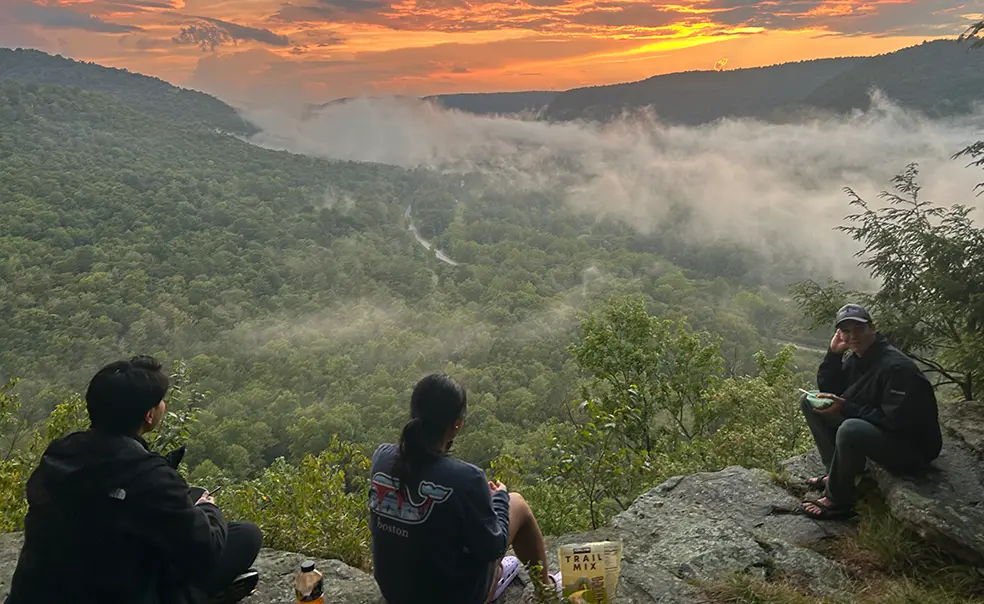

The Class of 2030 was the last to experience a 12-day freshman orientation with mandatory small-group experiences, Princeton University announced in an email to all students on Oct. 27. Outdoor Action, Community Action, and Dialogue and Difference in Action for first-year and transfer students will be moved to fall break and will no longer be required, among other changes.
Orientation will also be shortened by four days, to a total of eight, beginning next fall.
Vice President for Campus Life W. Rochelle Calhoun cited “an expanded approach … that recognizes that meaningful connections and belonging develop over time” in her note to students, which encouraged them to participate in a survey that will help guide future programming. Former student leaders can sign up to participate in one of 10 feedback sessions between Oct. 29 and Nov. 18. It is unclear what role student leaders may play going forward, though a New Student Orientation FAQ page said they are “an essential part of these programs.”
Calhoun’s email said the changes were “prompted by budgetary considerations” as well as feedback from students, staff, and faculty. “While the small group experiences have been positively received and valued, comments on the length of orientation and concerns about providing adequate time for students to settle into college life were also considered,” Calhoun wrote.
Princeton announced budget cuts of 5% to 10% beginning in 2025, in part due to lower projections for long-term endowment returns. Average annual returns of 8% are now expected, but earlier this month, the University announced a 23.7% return for fiscal 2026, raising the endowment’s value to $42.3 billion, a record for Princeton.
“The strong endowment return for the 2026 fiscal year should allow us to reach a lower payout rate more quickly than expected,” the FAQ stated. “However, we have not changed our long-term expectations for the endowment and will therefore continue to operate in a more financially constrained environment for the next couple of years as we transition to a new budget model to match the expected lower long-term returns.”
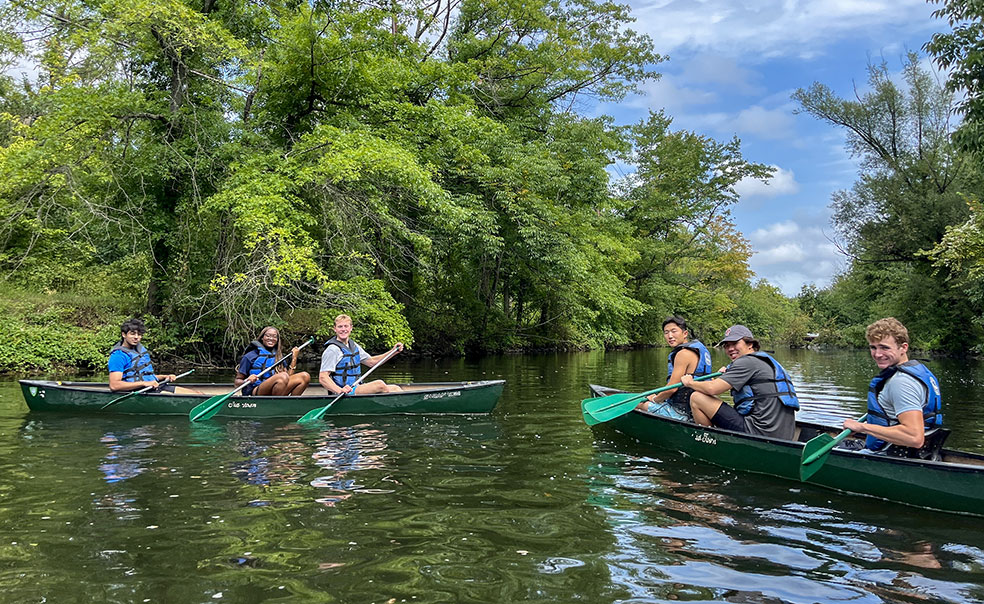
The survey asks first-years which topics and themes were most helpful during orientation, such as adjusting to life as a Princeton student, understanding values, supporting health and well-being, and getting to know people and making friends. Older students were asked how they felt around fall break of their first year at Princeton. Students were also asked how many nights they’d prefer for small-group experiences, how important it is to be off campus, and which elements of the programs were most important.
The Orientation Advisory Board is composed of 14 administrators across the University and is charged with providing “direction for the future of the Orientation program,” according to the New Student Orientation website.
The Pace Center for Civic Engagement runs Community Action, founded in 1987, in which students “learn what it means to be part of a community, how to grapple with complex societal questions, and begin to develop an awareness of their personal values,” according to the Pace Center website. The Pace Center Instagram account reported that 765 students participated this year.
The Office of Diversity and Inclusion runs Dialogue and Difference in Action, a social justice program in which students “engage in critical dialogues focused on identity, power, privilege, and difference” both in the University community and beyond, according to its website. It launched in 2017.
The Office of the Dean of Undergraduate Students runs Outdoor Action. This year, OA had 665 participants, according to Rick Curtis ’79, who has directed the program since 1981.
When OA celebrated its 50th anniversary in 2024, more than 130 former trip leaders came to campus to reflect on the program, which has had more than 25,000 participants. Holly Zindulis ’05, a former OA leader, told PAW at that time that the freshman trip “is so much more than a backpacking trip or a camping trip.”
Registration for the free small-group programs will open in early fall 2027, though spots will be limited.
The Latest
See all


Related News

With Prominent Journalists and Hoagies, the ‘Prince’ Celebrates 150 Years
A gala at the New York Historical raised roughly $400,000 for the independent student newspaper



No responses yet